 Ferndale
 Metal Roofing for Blaine Homes: Built for What This Coastline Actually Does to a Roof
Blaine sits close enough to the water that salt air is part of daily life, not an occasional nuisance. Add Whatcom County's driving winter rain and a moss season that can run eight months out of the year, and you've got a roofing environment that punishes shortcuts. A metal roof installed correctly for this stretch of coastline can outlast two or three asphalt roofs. A metal roof installed with the wrong fasteners, the wrong underlayment, or flashing details borrowed from a drier climate can fail early in ways that are expensive to fix. The difference almost always comes down to who installed it and whether they understood the site conditions before the first panel went up.
We work in Ferndale and the surrounding Whatcom County communities, including Blaine, regularly enough that we're not guessing at what this climate does to a roof over time. This page walks through what a Blaine metal roof actually needs, what a correct installation involves, and how to tell a solid bid from one that's cutting corners you won't see until the roof is ten years old.
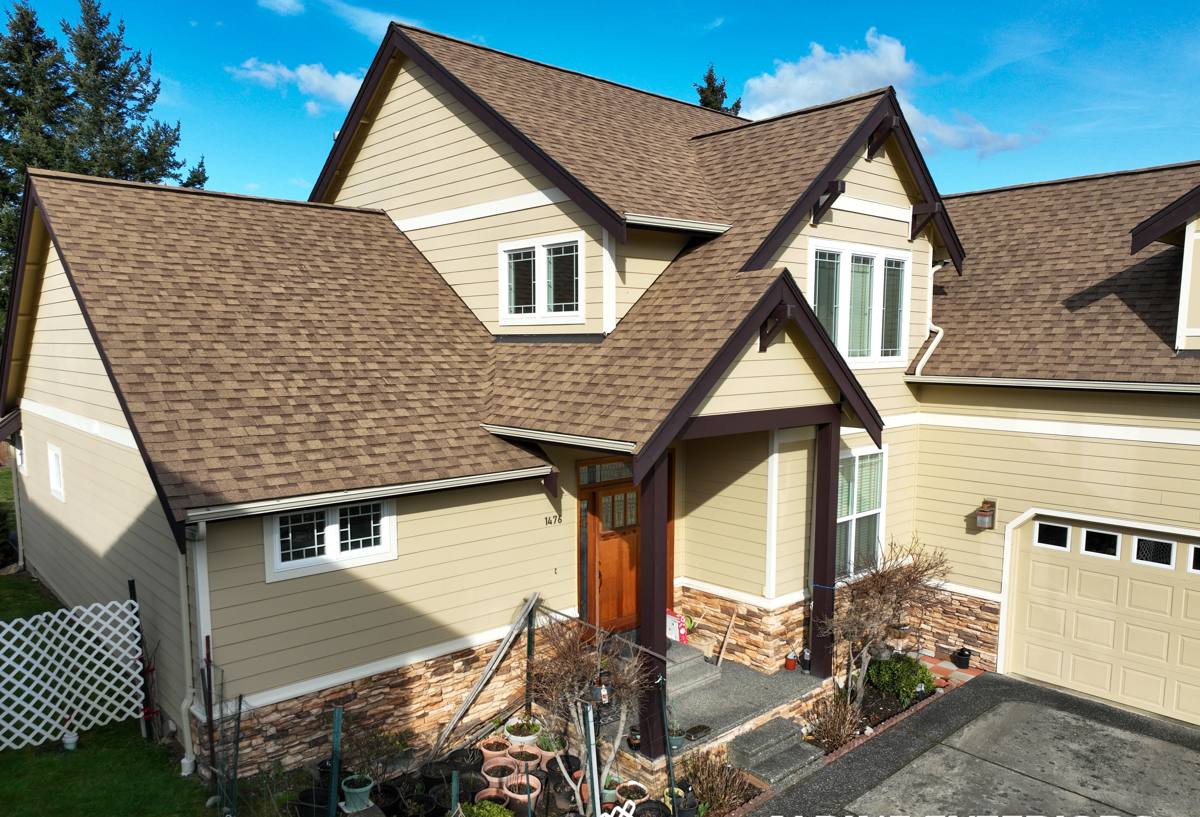
What Blaine's Climate Does to a Roof Over Time
Salt Air and Corrosion
Proximity to Puget Sound and the Strait of Georgia means airborne salt is a constant, low-level presence on anything metal — fasteners, flashing, gutters, and the panels themselves. Salt exposure doesn't destroy a quality metal roof, but it does mean material selection and fastener choice matter more here than they would fifty miles inland. Mixing incompatible metals, or using standard steel fasteners instead of corrosion-rated ones, sets up galvanic corrosion that shows up as rust streaks and failing screws years before the panels themselves would ever need replacing.
Driving Rain and Wind-Driven Water
Storms coming off the water don't always fall straight down. Wind-driven rain gets pushed sideways and upward under laps, around penetrations, and into any gap in the flashing that a calmer climate might tolerate. A roof detailed for Blaine needs every seam, valley, and penetration treated as if water is going to try to get underneath it — because eventually it will.
Extended Moss Season
Cool, damp conditions for most of the year make Whatcom County prime territory for moss and algae growth. Moss holds moisture against a roof surface and, on shingle roofs, works its way under tabs and lifts them over time. Metal roofing doesn't eliminate moss risk entirely, but its smooth, non-porous surface gives moss far less to grab onto than shingles do, and proper panel spacing and slope keep water moving instead of sitting.
Why Metal Makes Sense for This Location
Metal roofing isn't the right fit for every home or every budget, and we'll say so honestly during an estimate. But for Blaine specifically, several of metal's strengths line up well with local conditions:
- Sheds wind-driven rain more effectively than a lapped shingle surface when flashing details are done right
- Resists moss colonization far better than asphalt shingles, cutting down on the cleaning and treatment cycle
- Handles wind gusts off the water without losing individual pieces the way shingles can
- Long service life reduces how many times a homeowner has to deal with roofing work over the years
- Reflects heat in summer and holds up to freeze-thaw swings without the granule loss shingles experience
The trade-off is upfront cost — metal roofing is a bigger investment than asphalt. For homeowners planning to stay in their Blaine property long-term, or who are tired of moss maintenance and shingle repairs, the math often works in metal's favor over a 25-40 year horizon.
What a Correct Metal Roof Installation Actually Involves
Deck Inspection and Prep
Before any metal goes down, the roof deck gets inspected for soft spots, rot, or prior water damage — issues that are common on older Whatcom County homes where moss and moisture have had years to work on the sheathing. Skipping this step and installing over a compromised deck is one of the most common corner-cutting moves we see, and it guarantees problems down the road regardless of how good the metal itself is.
Underlayment Selection
In a high-moisture climate like this one, underlayment isn't a formality — it's the roof's backup plan if water ever gets past the panels. We use underlayment rated for the moisture load this area sees, not the minimum spec that might be fine in a drier region.
Fastener and Flashing Compatibility
Every fastener and flashing piece needs to be compatible with both the panel material and the coastal air. This means matching metals correctly to avoid galvanic reaction and using fasteners with corrosion-resistant coatings rated for the exposure. It's a detail that's invisible on install day and very visible ten years later if it's done wrong.
Panel Layout and Seams
Panel overlap, seam type, and fastening pattern all affect how well a roof resists wind-driven rain. Standing seam systems, where budget allows, offer the best defense against water intrusion at the seams because there are no exposed fasteners for water to find. Exposed-fastener panel systems can still perform well when the fastener spacing and washer quality are correct — the details matter more than the general product category.
Valleys, Penetrations, and Transitions
Valleys, vent pipes, chimneys, and wall transitions are where the majority of roof leaks actually originate, on metal or any other roofing material. Custom-fabricated flashing at these points, rather than generic off-the-shelf pieces forced to fit, is what keeps water out through decades of storms coming off the water.
Our Process for Blaine Roofing Projects
- On-site assessment — We look at the existing roof, deck condition, ventilation, and any problem areas specific to the property before quoting anything.
- Honest estimate — A written estimate covering material, labor, and any deck repair that's needed, with no surprise add-ons discovered mid-project.
- Material selection — We walk through panel style, gauge, and finish options based on the home's exposure and the homeowner's budget.
- Tear-off and deck prep — Old roofing removed, deck inspected and repaired as needed before anything new goes down.
- Underlayment and flashing installation — The unglamorous layer that determines whether the roof actually performs in coastal weather.
- Panel installation — Installed to manufacturer spec with fastening and seam details suited to this climate.
- Final walkthrough — We review the finished roof with the homeowner and address any questions before calling the job done.
Comparing Roofing Options for a Blaine Home
| Factor | Metal Roofing | Asphalt Shingles |
|---|---|---|
| Moss resistance | Strong — smooth surface, minimal foothold | Moderate — moss can lift tabs over time |
| Wind-driven rain performance | Strong with correct seam/flashing detail | Adequate but more seams to defend |
| Salt air durability | Excellent with matched fasteners/coatings | Good, less sensitive to metal compatibility |
| Typical service life | 40-60+ years | 20-30 years |
| Upfront cost | Higher | Lower |
| Maintenance | Low — occasional inspection | Moderate — moss treatment, granule loss over time |
Cost Factors Homeowners Should Know
Every Blaine property is different, so we don't quote firm numbers without seeing the roof, but the main variables that move a metal roofing estimate are:
- Panel type — standing seam runs higher than exposed-fastener panel systems
- Roof complexity — valleys, dormers, and multiple penetrations add labor and flashing work
- Deck condition — rot or soft sheathing found during tear-off adds repair cost
- Roof pitch and access — steep or hard-to-access roofs take longer and require more safety setup
- Gauge and finish — heavier gauge steel and premium coatings cost more but add longevity
Generally, homeowners should expect metal roofing to run higher per square foot than asphalt shingles upfront, offset by a much longer service life and lower maintenance costs over the years. We'll break down the specific numbers for your property during the estimate rather than quoting a generic range that may not reflect your actual roof.
Why a Crew That Already Works Blaine Matters
Roofing crews that mostly work drier, inland areas sometimes bring installation habits that don't hold up here — underspecced underlayment, mismatched fasteners, or flashing details that work fine in a low-moisture climate but not against wind-driven rain off the water. A crew that regularly works Ferndale, Blaine, and the rest of Whatcom County has already seen what happens when those shortcuts get taken, and builds accordingly from the start.
Local presence also matters for things homeowners don't think about until they need them: knowing which suppliers stock corrosion-rated fasteners locally, understanding how a specific street's exposure to wind off the water affects flashing needs, and being reachable if a question comes up after the job is finished.
Signs an Existing Roof Needs Attention
If you're not sure whether your current roof is due for replacement or repair, a few signs are worth a look before winter storm season:
- Heavy moss buildup, especially in shaded or north-facing sections
- Rust streaking around fasteners, vents, or flashing on an existing metal roof
- Curling, cracking, or missing shingles on an asphalt roof
- Water stains on interior ceilings, particularly after wind-driven storms
- Visible sagging or soft spots when walking the roof line
Catching these early usually means a repair. Waiting usually means a full replacement conversation instead.
Get a Free, No-Pressure Estimate
If you're weighing a metal roof for your Blaine property, or just want an honest read on the condition of what's up there now, we're glad to take a look. Use the form below to request a free estimate — no pressure, no obligation, just a straight assessment from a crew that already knows this coastline.