 Ferndale
 Siding Repair in Bellingham: Not the Same Job as New Construction
Repairing siding is a different skill than installing it. A repair crew has to work around what's already on the wall, match an existing product and color, and — most importantly — figure out why that section failed in the first place before touching a single board. In Bellingham, that diagnostic step matters more than in a lot of places, because the town's position on Bellingham Bay puts homes under a specific combination of pressure: salt-laden marine air, rain that regularly comes in sideways off the water, and a moss and mildew season that can run most of the year on shaded or north-facing walls.
We're based just up the road in Ferndale and work siding repair calls throughout this stretch of Whatcom County, including Bellingham's older hillside neighborhoods and its newer construction further from the water. Most of the repair calls we get here aren't random wear and tear — they trace back to one of a handful of climate-driven patterns we see over and over, which is part of why a crew that already knows this area's quirks tends to diagnose the actual problem faster than one that doesn't.
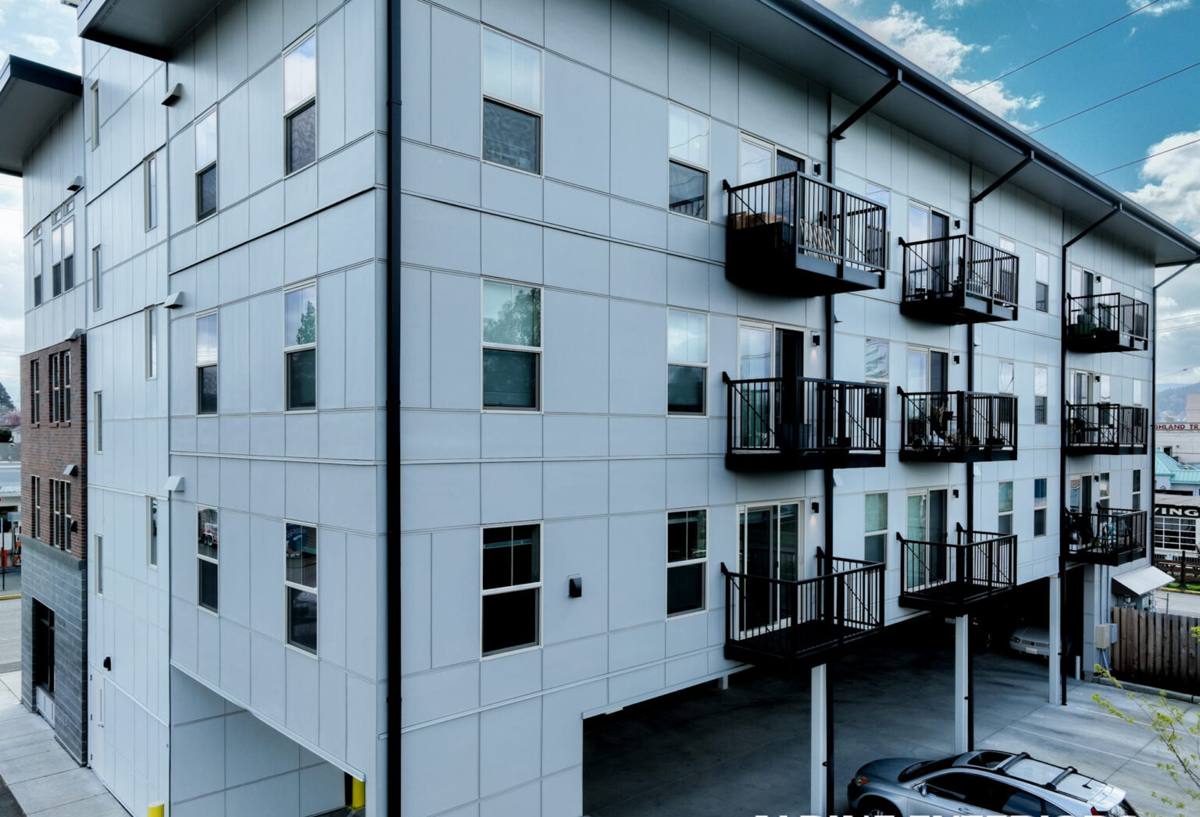
What Bellingham's Climate Does to Siding Over Time
Salt Air and Corrosion
Bellingham's bay-facing exposure means a steady flow of salt-tinged, moisture-laden air moving across the city, not just during storms. That kind of sustained exposure is hard on fasteners, flashing, and trim metal. Once a fastener starts corroding, it loses holding strength, which can let a board work loose or open a small gap where water gets a foothold — a slow problem that's often further along than it looks by the time it's noticed.
Wind-Driven Rain
Storms coming off the water tend to push rain sideways into Bellingham's homes rather than dropping it straight down. That matters for repair work specifically, because seams, laps, and trim joints that were built to shed vertical rainfall can still let water in at an angle they weren't detailed for. A lot of the repair calls we get involve water finding its way in through exactly this kind of angled intrusion, often at a corner, window trim line, or wall penetration.
A Long Moss and Mildew Season
Mild temperatures, tree cover, and consistent dampness add up to an extended growth season on shaded and north-facing walls across Bellingham. Moss and mildew aren't just a cosmetic nuisance — a mat of growth holds moisture directly against the siding surface and the fasteners behind it, which speeds up whatever damage is already starting underneath.
Common Siding Repair Issues We See in Bellingham
Most of what we repair in this area falls into a few recurring categories rather than one-off freak damage. Moisture-driven deterioration is the biggest one — water that's been tracking behind a wall assembly for months or years before it ever shows up as a soft spot or a stain. Mechanical damage is the second, usually from wind-driven debris, a ladder or equipment strike, or storm impact, and it tends to be more straightforward since the cause is obvious and the repair can often be isolated to the damaged section. The third category is failure at joints and penetrations — caulk that's dried out and cracked, trim that's separated slightly from the wall, or flashing around a window or vent that was never quite sealed correctly. That last category is deceptive because the visible symptom is often small, but the water it's letting in has usually been active behind the wall for a while before anyone notices.
Repair vs. Full Replacement: How We Make the Call
Not every siding problem in Bellingham means a full tear-off, and we're not going to tell you it does. But some situations genuinely do point toward replacement being the more honest recommendation, even when a patch is technically possible in the short term.
| Situation | What It Usually Means | Typical Path |
|---|---|---|
| Isolated impact damage to one or two boards | Localized, cause is obvious | Matched repair, no full replacement needed |
| Trim separation or cracked caulk at a joint | Sealant has aged out or was never detailed correctly | Reseal and reinforce the joint; check for hidden moisture first |
| Soft or spongy sheathing found once boards are pulled | Moisture has been tracking behind the wall for some time | Repair scope often expands to include sheathing; sometimes points to replacement |
| Recurring moss staining plus siding near the end of its service life | Material is failing broadly, not just at one spot | Full replacement is usually the more cost-effective long-term choice |
| Existing siding is a non-Hardie product with repeat problems | The material itself may be contributing to the failure pattern | We'll walk through repair vs. transitioning to Hardie honestly |
The only way to know which category a given repair falls into is to open it up and look. We don't quote repair work off a photo or a phone description when we can avoid it — what's visible from the ground is often the smallest part of the actual problem.
What a Correct Repair Actually Involves
Matching James Hardie Products
We install James Hardie fiber cement siding, and when we're repairing an existing Hardie installation, matching the profile, texture, and ColorPlus factory finish correctly is what keeps a repair from looking like a repair. Hardie's factory-cured finish is more consistent than field-applied paint, which actually makes color-matching more predictable than it would be with a hand-painted product, as long as the right plank profile and finish batch are used.
Fixing the Cause, Not Just the Symptom
Swapping a damaged board without addressing why it failed just buys time. A correct repair means checking the house wrap and flashing behind the damaged section, confirming water isn't still tracking in from a source higher up the wall, and making sure the replacement piece is integrated into the drainage plane the same way the original installation should have been. If we patch a board and the flashing behind it is still compromised, that same spot fails again — usually sooner than the first time.
If Your Existing Siding Isn't Hardie
A fair number of Bellingham homes we're called to have vinyl, LP SmartSide, cedar, primed spruce, or another product on them already, not Hardie. We'll still come look at it and tell you honestly what we see. In some cases a limited, compatible repair makes sense and we'll do it. In others, the pattern of damage points to something inherent to that material in this climate — vinyl that's warped and won't seat back into its channel correctly, engineered wood swelling at a cut edge, cedar that's held moisture long enough to start rotting underneath the finish — and in those cases, a patch is a short-term fix rather than a real solution. We'll say so plainly rather than charging you for a repair we don't think will hold, and we'll explain what transitioning that section, or eventually the whole wall, to Hardie would look like if you want to hear it.
Our Siding Repair Process in Bellingham
- Inspection: We look at the damaged area and the surrounding wall, not just the spot you called about, since related moisture damage often extends further than the visible symptom.
- Diagnosis: We identify the actual cause — impact, fastener corrosion, flashing failure, or material fatigue — before recommending a fix.
- Transparent quote: You get a clear explanation of what we found, what the repair involves, and what it would take to go further if we discover more once we open the wall.
- The repair itself: Matched materials, correct fastening and flashing integration, and attention to the same install details that matter on a full replacement.
- Final walkthrough: We show you what was done and what to watch for going forward, especially on a wall orientation that stays wet longer than others.
Signs Your Bellingham Home May Need Siding Repair
- Moss or dark staining that comes back quickly after cleaning, especially on shaded or north-facing walls
- Soft or spongy siding near the base of the wall or around window and door trim
- Visible cracks, gaps, or loose boards after wind events off the bay
- Peeling or bubbling paint concentrated in one area rather than spread evenly
- Cracked or missing caulk at trim joints, corners, or wall penetrations
- A draft or noticeably higher heating bill that might point to a compromised wall assembly
Why a Local Bellingham Crew Matters for Repair Work
A crew that regularly works Bellingham knows which wall orientations stay wet longest, where bay-facing exposure tends to concentrate wind-driven rain, and how the town's older hillside homes differ from the flatter, more open properties out toward Ferndale. That familiarity shortens the diagnostic part of a repair call — knowing where to look first instead of guessing — and it's the difference between a repair that actually holds and one that's back on the schedule in two winters.
If you're dealing with damaged, aging, or failing siding on a Bellingham home, we're glad to take a look and give you a straight answer about what it actually needs. Reach out using the form below to schedule a free, no-pressure estimate.