 Ferndale
 Building a Deck That Holds Up Near Bellingham Bay
A deck built for Bellingham has to survive conditions that inland decks never see. Homes close to Bellingham Bay and the surrounding Whatcom County shoreline deal with salt-laden air, long stretches of driving rain, and a moss season that can run most of the year in shaded yards. A deck that would hold up fine in a dry climate can start showing corrosion, soft spots, and slick green surfaces within a couple of seasons here if it wasn't built with that in mind. We build and repair decks in this area regularly, and the difference between a deck that lasts 10 years and one that lasts 25 almost always comes down to a handful of decisions made before the first board goes down.
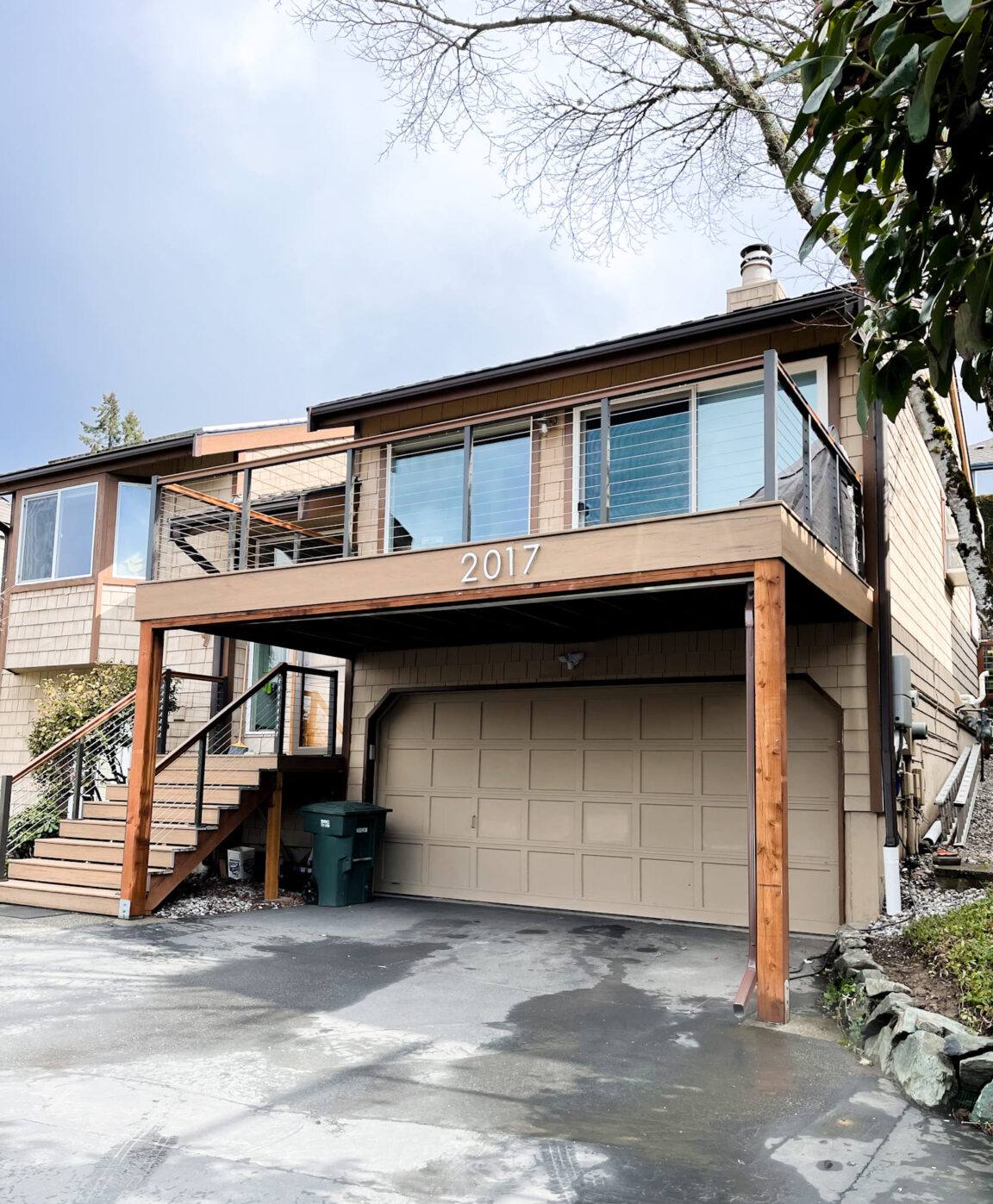
What Bellingham's Climate Actually Does to a Deck
Salt Air and Corrosion
Properties nearer the water pick up salt-laden moisture in the air, and that salt accelerates corrosion on anything metal — fasteners, joist hangers, railing brackets, and structural screws. A deck built with standard hardware can develop rust streaks, weakened connections, and staining within a few years in these conditions. This isn't unique to Bellingham, but it's more pronounced here than it is even a few miles further inland.
Driving Rain and Moisture Intrusion
Whatcom County gets a lot of rain, and a good portion of it comes in sideways during winter storms. That matters more than straight-down rain because it drives moisture into joints, under flashing, and behind ledger boards — the exact spots where rot starts and is hardest to spot until it's advanced. Decks attached to the house are especially vulnerable at the ledger connection if that detail wasn't flashed correctly.
The Long Moss Season
Shaded, damp decks in this region can grow moss for most of the year, not just in the deep of winter. Moss holds moisture against the decking surface, which speeds up wood decay and creates a genuinely slippery walking surface — a real fall hazard on stairs and near entry doors. Deck orientation, surface texture, and airflow underneath the structure all affect how bad this gets.
What a Correctly Built Deck Involves
A deck is a structure, not just a surface to walk on, and most of what determines its lifespan is invisible once it's finished. The details below are where corners get cut on lower-quality builds — and where problems show up first in this climate.
- Ledger board flashing — where the deck attaches to the house needs proper flashing and a water-resistant barrier behind it, not just lag bolts and caulk. This is the single most common failure point on Pacific Northwest decks.
- Joist protection — top and cut edges of joists should be protected from standing water so they don't rot from the inside out under the decking boards.
- Corrosion-resistant fasteners and hardware — stainless steel or heavy hot-dip galvanized hardware rated for treated lumber and coastal exposure, not general-purpose hardware store screws.
- Footings sized for our soil and frost depth — footing depth and sizing need to match Whatcom County soil conditions and local frost line, not a generic spec.
- Proper drainage and airflow underneath — grading and gapping that let water move away from the structure instead of pooling under it.
- Code-compliant railings and stair stringers — guardrail height, baluster spacing, and stair rise/run all need to meet current code, both for safety and for resale/insurance purposes.
Choosing Decking Material for This Climate
There's no single "best" decking material — the right choice depends on budget, how much maintenance you're willing to do, and how exposed the deck is to rain and shade. Here's how the common options actually perform in Bellingham-area conditions:
| Material | Moisture & Moss Resistance | Maintenance | Typical Lifespan Here |
|---|---|---|---|
| Pressure-treated lumber | Resists rot with proper sealing; moss still grows on the surface | Needs re-sealing every 1-3 years | 15-20 years with upkeep |
| Cedar | Naturally rot-resistant, but surface still holds moss in shade | Regular staining/sealing to maintain appearance | 15-20 years with upkeep |
| Composite decking | Doesn't rot; textured boards resist moss buildup better than smooth wood | Occasional washing, no sealing/staining | 25+ years |
| PVC decking | Fully moisture-proof; best moss/algae resistance of the group | Lowest maintenance, occasional washing | 25+ years |
We install both wood and composite decking depending on what the homeowner wants. Wood costs less upfront and has a warmer, natural look, but it's an ongoing commitment — skipping a sealing cycle in a wet year here shows up fast as graying, splitting, or moss growth. Composite and PVC cost more initially but hold up with far less attention, which matters a lot on decks that sit in shade for a good part of the day.
Dealing With Moss, Drainage, and Slip Safety
Moss control on a deck is mostly about design, not chemicals. A few things make a real difference:
- Orienting and trimming back overhanging trees where possible to get more sun and airflow onto the deck surface
- Choosing a decking board profile with grip texture rather than a smooth, sealed finish, especially on stairs
- Making sure gaps between boards are correct for drainage — too tight and water sits, too wide and debris collects
- Keeping the space underneath the deck ventilated so moisture doesn't get trapped against the joists
None of this eliminates moss entirely in a climate this wet, but it slows it down significantly and makes routine cleaning far more effective. A deck built without these considerations will need moss treatment or power washing far more often just to stay safe to walk on.
Permits and Code in Bellingham and Whatcom County
Most raised decks require a building permit, and inspections typically check footing depth, ledger attachment, joist spacing, and guardrail compliance. Requirements can differ slightly depending on whether the property is inside Bellingham city limits or in unincorporated Whatcom County, and on the deck's height and size. We handle the permit process as part of the job so homeowners aren't the ones tracking down requirements or scheduling inspections — and so the finished deck is actually documented and compliant, which matters if you sell the home later.
Our Process for Bellingham-Area Deck Projects
We walk every site before we quote anything, because the right build depends on the site — sun exposure, existing drainage, soil, and how close the deck sits to the water. From there:
- On-site assessment — we look at grading, existing structure (if replacing a deck), shade patterns, and access.
- Design and material selection — we walk through wood versus composite/PVC options honestly, including what upkeep each one actually requires in this climate.
- Permit handling — we prepare and submit what's needed for the jurisdiction the property falls under.
- Build — framing, flashing, and fastening done to hold up against salt air and driving rain, not just to pass a quick visual inspection.
- Final walkthrough — we go over the finished deck with the homeowner, including basic maintenance expectations for the material chosen.
Keeping a Bellingham Deck in Good Shape
Whatever material you choose, a little routine attention goes a long way in this climate. A simple seasonal checklist:
- Clear leaves and debris from between boards before fall rains set in
- Check and clear the gap under the deck so airflow isn't blocked by plants or stored items
- Inspect fasteners and railing connections annually for rust or looseness, especially on decks close to the water
- Wash off moss and algae buildup before it gets slick, particularly on stairs and shaded sections
- Reseal or re-stain wood decking on the schedule recommended for the product — don't wait until it's visibly gray or cracking
- Watch the ledger board area where the deck meets the house for any signs of staining or soft wood
Why a Crew That Already Works Bellingham Matters
A deck built to a generic spec sheet doesn't account for what actually happens to lumber and hardware a few miles from Bellingham Bay. We're based in Ferndale and work this part of Whatcom County regularly, so the flashing details, fastener choices, and material recommendations we make aren't guesswork — they're based on what actually holds up against the salt air, rain, and moss this area sees year after year. That's the difference between a deck that needs major repair in year eight and one that's still solid in year twenty-five.
If you're planning a new deck or need an honest assessment of one that's showing its age, we're glad to take a look. Reach out for a free, no-pressure estimate using the form below.