 Ferndale
 Roofing in Sandy Point Means Building for Salt Air, Not Just Rain
Sandy Point sits right on the water, and that changes what a roof has to survive. Most roofing advice you find online is written for inland homes that only have to deal with rain and sun. A house a few hundred feet from saltwater deals with all of that plus airborne salt, near-constant humidity, and wind that comes off open water with nothing to slow it down. Asphalt shingles can absolutely handle this environment, but only if they're specified and installed with the coastal conditions in mind from the start.
We work on homes throughout the Ferndale area and along the Whatcom County coastline, and Sandy Point roofs consistently show a different wear pattern than roofs even a few miles inland. Fasteners corrode faster. Metal flashing pits and fails sooner if the wrong alloy was used. Moss and algae get a head start because the roof rarely fully dries out between weather systems. None of that means asphalt shingle roofing is a bad choice for a waterfront property — it's still one of the most cost-effective, durable options available. It just means the details matter more here than they do elsewhere.
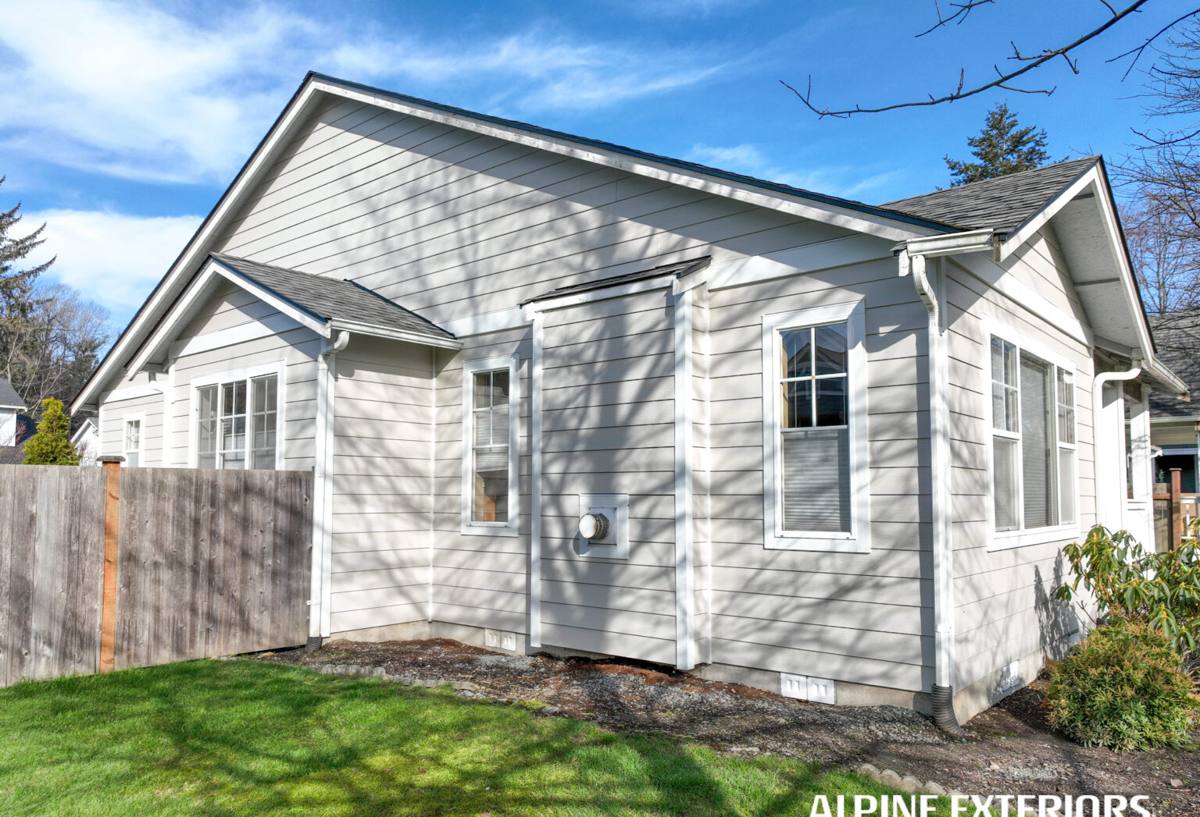
What Sandy Point's Climate Actually Does to a Roof
Salt Air and Corrosion
Salt-laden air accelerates corrosion on any exposed metal — nail heads, flashing, drip edge, vent stacks, and gutter hardware. Standard galvanized fasteners that hold up fine inland can start rusting within a few years this close to the water. Once a fastener corrodes, it loses holding power, and that's how shingles start lifting in wind long before they'd otherwise be due for replacement.
Driving Rain and Wind-Driven Water
Wind off the water doesn't just blow rain sideways — it pushes water uphill under shingle edges and around penetrations that would stay dry in a calmer setting. This is why underlayment choice and flashing detail work matter so much more on a waterfront roof than on a typical suburban one.
The Long Moss and Algae Season
Western Washington already has a long moss season, and Sandy Point's extra humidity and shade from mature coastal trees stretch it out further. Moss doesn't just look bad — it holds moisture against the shingle surface, works its way under shingle tabs, and can lift them enough to let water in. Algae staining is mostly cosmetic, but heavy moss growth is a real durability issue if it's left unaddressed for years.
What a Correctly Built Asphalt Shingle Roof Needs Here
A roof that's going to hold up on the Sandy Point waterfront needs a few things that are optional elsewhere in Whatcom County but shouldn't be skipped here:
- Corrosion-resistant fasteners and flashing — stainless or high-grade coated hardware instead of standard galvanized, especially anywhere within direct salt spray range.
- Full synthetic underlayment, not felt, for better wind-driven-rain resistance and longer service life in a wet, humid climate.
- Ice-and-water shield at eaves, valleys, and penetrations — this membrane self-seals around nail penetrations and is your real backup line of defense when wind pushes water where it shouldn't go.
- Balanced attic ventilation — intake at the eaves and exhaust at the ridge, sized correctly for the roof. Poor ventilation traps moisture underneath the deck, which shortens shingle life and invites rot regardless of how good the shingles themselves are.
- Algae-resistant shingles — modern architectural shingles with copper or zinc granules built in slow algae growth significantly compared to older or budget shingle lines.
- Properly lapped, sealed flashing at every chimney, skylight, wall intersection, and vent — these are the spots where waterfront roofs actually fail, far more often than the open field of shingles.
Choosing a Shingle for a Salt-Air, High-Moss Environment
Not every asphalt shingle product is a good fit for a coastal Whatcom County roof. Here's how the common tiers compare for this specific setting:
| Shingle Type | Coastal Performance | Moss/Algae Resistance | Typical Lifespan Here |
|---|---|---|---|
| 3-tab (budget) | Lower wind rating, less material mass to resist driving rain | Minimal unless treated | Shorter — often the first to show wear near water |
| Standard architectural/laminate | Good wind rating, solid rain performance | Better than 3-tab; varies by line | Solid mid-range choice for most Sandy Point homes |
| Architectural with algae-resistant granules | Same strong wind/rain performance as standard architectural | Best available — built-in copper/zinc granules actively resist growth | Our standard recommendation for waterfront and heavily shaded lots |
| Impact-resistant/premium lines | Highest durability and wind rating | Typically includes algae resistance | Best long-term value where budget allows |
We don't push the most expensive option on every roof — plenty of Sandy Point homes do fine with a well-installed standard architectural shingle. But we do steer people away from bare 3-tab shingles this close to the water. The installed cost difference is modest, and the performance gap in this specific climate is not.
Our Installation Process
The process itself isn't exotic — it's the attention to detail at each step that makes the difference on a waterfront roof:
- On-site inspection and measurement. We look at the existing roof, deck condition, ventilation, and flashing points before quoting anything, so the estimate reflects your actual roof, not a generic average.
- Tear-off and deck check. Old roofing comes off down to the deck, and we check for soft spots, rot, or prior water damage that needs to be addressed before new roofing goes on — this is where hidden problems from years of coastal moisture usually show up.
- Underlayment and ice-and-water membrane installation. Synthetic underlayment across the field, self-sealing membrane at eaves, valleys, and penetrations.
- Flashing and drip edge. New, corrosion-resistant flashing at every roof-to-wall, chimney, skylight, and valley detail — reusing old, pitted flashing is one of the most common shortcuts we won't take.
- Shingle installation to manufacturer spec, including correct nailing pattern and exposure — under-nailing is a major cause of wind-lift failures on exposed coastal roofs.
- Ventilation check and correction if the existing intake/exhaust balance isn't adequate for the space.
- Final walkthrough covering what was done, what to expect, and what routine maintenance looks like going forward.
Repair, Re-Roof, or Full Replacement?
Not every roofing issue on a Sandy Point home requires a full replacement. The right call usually comes down to age, extent of damage, and whether the deck and flashing underneath are still sound.
When Repair Makes Sense
Isolated wind damage, a failed flashing detail, a handful of lifted or missing shingles, or moss damage caught early can often be repaired without touching the rest of the roof — as long as the shingles aren't already at the end of their service life and the surrounding material is still in good shape.
When Full Replacement Is the Honest Answer
Widespread granule loss, shingles that are curling or cracking across large areas, repeated leaks in different spots, or a deck that's showing rot once you get underneath the shingles all point toward replacement being the more cost-effective long-term choice. Patching a roof that's structurally past its useful life usually just delays a bigger repair bill.
Moss, Algae, and Ongoing Maintenance in a Marine Climate
Even a well-built roof needs some upkeep in this environment. A simple annual routine goes a long way:
- Have moss and debris cleared from the roof surface and valleys before it builds up thick enough to hold moisture against the shingles.
- Check and clear gutters — clogged gutters back water up under the shingle edge, which is a common cause of eave damage on coastal homes.
- Look at flashing and sealant points for early signs of corrosion or gaps, especially after a stretch of high wind.
- Trim back overhanging branches where practical to reduce shade and debris, which slows moss regrowth.
- Address small issues — a lifted shingle, a small moss patch, a rusting fastener — as soon as they're noticed rather than waiting for the next full inspection.
None of this requires walking your own roof, which we'd discourage anyway — a quick professional check once a year catches most problems while they're still cheap to fix.
What Roofing Actually Costs to Get Right Here
Every roof is different, but these are the factors that most affect the price on a Sandy Point asphalt shingle project:
| Factor | Why It Matters |
|---|---|
| Roof size and pitch | More surface area and steeper pitches both increase labor and material needs |
| Number of layers to remove | Tear-off of multiple old layers adds labor and disposal cost |
| Deck condition | Rot or soft spots found during tear-off require repair before new roofing goes on |
| Shingle tier selected | Standard vs. algae-resistant vs. premium impact-rated lines carry different material costs |
| Flashing and penetration count | Chimneys, skylights, and multiple roof planes all add detail work |
| Ventilation upgrades needed | Correcting inadequate intake/exhaust airflow adds scope but protects the new roof |
We'd rather walk your roof and give you real numbers than quote a broad range that doesn't mean much. Costs vary enough between individual homes on the waterfront that a generic estimate usually isn't useful.
Why It Matters to Hire a Crew That Already Works Sandy Point
A roofing crew that mostly works inland Whatcom County jobs isn't necessarily going to think about corrosion-resistant fasteners, algae-resistant shingle lines, or the extra flashing attention a waterfront home needs — because most of their work doesn't require it. We've done enough roofs along the Ferndale coastline to know where salt air and wind-driven rain actually cause failures, and we build for those conditions from the first nail rather than learning it the hard way on your roof.
We're also familiar with the practical side of working in this area — narrow waterfront access, protecting landscaping and shoreline areas during tear-off, and coordinating around Whatcom County's weather windows so a job isn't left exposed when a storm rolls in off the water.
Get a Straightforward Estimate
If your roof is showing moss buildup, granule loss, lifted shingles, or you're just planning ahead for a home this close to the water, we're happy to take a look. Fill out the form below for a free, no-pressure estimate — we'll tell you honestly whether you need a repair or a full replacement, and what that would actually involve for your specific roof.