 Ferndale
 Roofing Built for Where You Actually Live
Homes in and around the Lummi Nation sit close to the water, and that changes what a roof has to deal with year after year. You're getting salt-laden air off the Salish Sea, long stretches of driving rain rolling in off the coast, and a moss season that can run most of the year in this part of Whatcom County. A shingle roof that would hold up fine forty miles inland doesn't always hold up the same way out here, and the installation details that matter most are often the ones a homeowner never sees until something goes wrong.
This page is about one job, done right, for this area: asphalt shingle roofing for Lummi Nation homes. Not a general roofing overview — the specific climate pressures here, what a correct installation actually involves, and why local experience on this particular stretch of Whatcom County coastline matters more than it might seem.
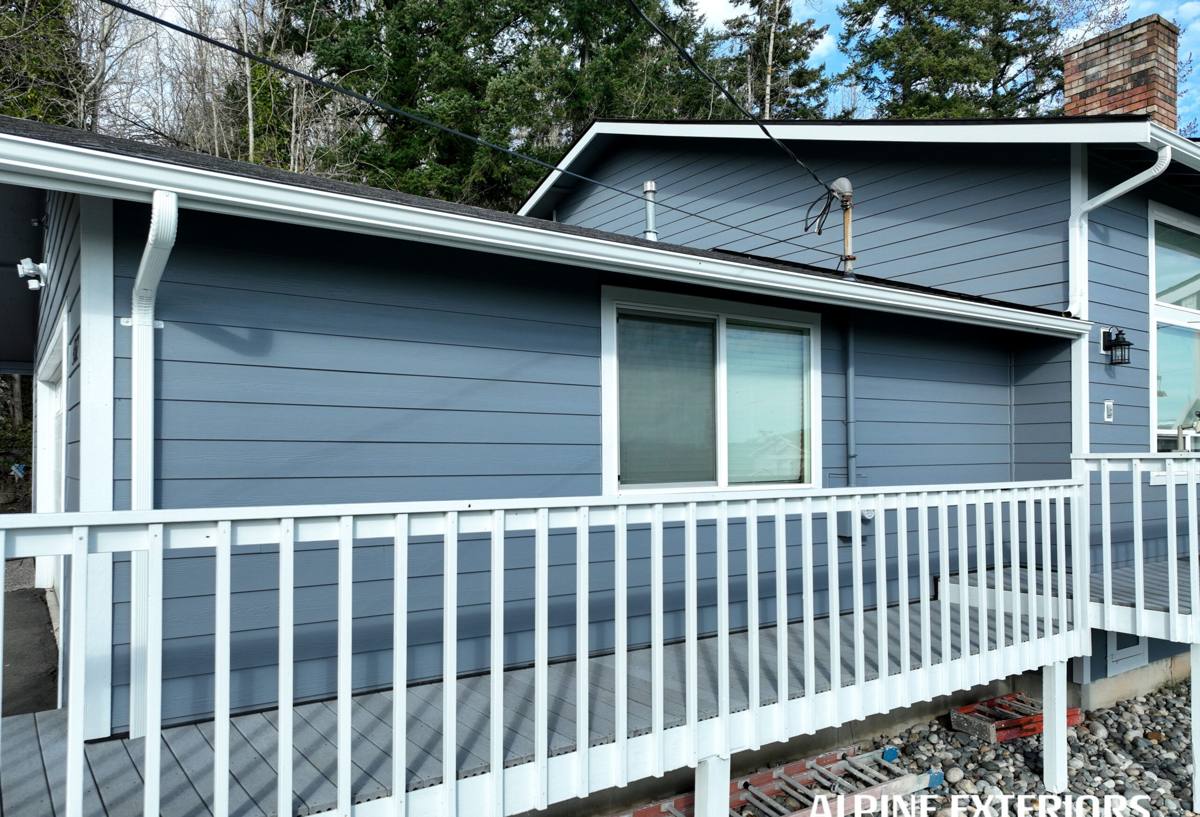
What Salt Air, Rain, and Moss Actually Do to a Roof
Salt Air and Metal Components
Asphalt shingles themselves tolerate salt air reasonably well, but the metal parts of a roofing system — flashing, drip edge, nail heads, vent housings — are another story. Cheaper or improperly coated metal corrodes faster this close to saltwater, and once flashing starts to pit or thin, it stops doing its one job: keeping water out at the seams, valleys, and penetrations. A roof can look fine from the ground while the flashing underneath is quietly failing.
Wind-Driven Rain
Rain that comes in sideways behaves differently than rain that falls straight down. It can work its way under shingle tabs, push past standard nailing patterns, and find gaps at ridges, hips, and wall intersections that would never leak in a calmer climate. Homes here need roofing systems — not just shingles — that account for wind-driven rain at every transition point, not just the open field of the roof.
Moss and Trapped Moisture
Moss doesn't just look bad. It holds moisture directly against the shingle surface far longer than the shingle was designed to handle, and it grows into the granule layer, which is what protects the asphalt underneath from UV and weather damage in the first place. Left alone, moss can lift shingle edges, hold water at overlaps, and shorten the usable life of an otherwise sound roof. In this climate, moss isn't a maybe — it's an expected condition to plan for, not an occasional nuisance.
What a Correct Installation Actually Involves
A shingle roof is only as good as the layers underneath it that homeowners rarely think about. For Lummi Nation homes, we treat the following as non-negotiable, not upgrades:
Full Tear-Off and Deck Inspection
Roofing over old shingles hides problems instead of fixing them. A full tear-off lets us inspect the actual roof deck for soft spots, rot, or damage from long-term moisture — issues that are common on roofs that have carried moss and trapped water for years without being addressed.
Underlayment Suited to the Climate
Standard felt underlayment is not enough for a coastal, high-rain area. We use synthetic or upgraded underlayment across the field of the roof, with self-adhering ice-and-water barrier at eaves, valleys, and any low-slope transitions where wind-driven rain and ponding are most likely.
Flashing That's Built to Last, Not Just to Pass Inspection
Every valley, chimney, skylight curb, and wall intersection gets flashing rated for this environment, installed with proper laps and sealant — not caulked-over shortcuts. This is the single detail that separates a roof that lasts from one that leaks in year three.
Ventilation That Matches the House
Proper intake and exhaust ventilation keeps moisture from building up in the attic, which matters even more in a damp coastal climate. Poor ventilation shortens shingle life from underneath, regardless of how good the shingles themselves are.
Choosing the Right Shingle for This Environment
Not every asphalt shingle product is a good match for salt air, heavy rain, and moss exposure. Here's how the common options compare for a Lummi Nation home:
| Shingle Type | Wind & Rain Performance | Moss/Algae Resistance | Typical Lifespan Here |
|---|---|---|---|
| Standard 3-tab | Adequate in mild conditions, more vulnerable to wind-driven rain at tabs | None without treated granules | Shorter end of the range |
| Architectural (laminated) | Stronger wind rating, better seal-down performance | Better if algae-resistant (AR) granules specified | Longer, mid-to-upper range |
| Impact-rated architectural | Highest wind and impact resistance | Best when paired with AR granules | Longest, best value over time here |
For most Lummi Nation homes, we recommend architectural shingles with algae-resistant (AR) granules as the baseline, not the upgrade. The AR treatment slows the growth of the algae and moss that this climate practically guarantees, and the heavier laminated construction handles wind-driven rain better than a basic 3-tab product.
What Actually Drives the Cost of a Roof Here
We don't quote prices without seeing the roof, but the honest cost factors are the same on every job:
| Factor | Why It Matters |
|---|---|
| Roof size and pitch | More surface area and steeper slopes mean more material, labor, and safety setup |
| Number of tear-off layers | Removing multiple old roofing layers takes more time and disposal |
| Decking condition | Rot or soft spots found during tear-off need repair before new shingles go down |
| Shingle class chosen | Architectural and impact-rated products cost more upfront but usually cost less over the life of the roof |
| Roof complexity | Valleys, dormers, chimneys, and skylights all add flashing work and labor time |
Our Process, Start to Finish
- Roof assessment. We inspect the current roof, deck, ventilation, and problem areas — including moss buildup and flashing condition — and explain what we find in plain terms.
- Written estimate. You get a clear scope of work and pricing before anything is scheduled, with the cost factors explained, not buried in a lump sum.
- Scheduling around weather. Roofing in this climate means planning around rain windows. We schedule realistically rather than rushing a job into a wet forecast.
- Full tear-off and deck repair. Old roofing comes off completely, the deck is inspected, and any needed repairs are done before new material goes down.
- Underlayment, flashing, and shingle installation. Installed in the order and detail described above, with attention to every valley, penetration, and edge.
- Cleanup and walkthrough. Job site and yard are cleared of debris and nails, and we walk the finished roof with you before calling it done.
Repair or Replace? Signs Worth Knowing
Not every roof issue means a full replacement. These are the signs we check for when deciding what a roof actually needs:
- Granules collecting in gutters or at downspouts, signaling shingle wear
- Moss concentrated in valleys or on north-facing slopes that stay shaded and damp
- Curling, cracking, or missing shingles, especially after a windstorm
- Rusted or lifted flashing around chimneys, vents, or skylights
- Water stains or discoloration on interior ceilings near exterior walls
- Soft or spongy spots felt when walking the roof deck
- A roof approaching or past the expected lifespan of its shingle class
Some of these point to a targeted repair. Others point to a roof that's past the point where patching makes financial sense. We'll tell you honestly which situation you're in.
Maintenance That Actually Extends Roof Life Here
Given the moss and moisture this climate produces, a shingle roof in this area needs more upkeep than one inland. That doesn't mean constant attention — it means the right attention at the right intervals: periodic moss treatment and gentle removal (not high-pressure washing, which damages granules), keeping gutters and valleys clear so water has somewhere to go, and a visual inspection after major windstorms. A roof that gets this basic care consistently will outlast one that's ignored until there's a visible leak, regardless of how good the original installation was.
Why Local Experience on This Coastline Matters
A crew that already works in and around the Lummi Nation knows what this stretch of coastline does to a roof before the first shingle comes off. That means recognizing moss patterns tied to shade and drainage on this terrain, knowing which flashing details actually hold up against this area's wind-driven rain, and not treating salt air exposure as an afterthought. It also means showing up, doing what we said we'd do, and being reachable afterward — not disappearing once the invoice is paid. For a home this close to the water, that local familiarity isn't a nice-to-have. It's the difference between a roof that's built for where it sits and one that's just built.
If you're weighing a repair, a full replacement, or just want an honest read on where your roof stands, we're happy to take a look. Fill out the form below for a free, no-pressure estimate — no obligation, just a straight answer about what your roof actually needs.