 Ferndale
 Windows in Kendall Face a Different Kind of Weather
Kendall sits inland from Ferndale in the Whatcom County foothills, but "inland" doesn't mean protected. This part of the county still gets long stretches of driving rain off Pacific storm systems, marine-influenced air that carries moisture (and a trace of salt) well past the coastline, and the kind of persistent shade and dampness that keeps roofs, siding, and window trim under a steady coat of moss for a good chunk of the year. Add in the wider temperature swings you get closer to the foothills — cold snaps in winter, real heat in summer — and windows here are working harder than a spec sheet usually accounts for.
Wood-framed homes and older aluminum-frame windows common in this area weren't built with today's moisture-management standards in mind. Over years of freeze-thaw cycling, wind-driven rain, and moss holding water against trim and sills, gaps open up, seals fail, and water finds its way behind the window rather than off of it. None of that shows up as a leak overnight — it shows up as soft wood, fogged glass, and a heating bill that keeps climbing.
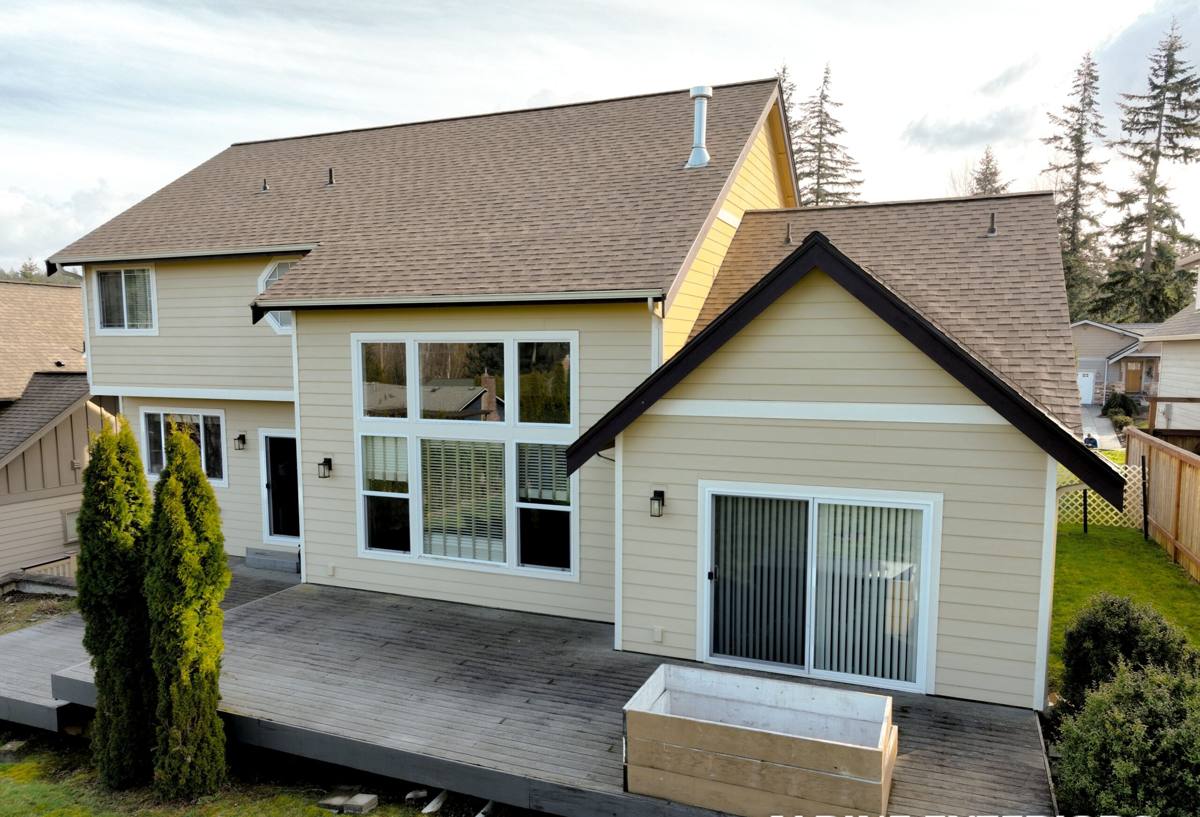
Signs a Kendall Home Is Ready for New Windows
Most homeowners don't replace windows because they woke up one day and decided to. They replace them because a handful of small annoyances finally added up. Worth checking for:
- Fogging or a hazy film between the panes — the seal on the insulated glass unit has failed and can't be repaired, only replaced
- Cold drafts near the frame even with the window fully latched
- Windows that are painted shut, swollen, or hard to open and close with the seasons
- Soft, discolored, or spongy wood at the sill or lower corners of the frame
- Visible daylight or gaps around the frame from outside
- Moss or dark streaking building up on the sill or exterior trim faster than it used to
- Condensation forming on the inside of the glass regularly, especially in winter
Any one of these is usually a fixable problem. Several at once, especially soft wood, is a sign the frame itself is compromised and patch repairs won't hold.
What a Correct Window Installation Actually Involves
A window is only as good as the water management around it. A high-end window installed without proper flashing will leak eventually; a mid-range window installed correctly can outlast it. In a climate that sees this much driving rain and standing dampness, the installation details matter more than the brand name on the glass.
Water has to have somewhere to go
Every opening needs a sloped sill pan so any water that does get past the exterior seal drains back out instead of pooling against the framing. Head flashing and side flashing need to integrate with the home's existing weather-resistant barrier in the right shingle-lap order — flashing installed out of sequence can actually funnel water into the wall instead of away from it.
The gap around the frame isn't just "caulk it and go"
The space between the window and the rough opening needs to be shimmed for a square, plumb fit, then insulated with a low-expansion foam or backer rod system that won't bow the frame — over-filled gaps are a common cause of windows that won't operate smoothly a year later. Sealants on the exterior need to be a product rated for sustained wet exposure, not a general-purpose caulk that hardens and cracks after one wet season.
The interior finish matters too
Interior air sealing, insulation, and trim work affect both energy performance and condensation. A window can be perfectly sealed outside and still fog up on the inside if the interior isn't properly finished and insulated.
Choosing the Right Window for a Kendall Home
There's no single "best" window material — the right choice depends on the home's age, exposure, and how much upkeep you want to take on. Here's how the common options actually compare for this climate:
| Material | Moisture Performance | Maintenance | Typical Lifespan |
|---|---|---|---|
| Vinyl | Won't rot, resists moisture well | Low — occasional cleaning | 20–30+ years |
| Fiberglass | Excellent — very stable in wet/dry cycles, minimal expansion | Low | 30–40+ years |
| Wood-clad | Good if the exterior cladding is intact; interior wood needs to stay dry | Higher — finish and seals need periodic attention | 20–30 years with upkeep |
| Bare wood | Poor in constant wet/shade exposure without diligent maintenance | High — repainting, sealing, rot checks | Variable, shorter without upkeep |
For homes in shaded, moss-prone spots around Kendall, we generally steer people toward vinyl or fiberglass — not because wood windows are a bad product, but because a material that doesn't depend on an intact paint film to stay dry is a lower-maintenance fit for a property that's going to sit under tree cover and damp air for most of the year. If you already have wood-clad windows in good shape, that's a legitimate choice too — it just comes with a maintenance commitment.
Full-Frame Replacement vs. Insert (Pocket) Replacement
There are two general approaches to replacing a window, and which one applies depends on what we find once the old window comes out.
Insert replacement
The new window is built to fit inside the existing frame, which stays in place. This is faster and less invasive, and it works well when the existing frame is square, solid, and free of rot — common on newer or well-maintained homes.
Full-frame replacement
The old frame comes out entirely down to the rough opening, which lets us inspect and repair the framing, flashing, and sheathing underneath before the new window goes in. This is the right call whenever there's any sign of water damage, rot, or a frame that's no longer square — which, given how much rain this area sees, is more common in older homes than people expect. It costs more in labor, but it's the only way to actually fix a moisture problem instead of building a new window on top of one.
We won't know for certain which approach a given window needs until the old unit is out and we can see the framing directly. We'll walk you through what we find before moving forward with either path.
Our Installation Process
- On-site assessment — we look at existing windows, framing condition, sun and wind exposure, and any moisture or rot concerns specific to the home's site
- Measurement and product selection — exact sizing, plus a walkthrough of material and glass options that fit the home and the budget
- Careful removal — old windows come out without damaging surrounding siding or trim any more than necessary
- Framing check and repair — any soft wood, failed flashing, or water-damaged sheathing gets addressed before the new window goes in, not covered up
- Installation — proper shimming, sill pan flashing, weather barrier integration, and insulation around the frame
- Exterior sealing and trim — weather-rated sealants and trim work that ties back into the existing siding cleanly
- Interior finish — trim, insulation, and a final operational check on every window
- Cleanup and walkthrough — job site cleared, and we go over each window with you before we call it done
What Window Replacement Typically Costs
Every home is different, but these are the main factors that move the price up or down:
| Factor | Why It Matters |
|---|---|
| Number and size of windows | More openings and larger glass area increase material and labor cost |
| Insert vs. full-frame | Full-frame replacement takes more labor time due to framing repair and rebuild |
| Frame material and glass package | Fiberglass and upgraded glass (low-E coatings, extra panes) cost more than standard vinyl |
| Condition of existing framing | Rot or water damage discovered during removal adds repair time before the new window can go in |
| Trim and siding integration | Matching or rebuilding exterior trim around the new window adds labor |
| Access and site conditions | Second-story windows, tight clearances, or difficult access add time |
We give a firm, itemized quote after the in-person assessment rather than a phone estimate — with this much variation in what's actually behind the old window, a number given sight-unseen isn't a number you can trust.
Why a Crew That Already Works Kendall Matters
Kendall is unincorporated, so permitting and code questions here run through Whatcom County rather than the City of Ferndale — worth knowing before you assume a process that applies in town also applies out here. It's also a mix of older farmhouses, cabins, and newer builds spread across wooded and open lots, which means exposure to wind, sun, and standing shade varies a lot from one property to the next, even within the same general area.
A crew that's done this work around Kendall before has already seen how these specific conditions play out — where moss builds up fastest, which older homes tend to have flashing that was never done right the first time, and what kind of framing issues show up most often once an old window comes out. That's the kind of judgment that only comes from doing the work locally, not from a general install checklist.
Keeping New Windows Performing for the Long Haul
A correctly installed window still benefits from basic upkeep, especially in a climate this wet:
- Rinse sills and tracks periodically to keep moss and organic debris from holding moisture against the frame
- Check exterior caulk lines once a year and touch up any cracking before wet season sets in
- Keep gutters and downspouts clear so runoff isn't sheeting directly down over window trim
- Trim back vegetation that's shading windows and keeping trim damp longer than it should be
- Operate each window a few times a season so weatherstripping and hardware don't seize up
None of this is high-maintenance — it's the same handful of habits that keep any exterior component in this region performing the way it's supposed to.
If your Kendall home has windows that are drafty, fogged, hard to operate, or original to a much older build, we're happy to take a look and give you a straightforward, no-pressure estimate — just fill out the form below.