 Ferndale
 Storm Damage Roofing in a Community That's Different From the Rest of Whatcom County
Point Roberts sits in an unusual spot. It's part of Whatcom County, but it's a small peninsula cut off from the rest of Washington by an international border — to drive there from Ferndale, you cross into Canada and back into the U.S. That geography shapes almost everything about how storm damage roofing gets handled out there, from how fast a crew can respond to how materials get delivered. It also means the community sees a lot of weather most contractors never think about: wind and rain coming straight off open water, with very little tree cover or terrain to slow it down before it hits a roof.
If you own a home or a getaway property in Point Roberts, storm damage roof repair isn't a once-in-a-blue-moon call. It's a maintenance reality tied to where the house sits relative to the water, how old the roofing is, and how consistently it's been checked after weather events.
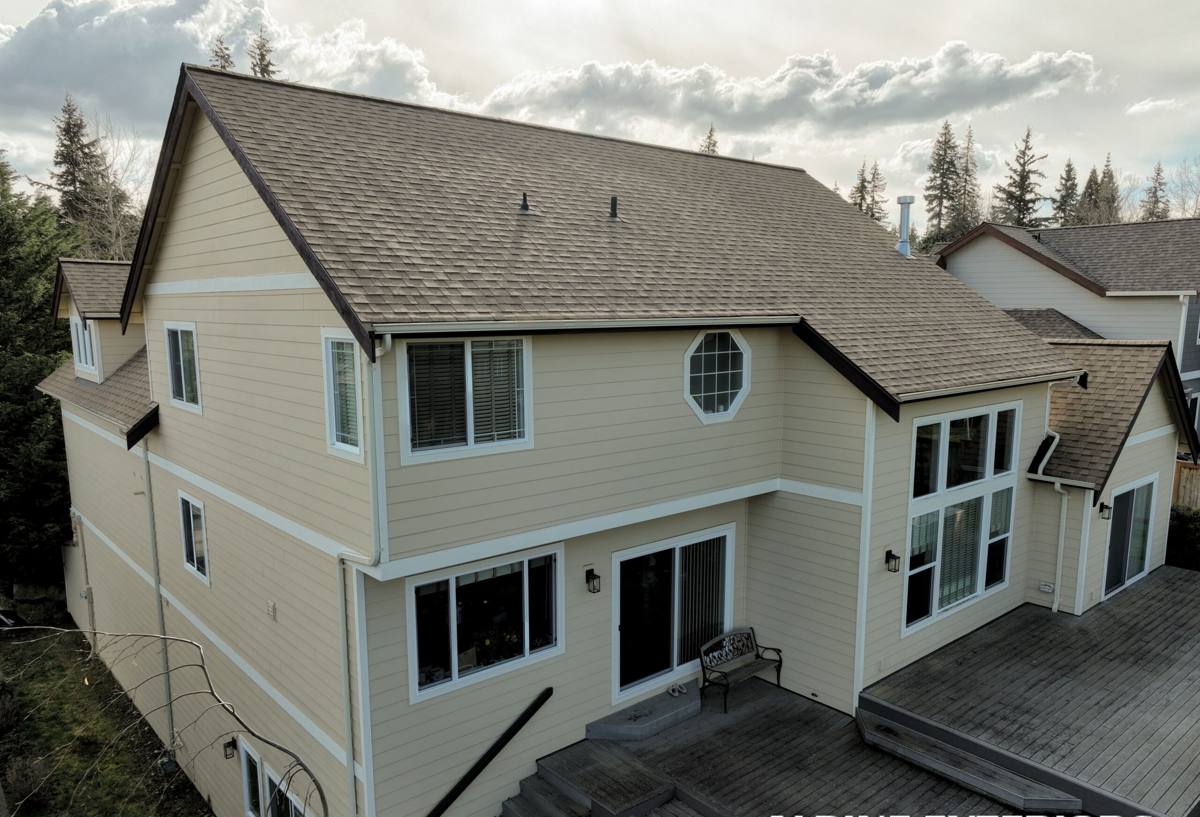
What Point Roberts Weather Actually Does to a Roof
The exposure out there is a combination that's tough on roofing systems specifically:
- Salt air corrosion — metal flashing, fasteners, vent caps, and gutter hardware corrode faster this close to saltwater than they would even a few miles inland.
- Driving rain — wind-driven rain doesn't just fall on a roof, it gets pushed sideways and upward under shingle tabs, around flashing laps, and into any gap that a calm-weather rain would never find.
- Long moss season — Whatcom County's wet stretch runs long, and shaded or north-facing roof sections in Point Roberts can stay damp for weeks at a time, which is exactly what moss and algae need to take hold.
- Open-water wind exposure — with less windbreak than a typical Ferndale neighborhood, gusts hit roof edges, ridge caps, and any already-loose shingle tabs harder and more often.
None of these show up as one dramatic failure. They show up as a slow accumulation of small weak points, until a storm finally finds one and turns it into a leak.
Why Moss Isn't Just Cosmetic
Moss holds moisture against the roofing material. On asphalt shingles, that moisture speeds up granule loss and can lift tabs enough for wind-driven rain to get underneath. On any roof, moss and algae growth in gutters and valleys blocks water flow right when a storm needs those channels working. A roof that looks "just a little mossy" from the ground is often further along than it looks.
What Storm Damage Actually Looks Like
Storm damage isn't always a hole in the roof. Most of what we find after wind and rain events in Point Roberts falls into a few categories:
| Damage Type | What Causes It | Why It Matters |
|---|---|---|
| Lifted or missing shingle tabs | Wind gusts catching an edge or a spot where sealant has already broken down | Opens a path for wind-driven rain even before a full leak shows up inside |
| Flashing separation | Repeated wind flex plus corrosion at fasteners | Flashing is the seal at chimneys, walls, and valleys — once it moves, water has a direct route in |
| Granule loss / bare spots | Wind-driven rain and age combined with moss holding moisture | Reduces the shingle's ability to shed water and UV, accelerating further wear |
| Clogged or damaged gutters | Storm debris plus long-term moss and needle buildup | Backed-up water finds the weakest point on the roof edge, often under the drip edge |
| Soft or stained decking | A slow leak that's been getting in for longer than the homeowner realized | Signals the damage has gone past the roofing surface into the structure underneath |
What a Correct Storm Damage Repair Involves
A proper repair isn't just patching the spot that's visibly leaking. It means tracing the water back to where it actually got in — which is sometimes several feet from where the stain shows up inside — and fixing that entry point correctly, not just covering it.
Our Process
- Roof and attic inspection. We look at the roof surface, flashing points, valleys, and penetrations, and check the attic or ceiling for signs of moisture tracking.
- Documented findings. Photos and a plain-English explanation of what we found and why it happened — useful for your own records and for insurance if you're filing a claim.
- Targeted repair plan. Not every storm-damaged roof needs full replacement. We separate what needs to be fixed now from what can be monitored, and we tell you which is which.
- Correct materials for the exposure. Given the salt air and wind, we pay close attention to fastener and flashing material choices and to sealing details at every penetration — not just the shingles themselves.
- Cleanup of contributing conditions. If moss or gutter blockage played a role, we address that as part of the repair, not as an afterthought, so the same failure doesn't repeat next storm season.
Repair vs. Replacement: How We Make That Call
Homeowners often assume storm damage means a full new roof. Sometimes it does — but often it doesn't. We base the recommendation on a few honest factors:
- Age of the roofing system. A roof already near the end of its expected service life is a different conversation than one that's five years old with one storm-damaged section.
- Extent of the damage. Isolated flashing or shingle damage is usually a straightforward repair. Widespread granule loss, multiple soft decking spots, or repeated leak history in different areas points toward replacement being the more cost-effective long-term choice.
- Underlying decking condition. If water has been getting into the structure for a while, repair has to include addressing that decking — patch-and-shingle over a compromised deck doesn't hold up.
- What's realistic for the exposure. On a site this exposed to wind and salt air, we factor in how a repair will actually perform out there, not just how it looks on installation day.
Why Working With a Crew Familiar With Point Roberts Matters
Point Roberts isn't a quick add-on stop for most Whatcom County contractors. Getting a crew and materials there means crossing the border, which takes planning that a lot of companies simply don't bother with — so storm damage calls out there can sit for weeks waiting on a contractor who's willing to make the trip.
We work Point Roberts regularly enough to know what that logistics reality means in practice: scheduling with border crossing built in, having the right materials loaded before we head out rather than discovering a gap mid-job, and understanding which roofing details need extra attention because of the specific wind and salt exposure out there versus a typical Ferndale lot. That familiarity is the difference between a repair that's rushed to beat a border-crossing timeline and one that's done right the first time.
What to Do Right After a Storm
If you've just been through a wind or rain event and you're worried about your roof, a few things help before a contractor ever arrives:
- Check ceilings and attic spaces for new staining, dampness, or a musty smell — these show up before an active drip does.
- Look at the roofline from the ground for obviously lifted, missing, or displaced shingles or flashing — don't get on the roof yourself.
- Note the date and general conditions of the storm for your records, especially if you may file an insurance claim.
- Avoid temporary fixes like caulking or tarping unless you're doing it safely — a poorly placed tarp can trap moisture and make the underlying problem worse.
- Call for an inspection sooner rather than later — a small entry point left through another storm cycle tends to turn into a decking or interior repair.
Maintenance That Prevents the Next Storm Call
Given how long the moss season runs and how much salt air and wind this stretch of the county sees, the roofs that hold up best out here are the ones that get looked at between storms, not just after them. Clearing moss and debris before it holds moisture against the shingles, keeping gutters clear so storm water actually drains, and catching a lifted tab or worn flashing seal before a big wind event finds it — that routine attention is what keeps a storm damage repair small instead of turning it into a full roof replacement.
If your Point Roberts home has taken storm damage, or you just want a straight assessment of where your roof stands before the next system rolls through, we're glad to come take a look. Fill out the form below for a free, no-pressure estimate — we'll tell you honestly what needs attention now and what can wait.