 Ferndale
 Why Sandy Point's Location Changes What a Window Job Needs
Sandy Point sits right up against the water, and that exposure changes the math on windows compared to a house a few miles inland in Ferndale. Wind off the Strait carries salt spray onto siding, trim, and glazing. Storms come in sideways more often than straight down, which means water gets tested against seals and flashing in ways a sheltered lot never sees. And like most of Whatcom County, the wet season here is long enough that moss and algae get a real foothold on anything that stays damp and shaded for weeks at a time.
None of that makes window replacement harder to do correctly. It just means the margin for cutting corners is smaller. A window that's "good enough" in a dry, protected spot can start failing years early in a waterfront exposure like Sandy Point if the frame material, glass package, or installation detailing wasn't chosen with that exposure in mind.
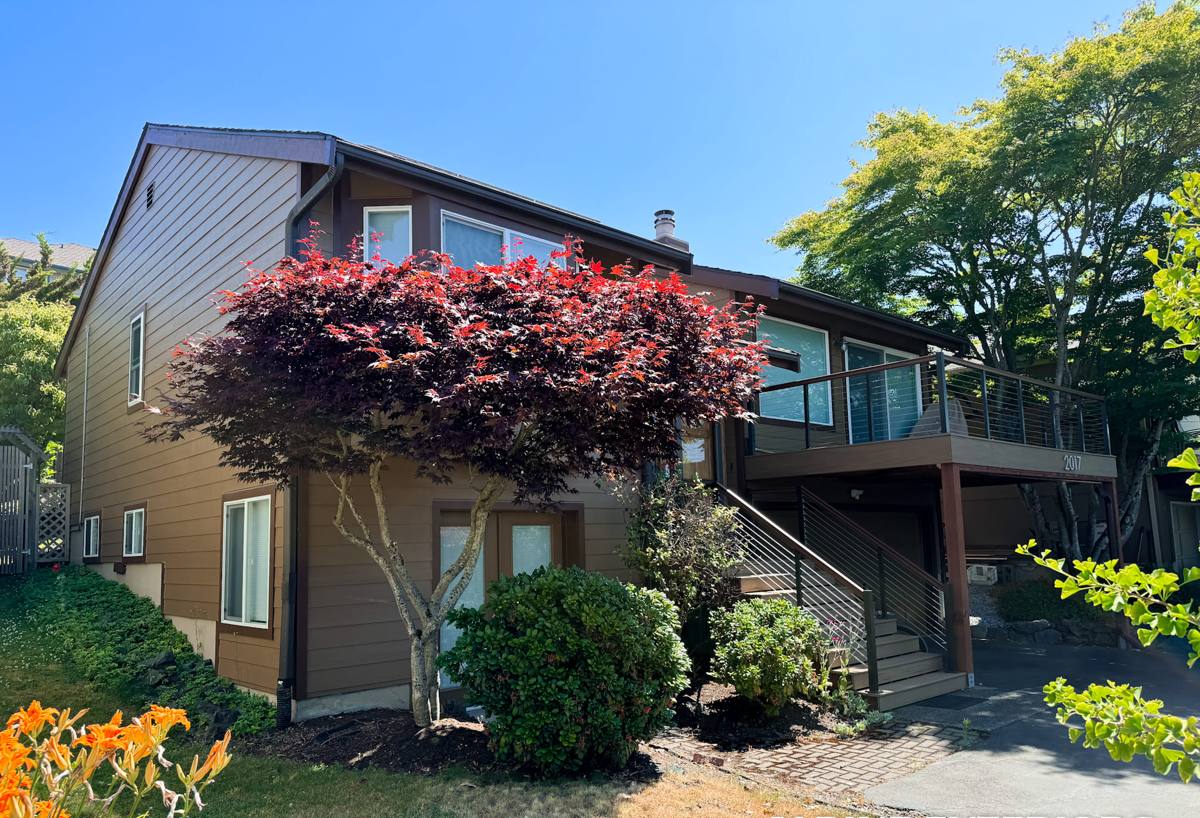
What Salt Air, Driving Rain, and Moss Season Actually Do to a Window
Salt air
Airborne salt is corrosive to exposed metal hardware — hinges, locks, cranks, and screws — and it accelerates the breakdown of some coatings and sealants over time. It doesn't damage every material equally, which is part of why frame choice matters more here than it does a few miles inland.
Wind-driven rain
Rain that's being pushed sideways by wind behaves differently than rain falling straight down. It gets forced up under trim, into gaps around the frame, and against seals that were never designed to handle water pressure from that angle. This is a flashing and installation issue as much as it is a product issue — even a top-tier window will leak if it's not flashed to shed wind-driven water.
Moss season
Extended damp, shaded conditions let moss and algae take hold on horizontal surfaces, sills, and anywhere water sits instead of draining. Beyond the cosmetic issue, trapped moisture under organic growth keeps wood trim and sealant joints wet longer, which shortens their service life.
What "Energy-Efficient" Should Mean for a Home Like Yours
"Energy-efficient" gets used loosely in this industry, so it's worth being specific. For a Sandy Point home, efficiency comes from three things working together, not any single feature:
- Glass performance — how well the glazing resists heat loss and manages solar heat gain.
- Frame performance — how well the frame material itself insulates and resists air infiltration at the sash and frame joints.
- Installation quality — how well the window is sealed, flashed, and insulated into the rough opening. A high-performance window installed with gaps or poor flashing will underperform a mid-grade window installed correctly.
In a marine climate, air sealing matters as much as glass rating. Wind pressure against the building envelope pushes air through any gap that's there, and that same pressure is what drives water intrusion during a storm. Efficiency and weather resistance are solved by the same detailing, which is one reason we treat them as one job rather than two.
Two ratings worth understanding
| Rating | What it measures | Why it matters here |
|---|---|---|
| U-factor | How well the window resists heat loss (lower is better) | Keeps heating costs down through Whatcom County's long, damp winters |
| SHGC (Solar Heat Gain Coefficient) | How much solar heat passes through the glass (lower blocks more heat) | Less critical here than in sunnier climates, but still affects comfort on west-facing, water-facing walls |
Frame Material Trade-Offs in a Salt-Air Exposure
There's no single "correct" frame material for every home — it depends on your budget, the window's sun and wind exposure, and how much upkeep you want to take on. Here's how the common options actually compare in a coastal exposure like Sandy Point, based on what we see in the field rather than manufacturer marketing:
| Frame material | Salt-air behavior | Maintenance | Trade-offs |
|---|---|---|---|
| Vinyl | Doesn't corrode; performs well in most coastal settings | Low — occasional rinse to clear salt film | Quality varies widely by manufacturer; heavier gauge holds up better long-term |
| Fiberglass | Very stable dimensionally; handles temperature swings and moisture well | Low | Higher upfront cost than vinyl |
| Aluminum | Conducts heat and cold, and is more prone to corrosion pitting near salt water over time | Moderate — hardware needs periodic attention | Best reserved for specific architectural applications rather than whole-house replacement here |
| Wood-clad | Cladding protects the wood, but any breach in the cladding exposes wood to moisture | Higher — seams and joints need monitoring | Appearance appeal has to be weighed against added moisture risk this close to the water |
We're not going to tell you a given brand or material is "bad" — every option above has legitimate uses. What we will do is walk through your specific exposure (how much direct wind and spray a given wall actually gets) and give you an honest read on which material makes sense for that wall, rather than selling the same frame for every elevation of the house.
What a Correct Installation Actually Involves
The window itself is maybe half of what determines how it performs. The other half is installation detailing — and this is where wind-driven rain finds every shortcut. A correct job includes:
- Removing old windows without damaging the surrounding framing, and inspecting that framing for hidden water damage or rot before anything new goes in
- Installing water-resistive barrier and flashing in the correct shingled order so water is directed out, not trapped behind the new window
- Sealing the interior air barrier separately from the exterior water barrier — these are two different jobs, and conflating them is a common source of failure
- Insulating the gap between the window frame and rough opening properly, without over-packing it in a way that bows the frame
- Finishing exterior trim and sealant joints so water sheds away from the window rather than pooling against it
- Confirming the window operates smoothly and locks fully — a window that doesn't close tight isn't sealing tight either
Any one of these steps done poorly can undo the performance rating printed on the window's label. That's true anywhere, but a missed flashing detail shows up faster in a wind-driven rain event than it does in a calmer inland location.
How We Approach a Sandy Point Window Project
- On-site assessment. We look at each window's actual exposure — which walls take direct wind and spray, which sills already show wear, and what the current flashing and trim condition tells us about moisture history.
- Straightforward proposal. You get a clear breakdown of frame material, glass package, and scope for each opening, with honest reasoning for any recommendations — not a one-size pitch.
- Careful removal and inspection. Old windows come out cleanly, and we flag any hidden framing damage before it's covered up again.
- Installation to a consistent standard. Flashing, air sealing, insulation, and trim are done the same careful way on every opening, not just the ones that are easy to reach.
- Walkthrough and cleanup. We check operation on every window with you and leave the site clean.
Why Local, Coastal-Specific Experience Matters
A crew that mostly works drier, more sheltered neighborhoods can still do competent work — but they may not default to the flashing sequence, sealant choice, or frame material that holds up best against sustained salt exposure and sideways rain. Working regularly in Sandy Point and similar shoreline areas around Ferndale means we've seen which details actually matter here: where moisture tends to find its way in, which materials age well against salt air, and which ones need more attention than their spec sheet suggests. That's knowledge you build by doing the work in this specific environment, not by reading a manufacturer's brochure.
Protecting Your Investment After Installation
Good windows and a correct installation get you most of the way there. A little seasonal attention protects the rest:
- Rinse salt film off frames and glass periodically, especially on walls with direct water exposure
- Clear debris and moss from sills and tracks before it holds moisture against the frame
- Check exterior caulk lines once a year for cracking or separation and have gaps resealed promptly
- Operate each window through its full range a few times a year so hardware doesn't seize up from disuse
- Watch for condensation between panes, which signals a failed seal rather than something you can fix from the outside
Getting Started
If your windows in Sandy Point are showing their age — drafts, fogging between panes, sticky operation, or visible wear from salt and weather — it's worth having someone look at the whole picture before you decide what to replace and with what. We're happy to walk the exterior with you, point out what we see, and put together a clear, no-pressure estimate using the form below.