 Ferndale
 Blaine's Coastline Is Tough on Roofs — Here's Why
Homes in Blaine sit right up against the marine air coming off the Strait of Georgia and Drayton Harbor, and that proximity to salt water changes what a roof has to deal with compared to homes even a few miles inland. Salt-laden air accelerates corrosion on exposed metal fasteners, flashing, and vents. Combine that with Whatcom County's long, wet fall-through-spring stretch of driving rain, and you have a climate that tests every seam, lap, and penetration on a roof system year after year.
Then there's moss. Blaine gets enough shade, moisture, and moderate temperatures for moss and algae to take hold on north-facing slopes and anywhere debris collects, sometimes within a couple years of a new roof going down if the roof wasn't detailed with that in mind. Moss isn't just cosmetic — it holds moisture against the roofing material, works into shingle laps, and can lift edges enough for wind-driven rain to get underneath.
A roof replacement done right in Blaine has to account for all three of these pressures at once: corrosion resistance, water-shedding detail work, and moss resistance. Get any one of them wrong and you're looking at a roof that underperforms its warranty, sometimes by a decade or more.
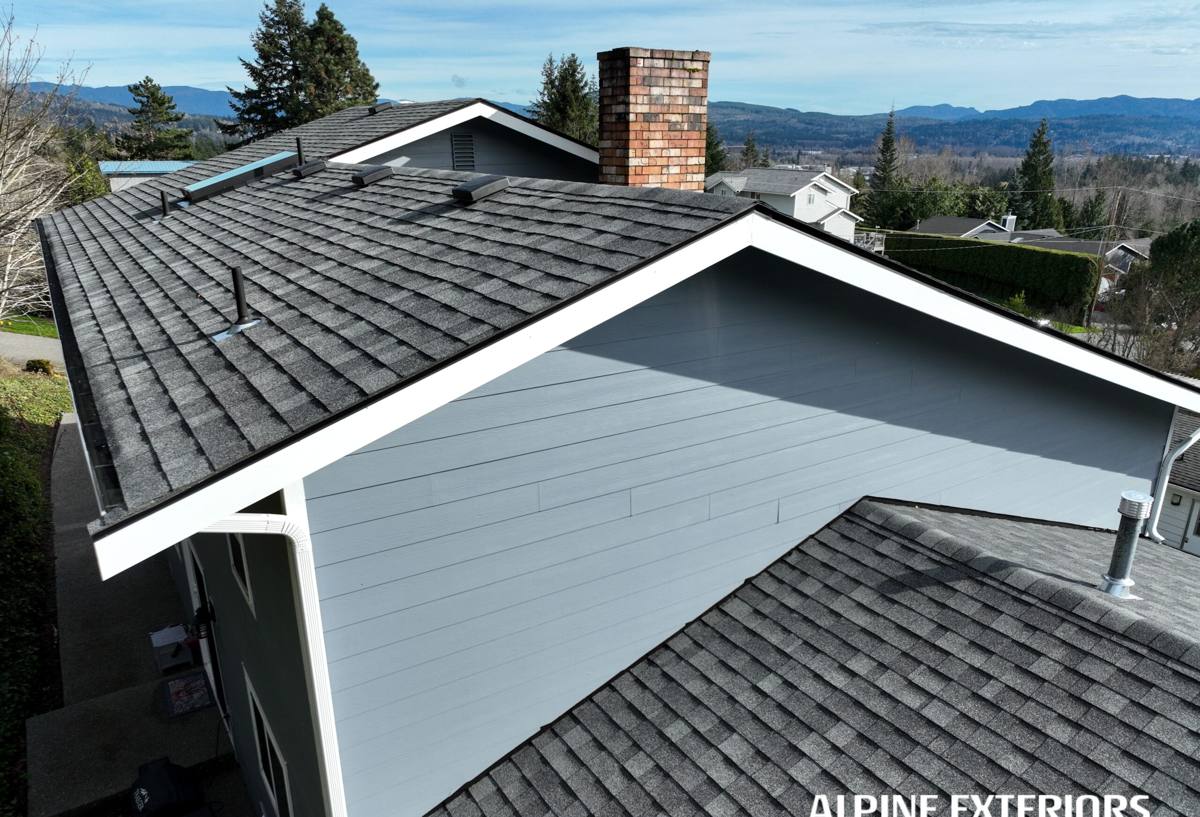
Signs a Blaine Home Actually Needs a Roof Replacement
Not every roof problem calls for a full tear-off. Part of doing this job honestly is telling a homeowner when a repair will genuinely hold and when it's just delaying a bigger, more expensive fix. These are the signs that usually point to replacement rather than patching:
- Granule loss heavy enough that you can see bare asphalt mat on multiple shingles, not just a few worn spots
- Shingles that are cupping, curling, or cracking across large sections rather than one isolated area
- Soft or spongy decking felt underfoot in the attic, especially near valleys or eaves — a sign water has already gotten past the roofing layer
- Moss growth that's established itself under the shingle edges, not just sitting on the surface
- Flashing around chimneys, skylights, or roof-wall intersections that's rusted, separated, or was never properly step-flashed to begin with
- A roof approaching or past 20-25 years old for asphalt composition, or showing its age well ahead of that timeline due to coastal exposure
- Daylight visible through the roof deck from inside the attic
If a roof is showing two or more of these at once, replacement is almost always the more cost-effective path — repeated repairs on a roof near the end of its service life tend to cost more over two or three years than one properly done replacement.
What a Correct Roof Replacement Actually Involves
It Starts Below the Shingles, Not At Them
The shingles or panels get the attention, but the layers underneath them do most of the work protecting a Blaine home from wind-driven rain. A correct replacement includes a full tear-off to bare decking (never a roof-over), inspection and replacement of any damaged or delaminated sheathing, and an underlayment system matched to the exposure. In a driving-rain climate like this one, we pay particular attention to self-adhered ice-and-water membrane at eaves, valleys, and around every roof penetration — not just the code minimum, but everywhere wind-driven rain realistically has a chance to work its way sideways or upward under the surface layer.
Ventilation Matters as Much as the Roof Covering
A roof deck that can't breathe traps moisture, which speeds up rot and gives moss and mold an easier foothold from underneath. Balanced intake at the eaves and exhaust at the ridge keeps attic humidity and temperature in check, which extends the life of both the decking and the roofing material above it. On older Blaine homes we often find ventilation that was undersized or blocked by insulation, and correcting that is part of doing the job right, not an upsell.
Flashing Is Where Most Roof Failures Actually Start
Chimneys, skylights, dormers, and roof-to-wall transitions are where the majority of real-world roof leaks originate — almost never in the open field of shingles. Step flashing, counter-flashing, and properly lapped kick-out flashing at wall intersections need to be installed correctly and, in a salt-air environment, made from a material that won't corrode faster than the roof around it.
Choosing a Roofing Material for Blaine's Conditions
There's no single "best" roofing material for every home — it depends on budget, roof pitch, architectural style, and how much long-term maintenance a homeowner wants to take on. Here's how the common options stack up specifically against salt air, rain, and moss:
| Material | Salt Air / Corrosion | Moss Resistance | Typical Lifespan | Maintenance |
|---|---|---|---|---|
| Architectural asphalt shingle | Good — minimal exposed metal if detailed well | Moderate; algae-resistant granules help | 25-30 years | Periodic moss/debris removal |
| Standing seam metal | Excellent with proper coating/finish | Very good — hard for moss to grip | 40-50+ years | Low |
| Cedar shake | Fair — needs treatment, holds moisture | Poor without regular treatment | 20-30 years with upkeep | High |
| Composite/synthetic shake | Good | Good | 40-50 years | Low to moderate |
For most Blaine homes, we steer people toward a high-quality architectural asphalt shingle with algae-resistant granules for a balanced budget-to-performance choice, or standing seam metal when the homeowner wants to minimize long-term maintenance and can accommodate the higher upfront cost. Cedar shake can look great and has a long history in this region, but we're upfront that it demands a real maintenance commitment in a climate this wet — that's a trade-off we lay out honestly rather than talk anyone out of if it's the look they want.
Our Roof Replacement Process
- On-site inspection and estimate. We walk the roof (weather permitting) or inspect closely from a ladder and the attic, check decking condition, ventilation, and flashing points, and give a written estimate with no pressure to sign on the spot.
- Material selection. We go over the options in the table above against your budget, roof pitch, and how the home is exposed to wind and rain off the water.
- Scheduling around Whatcom County weather. Roof tear-offs need a dry window. We plan the job to minimize the time your decking is exposed and keep the home dry-in with felt or membrane at the end of each work day if a job spans more than one.
- Tear-off and deck inspection. Old roofing comes off down to the deck, and any soft or damaged sheathing gets replaced before anything new goes down — never covered over.
- Underlayment, flashing, and ventilation installed. This is the layer that actually keeps a Blaine home dry through the rainy months, and we don't rush it.
- Roofing material installed to manufacturer spec. Correct nailing patterns, exposure, and starter courses matter for both performance and warranty validity.
- Final walkthrough and cleanup. We walk the job with you, and a magnetic sweep of the property picks up stray fasteners before we leave.
What Drives the Cost of a Roof Replacement in Blaine
| Factor | Why It Matters Here |
|---|---|
| Roof size and number of planes | More material and more seams/flashing points to detail correctly |
| Roof pitch and access | Steeper roofs and difficult access near water or bluffs take longer and require more safety setup |
| Decking condition | Rot from long-term moisture intrusion means replacement sheathing, which isn't always visible until tear-off |
| Material choice | Asphalt, metal, and shake carry different material and labor costs, as shown above |
| Flashing and penetration count | Chimneys, skylights, and multiple roof-wall intersections each add labor time |
| Ventilation upgrades | Correcting undersized or blocked intake/exhaust adds cost but pays back in roof lifespan |
We don't publish a flat per-square price because these factors genuinely swing the number from job to job, and quoting a number before seeing the roof would mean guessing. What we can say honestly: the biggest cost surprises on Blaine roofs almost always come from decking damage found at tear-off, which is exactly why we build a contingency conversation into every estimate up front instead of springing it on you mid-job.
Why It Matters That We Already Work in Blaine
A roofing crew that regularly works Blaine and the rest of Whatcom County isn't guessing at how to detail a roof for this environment — we've seen which flashing details hold up against driving rain off the water and which ones fail early, and we've seen how fast moss can take hold on a shaded north slope near the coast. That local track record shapes real decisions: fastener and flashing material selection, underlayment placement, and how we sequence a tear-off around this region's rain patterns rather than a generic install schedule.
Local presence also matters after the job is done. If a question comes up during the first heavy rain of the season, you're not calling a crew that has to drive in from out of the area or that won't be back this way again soon.
Keeping a New Roof Performing in Blaine's Climate
A correctly installed roof still benefits from basic upkeep in this environment. A simple annual routine goes a long way:
- Clear leaves, needles, and debris from valleys and gutters before the fall rains set in
- Have moss growth treated or removed early, before it works under shingle edges
- Trim back overhanging branches that keep roof sections shaded and damp
- Check attic ventilation isn't blocked by insulation or stored items
- Have flashing points inspected every few years, especially around chimneys and skylights
None of this requires a homeowner to get on the roof themselves — most of it can be part of a periodic exterior check-up.
Get a Free, No-Pressure Estimate
If your Blaine home's roof is showing its age, or you just want an honest read on how much life is left in it, we're happy to take a look and walk you through the options with no obligation. Use the form below to request a free estimate.