 Ferndale
 Storm Damage Roof Repair for Marietta Homes
Marietta sits close to the water on the edge of Ferndale, and that location shapes what happens to roofs here. Homes in this part of Whatcom County take a different kind of beating than roofs ten miles inland — more wind exposure, more salt in the air, and a wet season that seems to stretch longer every year. When a storm rolls through and knocks something loose on your roof, the fix needs to account for all of that, not just patch what's visible from the ground.
This page covers what storm damage roof repair actually looks like for a Marietta property: what the local climate does to roofing materials over time, what a thorough repair involves, and how our process works when you call us after a storm.
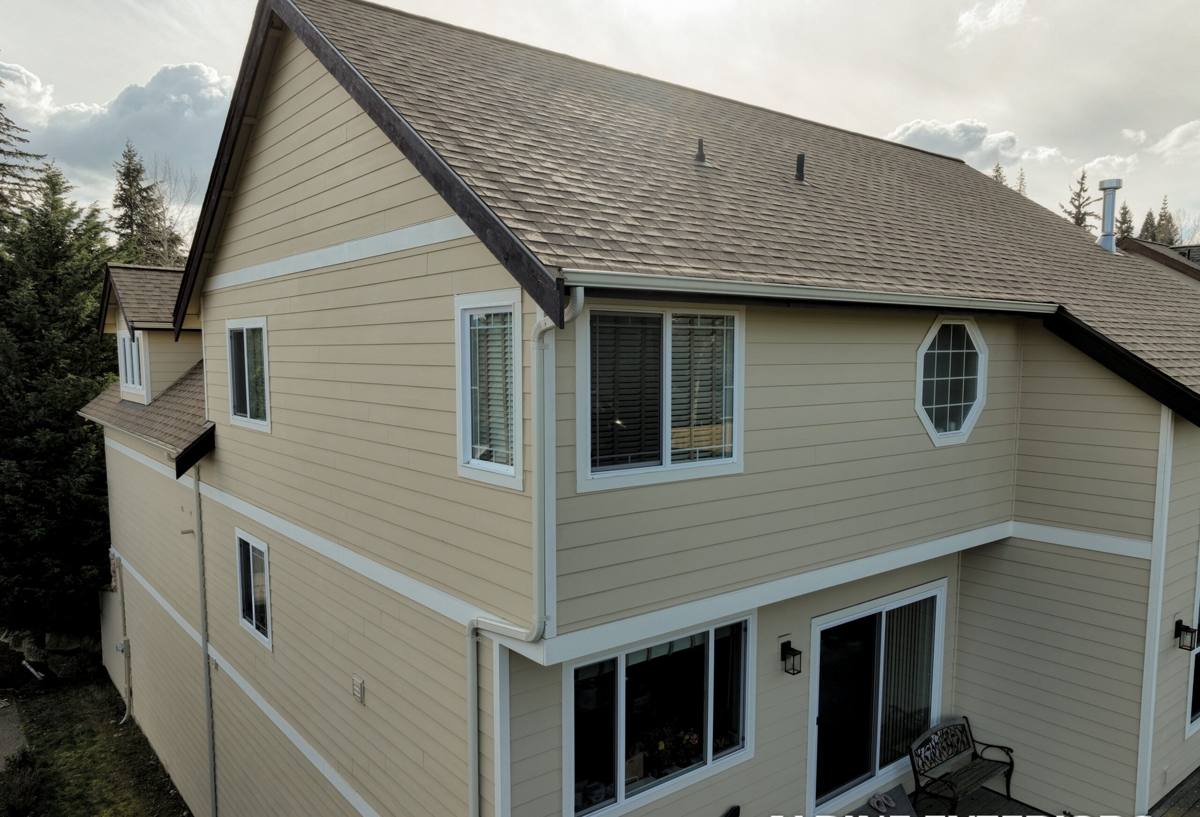
What Whatcom County Weather Does to a Marietta Roof
Salt Air and Wind Off the Water
Being close to Bellingham Bay means Marietta roofs deal with salt-laden air more than homes further into Ferndale proper. Salt air accelerates corrosion on exposed metal — flashing, fasteners, gutter hardware, and roof vents all age faster here than they would in a drier, inland location. Add in wind gusts that come straight off the water during winter storms, and you've got a combination that works loose shingles, lifts ridge caps, and stresses seams that would otherwise hold up fine for decades.
A Long Moss Season
Whatcom County's wet, mild climate gives moss a long growing window — realistically most of the year outside of a dry stretch in summer. Moss isn't just cosmetic. It holds moisture against the roof surface, works its way under shingle edges, and lifts tabs just enough for wind-driven rain to get underneath during the next storm. A roof with untreated moss growth is more vulnerable to storm damage than a clean one, because the moss has already done some of the damage before the wind even shows up.
Driving Rain
Storms in this area rarely come straight down. Wind-driven rain hits roofs at an angle, which means it finds every weak point — a lifted shingle tab, a gap in flashing, a nail that's backed out over time — and pushes water in rather than letting it run off. This is why storm damage often shows up as an interior leak days after the actual weather event, once enough water has worked its way through.
Common Storm Damage We See on Marietta Roofs
- Lifted or torn shingles — wind gets under an edge and peels it back or tears it off entirely
- Missing ridge cap sections — the highest, most wind-exposed part of the roof is often the first to go
- Granule loss — heavy, wind-driven rain and hail-like debris can strip the protective granule layer off asphalt shingles
- Damaged flashing — around chimneys, vents, and roof-to-wall transitions, where salt-air corrosion has already weakened the metal
- Limb and debris impact — trees near the property dropping branches during high wind
- Clogged or torn-loose gutters — heavy rain volume combined with wind can pull gutters away from the fascia
Some of this is obvious from the ground. A lot of it isn't — which is the reason a proper storm inspection matters more than a quick visual check from the driveway.
What a Correct Storm Damage Repair Actually Involves
An Inspection That Goes Beyond the Obvious Damage
A storm repair done right starts with a full roof inspection, not just a fix for the spot you can see is missing shingles. We check the surrounding shingles for wind stress even if they haven't blown off yet, look at flashing and seals around every penetration, and check the attic side for any sign that water has already gotten in. Skipping this step is how a homeowner ends up calling back six weeks later about a leak in a different spot — because the storm actually damaged more than one area, and only one got fixed.
Matching Materials the Right Way
Repairs need to match the existing roof — not just in color, but in shingle type, weight, and installation method. Mismatched or incompatible materials can void manufacturer warranties on the rest of the roof, and they often perform differently in wind, which defeats the purpose of a storm repair. If your roof is old enough that exact matches aren't available, we'll tell you honestly what your options are rather than installing something that won't hold up the same way.
Fastening and Flashing Done to Spec
A lot of storm damage repeats itself because the original installation was under-fastened or the flashing wasn't sealed correctly the first time. We install to the shingle manufacturer's nailing pattern and use flashing details suited to a wind-and-salt environment, not just whatever was quickest. It's a small difference in labor and a real difference in whether the same spot fails again in the next storm.
Repair or Replace? Honest Factors to Weigh
Not every storm-damaged roof needs a full replacement, and not every repair is worth doing if the roof is already near the end of its life. Here's how we think through it:
| Factor | Leans Toward Repair | Leans Toward Replacement |
|---|---|---|
| Roof age | Under 12-15 years | Approaching or past manufacturer lifespan |
| Extent of damage | Isolated area, single slope | Multiple areas across the roof |
| Underlying condition | Decking and underlayment sound | Soft decking, widespread moss/moisture damage |
| Material availability | Close match available | Discontinued or badly weathered shingle line |
| Insurance scope | Adjuster approves targeted repair | Adjuster approves full slope or roof replacement |
We'll walk you through where your roof actually falls on this list rather than defaulting to the more expensive answer. If a repair is the honest recommendation, that's what we'll propose.
Our Storm Repair Process
- Call or request an estimate — tell us what happened and what you're seeing (missing shingles, a leak, debris on the roof)
- On-site inspection — we walk the roof and check the attic where accessible, documenting what we find
- Straight explanation — we tell you what's damaged, what caused it, and what the repair involves, in plain terms
- Written estimate — scope and cost before any work starts, no surprises added later
- Repair and cleanup — work completed to manufacturer spec, debris and old material hauled off
- Final walkthrough — we show you the completed repair before we consider the job done
Working With Insurance on Storm Claims
Many storm repairs in this area get filed as insurance claims, and we're used to working alongside that process. We can document damage clearly for a claim, meet an adjuster on site if needed, and give you a written scope that matches what actually needs to be done. We won't inflate a scope to chase a bigger payout, and we won't downplay damage to make a job look smaller than it is — our job is an accurate assessment, whatever the number turns out to be.
After the Storm: A Quick Homeowner Checklist
- Check gutters and the ground around your home for shingle granules or shingle pieces
- Look for any daylight or staining in the attic after heavy wind-driven rain
- Note any new ceiling stains, even small ones — they often mean water is already getting in
- Avoid getting on the roof yourself after a storm — wet, windblown roofs are not safe to inspect on your own
- Take photos from the ground of anything visibly missing or displaced, dated to the storm event
- Call a local roofer before a large hail or wind event brings door-knocking crews from out of the area
Why a Crew That Already Works in Marietta Matters
Storm response is different when a crew already knows the area. We know what Marietta roofs are up against because we've worked on them before — the salt-air corrosion pattern on flashing, the moss buildup that's common on north-facing slopes near the water, the wind exposure that's worse here than a few miles inland. That's not something an out-of-town storm-chasing crew picks up on in a single visit. Being local also means we're reachable after the job is done, not just after the storm makes the local news.
Ferndale and the surrounding Whatcom County communities deal with this same weather pattern every year. Repairing storm damage correctly the first time — with the right materials, proper fastening, and an inspection that catches what the storm actually did rather than just what's visible — is what keeps you off the roof-repair list again next season.
If you've got storm damage on a Marietta roof, or you just want an honest opinion on what a recent storm did to your roof, we're glad to come take a look. Request a free, no-pressure estimate using the form below, and we'll give you a straight answer on what your roof needs.