 Ferndale
 Why Marietta Roofs Age Differently Than Roofs Inland
Marietta sits low, close to the water, right in the path of weather that rolls off Bellingham Bay and up the Nooksack River corridor. That location is part of what makes it a nice place to live, and it's also exactly why roofs here wear on a different timeline than roofs ten or fifteen miles inland in Whatcom County. Salt-laden air corrodes exposed metal faster. Driving rain, pushed sideways by wind off the water, finds gaps that would stay dry in a calmer neighborhood. And the long, damp moss season here — often eight or nine months of the year with the right combination of shade and moisture — puts a slow, grinding load on shingles, fasteners, and flashing that a lot of manufacturers' warranties simply weren't written for.
None of that means Marietta homes need exotic roofing. It means the details matter more here than they do in a drier, more sheltered part of the county. A roof replacement done right in this area accounts for salt exposure on metal components, wind-driven rain at every penetration, and a moss and moisture load that never fully lets up.
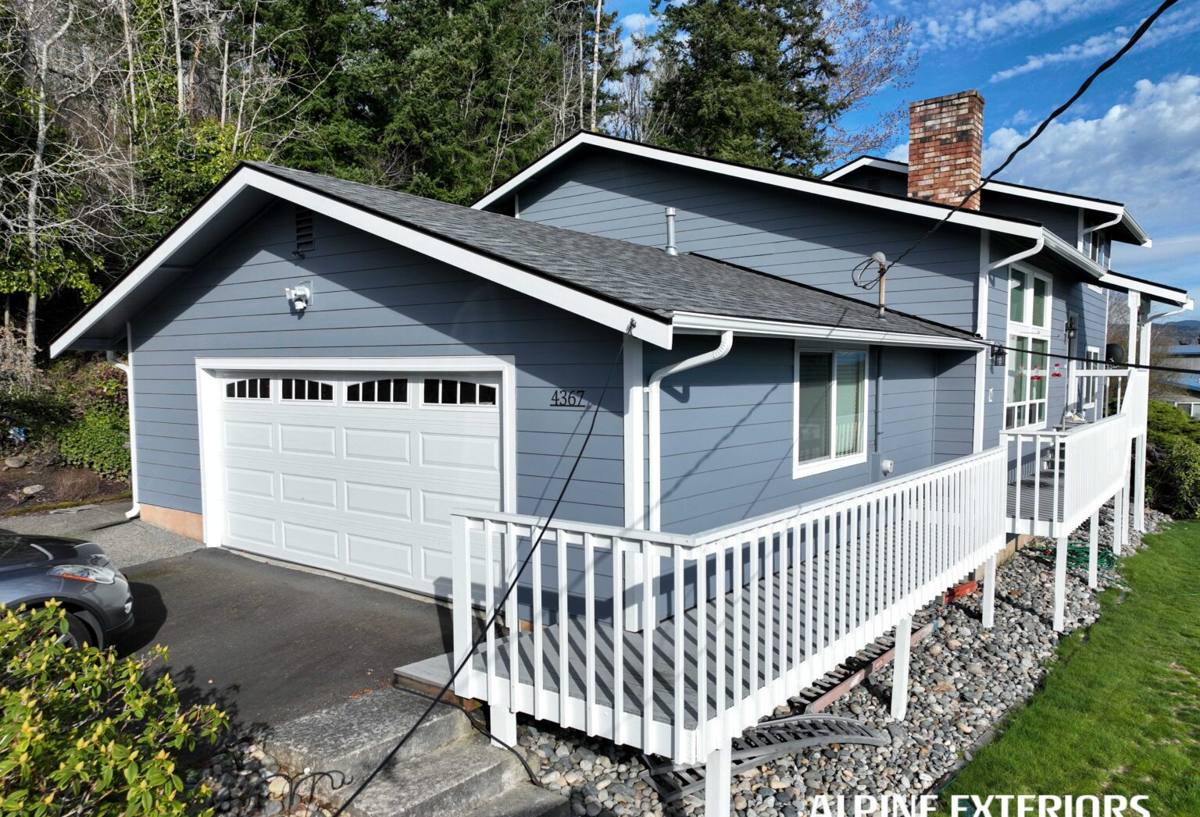
Signs a Marietta Roof Needs Replacement, Not Just Repair
Not every roof problem here calls for a full tear-off. But there's a point where patching becomes throwing good money after bad, and it's worth knowing where that line is before you spend on repairs that won't hold.
- Granule loss heavy enough that you're finding grit in the gutters every time it rains, not just occasionally
- Shingles that are cupping, curling, or cracking across large sections rather than one isolated spot
- Moss that keeps returning within a season or two of cleaning, even after treatment — a sign the roof surface is holding moisture longer than it should
- Flashing around chimneys, vents, or valleys that's rusted, lifted, or was never properly step-flashed in the first place
- Soft or spongy spots on the decking when walked, or daylight visible through the attic roof boards
- Multiple leak repairs in different spots over the last couple of years instead of one recurring issue
- A roof approaching or past 20-25 years for asphalt composition, especially one that's taken the full brunt of salt air the whole time
If you're only seeing one or two of these, a repair may genuinely be the right call, and we'll say so. Replacement gets recommended when the underlying materials — decking, underlayment, flashing system — are failing together, not just the top layer.
What a Correct Roof Replacement Involves in This Climate
Full Tear-Off and Deck Inspection
We don't install new roofing over old. A tear-off is the only way to actually see the decking, find soft spots or rot before they become a bigger problem, and give the new system a clean, solid base. In a moisture-heavy area like Marietta, decking that's been sitting under a failing roof for even a year or two can have hidden damage that a surface inspection won't catch.
Ice and Water Shield at Vulnerable Points
Valleys, eaves, and any low-slope transitions get self-adhering waterproof membrane, not just felt. This is the layer that protects against wind-driven rain that gets pushed uphill under shingles during a real coastal storm — a scenario that's more common here than in sheltered inland areas.
Proper Flashing, Not Just Caulk
Chimneys, skylights, and wall-to-roof transitions need step flashing and counter-flashing installed correctly, not sealant used as a substitute for it. Caulk fails; metal properly lapped and integrated with the underlayment doesn't rely on failing.
Ventilation That Matches the Moisture Load
Balanced intake and exhaust ventilation keeps the attic from trapping the moisture that this climate throws at a house constantly. Poor ventilation is one of the most common causes of premature roof failure we see, and it's invisible from the ground — it only shows up as a shortened roof lifespan a few years later.
Fastener and Metal Selection for Salt Exposure
Standard fasteners can start showing corrosion faster in salt air than they would further from the water. We select fastener and flashing materials with that exposure in mind rather than defaulting to whatever's cheapest, because replacing corroded fasteners under a roof that's otherwise fine is an avoidable headache.
Choosing a Roofing Material for Marietta's Conditions
There's no single "best" roofing material — there's a best fit for your home, your budget, and how much maintenance you want to take on. Here's how the common options actually perform in a salt-air, high-moss climate, described honestly rather than as a sales pitch.
| Material | Moss & Moisture Behavior | Salt Air Considerations | Typical Lifespan Here |
|---|---|---|---|
| Asphalt composition shingle | Prone to moss growth without periodic cleaning; algae-resistant granules help but don't eliminate the need for maintenance | Minimal metal exposure issue; low overall risk | 18-25 years, on the shorter end of manufacturer ratings due to climate load |
| Standing seam metal | Sheds moisture fast, resists moss better than shingles due to smooth surface and low water retention | Requires marine-grade or coated finishes near the water; lesser coatings corrode faster | 40-60+ years with correct coating and fastener choice |
| Cedar shake/shingle | Highest moss and moisture sensitivity; needs regular treatment and airflow underneath to avoid rot | Not a salt-air-specific concern, but the maintenance burden compounds with our wet season | 15-25 years, heavily dependent on upkeep |
| Synthetic composite (poly/rubber blend) | Good moisture resistance, moss resistance varies by product line | Minimal metal exposure; low risk | 30-50 years depending on product |
For most Marietta homes, a quality asphalt composition shingle with proper ventilation and moss-resistant granules remains the most practical balance of cost and performance. Metal roofing is a strong option for owners planning to stay long-term and wanting to minimize future maintenance, provided the coating and fasteners are specified for coastal exposure. We'll walk through the real tradeoffs for your specific roof rather than steering you toward one product across the board.
What Roof Replacement Costs Depend On
We don't publish fixed prices because every roof is different, but these are the factors that actually move the number, in rough order of impact:
| Factor | Why It Matters |
|---|---|
| Roof size and number of facets | More square footage and more valleys/hips mean more material and labor hours |
| Decking condition | Rotted or soft decking found during tear-off requires replacement, which adds material and time not visible before demo |
| Pitch and access | Steep roofs or roofs with limited ground access around the home take longer and require more safety setup |
| Material choice | Standing seam metal and composite products cost more upfront than asphalt but reduce long-term maintenance |
| Flashing and penetration count | Chimneys, skylights, and multiple vents each require careful detail work that adds labor |
| Ventilation upgrades | Adding or correcting intake/exhaust venting during the tear-off is far cheaper than doing it later |
The only way to get an accurate number is a real inspection — we'll give you a written estimate that breaks these factors down rather than a single vague total.
Our Process, Start to Finish
- Inspection and honest assessment. We walk the roof (or use appropriate access equipment) and tell you plainly whether you need a repair or a replacement — we don't upsell a full replacement when a repair will genuinely hold.
- Written estimate. Material options, cost factors, and timeline laid out clearly, no pressure to decide on the spot.
- Scheduling around weather. In this climate, timing a tear-off matters. We plan around forecasted dry windows so your home isn't exposed to open decking during a storm system.
- Tear-off and deck inspection. Old roofing comes off, decking is inspected and repaired as needed, and you're notified before any additional work proceeds.
- Underlayment, flashing, and material installation. Built in the order and to the specifications described above — ice and water shield first, proper flashing integration, then the finish material.
- Ventilation check. We confirm intake and exhaust venting is balanced for your attic before closing the job out.
- Final walkthrough and cleanup. Site cleared of debris and fasteners, and we walk the finished roof with you.
Why a Crew That Already Works Marietta Matters
Roofing knowledge that applies in a dry inland climate doesn't automatically transfer to a coastal, moss-heavy corner of Whatcom County. A crew that regularly works in Marietta and the surrounding Ferndale area already knows which flashing details tend to fail first in this exposure, which fastener and coating choices actually hold up, and how the moss season here behaves differently than it does even a few miles away. That's not a marketing point — it shows up in fewer callbacks and a roof that performs closer to its rated lifespan instead of falling short of it.
It also means faster response if something does come up after the job — no travel time from another county, no unfamiliarity with local permitting or typical construction in the area.
Protecting Your Investment After Replacement
A correctly installed roof still benefits from basic upkeep in this climate. A short annual routine goes a long way:
- Clear debris from valleys and gutters at least twice a year, more often under overhanging trees
- Watch for moss regrowth and address it early rather than letting it establish
- Have flashing around chimneys and vents visually checked every year or two, since these are the first points to show wear
- Trim back branches that keep a section of roof shaded and damp longer than the rest
- Address any granule buildup in gutters or any new interior staining right away rather than waiting for it to spread
A roof replacement is one of the larger investments in maintaining a home, and it's not one you want to make twice in a decade because corners were cut the first time. If you're seeing signs of wear on a Marietta home, or just want an honest read on where your roof actually stands, we're glad to come take a look. The estimate is free, there's no pressure attached to it, and you'll get a straight answer about whether you need a repair, a replacement, or nothing at all right now — just fill out the form below.