 Ferndale
 Building New in Marietta? The Windows Have to Be Right the First Time
Marietta sits close enough to Bellingham Bay and the Nooksack delta that new-construction homes here deal with a specific mix of weather most inland Whatcom County builds don't: salt-laden air off the water, wind-driven rain that hits walls sideways instead of straight down, and a wet season that runs long enough to grow moss on anything that stays damp too long. When you're framing a new home or a major addition in this area, the window installation isn't just a product choice — it's a flashing, sequencing, and drainage decision that determines whether the walls around those windows stay dry for the next 30 years.
New construction is actually the best time to get this right. Unlike a retrofit, you're not working around existing siding or fighting old trim to make a window fit — you're building the water management system into the wall from the start. That's an advantage, but only if the crew doing the install understands how to use it.
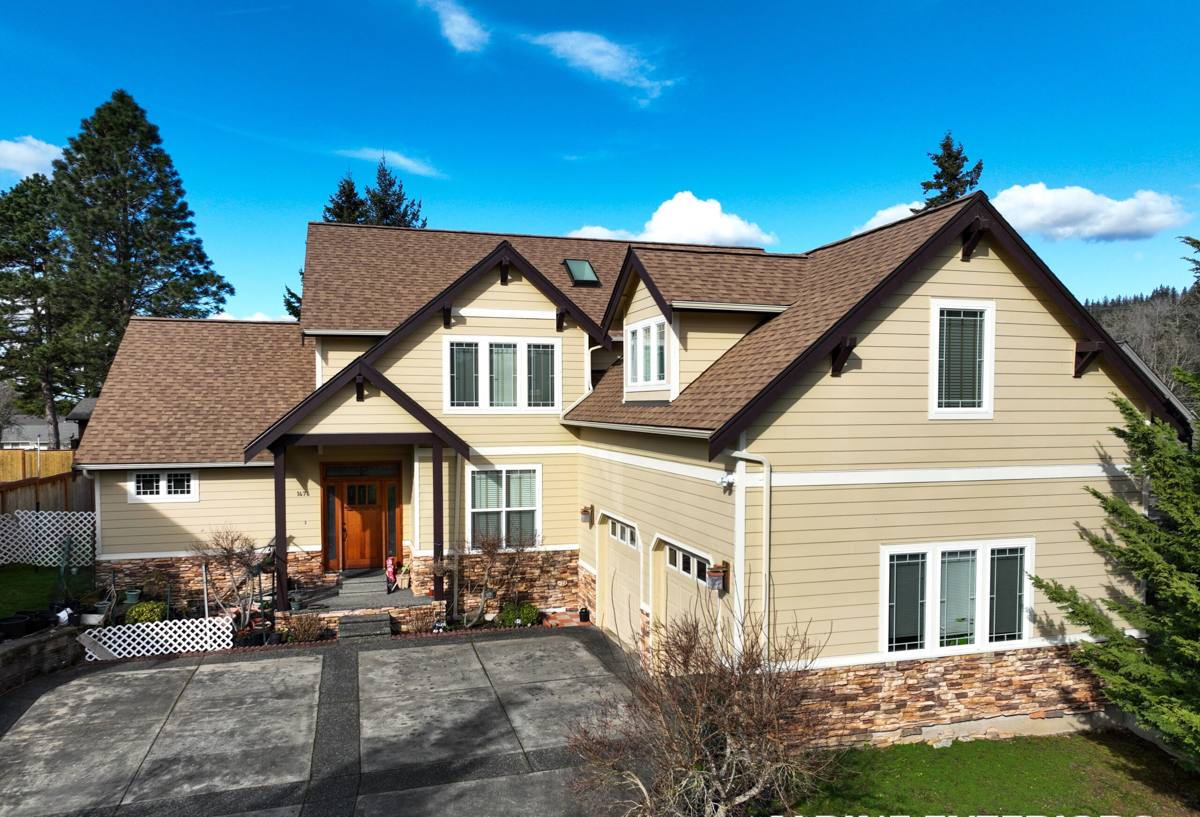
What Marietta's Climate Actually Does to a Window Opening
Salt Air
Proximity to the bay means airborne salt settles on exterior surfaces more than it would a few miles inland. Over time, salt exposure accelerates corrosion on unprotected fasteners, hardware, and some metal flashing products. It doesn't ruin a properly built house, but it does mean fastener choice and flashing material matter more here than in a drier, inland Whatcom County neighborhood.
Driving Rain
Wind off the water pushes rain into wall assemblies at an angle, not just straight down. A window that would stay dry under still-air rain in a sheltered location can leak under wind-driven rain if the flashing details — head flashing, sill pan, and the way the water-resistive barrier laps over and under the window flange — aren't sequenced correctly. This is the single biggest source of new-construction window failures we see: not a bad window, a bad installation sequence.
Long Moss Season
Western Washington's wet stretch runs roughly October through May. Anywhere water sits or drains slowly — sills, horizontal trim, low-slope window heads — becomes a candidate for moss and algae growth. On a new build, the fix isn't fighting moss after the fact; it's designing sloped sills and adequate drip edges into the install so water never has a reason to linger.
What a Correct New-Construction Window Install Involves
New-construction windows use a nailing flange that gets integrated directly into the wall's weather-resistive barrier (WRB) system, which is different from a retrofit "pocket" install into an existing frame. Done right, the sequence looks like this:
- Rough opening is checked for square, level, and correct dimension before the window ever shows up on site.
- A sill pan flashing is installed to catch and direct out any water that gets past the window itself — this is the detail most often skipped on cheaper builds, and it's the one that prevents rot when (not if) some water eventually finds its way to the sill.
- The window is set, shimmed level and plumb, and fastened per the manufacturer's schedule — not just "screwed in until it feels tight."
- Flashing tape or flexible flashing goes over the side flanges, then the head flashing, integrated so that every layer overlaps the one below it — water always sheds down and out, never into a seam.
- The WRB (housewrap or building paper) is lapped over the head flashing to complete the shingle-style drainage path before siding ever goes on.
- Interior air-sealing is completed separately from the exterior water management — the two systems do different jobs and both need attention.
Skip or reorder any of these steps and you can have a window that looks perfect for years while quietly letting water into the wall cavity. On a home exposed to Marietta's wind-driven rain, that's not a hypothetical.
Window Products: What We Recommend and Why
For new construction in this area, we generally steer homeowners toward vinyl or fiberglass frames with a solid warranty and a nailing flange designed for standard WRB integration. Wood-clad windows can look great, but they demand more diligence on flashing and finish maintenance given the moisture exposure here — we'll walk you through the trade-offs honestly rather than push whatever's easiest for us to install.
| Frame Material | Salt Air / Moisture Behavior | Maintenance | Typical Fit for Marietta |
|---|---|---|---|
| Vinyl | Won't corrode or rot; stable in humid, salty air | Low — occasional cleaning | Strong default for most new builds |
| Fiberglass | Very stable, minimal expansion/contraction, holds up well to weather cycling | Low | Good upgrade where budget allows, especially larger openings |
| Wood / Wood-Clad | Attractive but more sensitive to sustained moisture exposure if flashing or finish fails | Higher — finish upkeep, joint inspection | Workable with disciplined flashing and maintenance plan |
| Aluminum | Prone to corrosion in salt air without proper coating; thermal performance is generally weaker | Moderate | Not our first recommendation this close to the bay |
Whatever frame material a homeowner chooses, we install it to the same flashing standard. The product matters, but the installation is what actually keeps water out.
Why Hire a Crew That Already Works in Marietta
Flashing details that work fine in a sheltered, inland lot can fall short on a Marietta build with more direct wind and rain exposure. A crew that already installs windows in this specific area has already made the adjustments — heavier flashing tape overlaps, sill pan details sized for wind-driven rain, fastener choices that hold up to salt air — instead of learning those lessons on your house. We're a Ferndale-based crew, and Marietta is part of our regular service area, not an occasional trip.
We also coordinate directly with builders and framers on new-construction timelines. Window installation on a new build isn't a standalone job — it has to land at the right point in the framing and WRB sequence, and communication between trades matters as much as the install itself.
Sizing, Placement, and Energy Performance
New construction gives you flexibility a retrofit doesn't: window size and placement can be set for the view, the room's natural light needs, and energy performance, rather than matching an existing hole in the wall. A few things worth deciding early with your contractor:
- U-factor and solar heat gain coefficient (SHGC) appropriate for our climate zone — Western Washington favors good insulating value without excessive glare or heat loss
- Larger openings on view-facing walls may need reinforced framing — plan this with your builder before walls are closed in
- Egress requirements for bedrooms (minimum opening size and sill height) — this is code, not optional
- Window placement relative to roof overhangs — more overhang protection means less direct rain exposure and less long-term maintenance
- Grouping windows (e.g., a paired or bay configuration) changes the flashing plan and should be finalized before rough openings are framed
Our Process, Start to Finish
For a new-construction window job in Marietta, our process generally runs:
- Site visit and plan review — we look at your building plans or existing rough framing, discuss window styles and sizes, and flag any openings that need special flashing attention given exposure and orientation.
- Product selection — we walk through frame material, glass package, and performance ratings suited to this climate, with honest trade-offs on cost versus long-term maintenance.
- Written estimate — clear scope, materials, and timeline before anything is ordered.
- Coordination with your builder — we schedule installation to land at the correct point in the framing and WRB sequence.
- Installation — full flashing sequence as described above, on every opening, no shortcuts on the ones that are harder to reach.
- Final walkthrough — we check operation, seals, and flashing visibility before we consider the job finished.
What This Typically Costs
New-construction window pricing depends heavily on window count, size, frame material, and glass package, so we won't quote a number here that wouldn't hold up house to house. In general, vinyl windows sit at the lower end of the cost range, fiberglass runs higher, and wood or wood-clad windows cost more up front and over the life of the home due to maintenance. The most reliable way to get an accurate number is a site visit and a look at your plans — we'll give you a straight, itemized estimate, not a vague range that changes once we're on site.
Ready to Talk Windows for Your Marietta Build?
If you're framing a new home or addition in the Marietta area and want windows installed by a crew that already knows how this stretch of Whatcom County weather behaves, we're glad to take a look at your plans. Reach out through the form below for a free, no-pressure estimate — we'll walk the site, talk through your options, and give you a clear, honest number before any work begins.