 Ferndale
 Roofing in Marietta Comes With Its Own Set of Problems
Marietta sits close enough to the water and low enough in the county that homes here take a different kind of weather beating than roofs a few miles inland. The combination of salt-laden air off Bellingham Bay, long stretches of driving rain through the fall and winter, and a moss season that can run eight months or more means an asphalt shingle roof in this neighborhood has to work harder than the same roof would in a drier, higher part of Whatcom County. We've installed and repaired enough roofs in and around Marietta to know which parts of a shingle system tend to fail first here, and it's rarely the shingles themselves that go bad first — it's the details around them.
A roof that's "fine on paper" — correct shingle brand, correct nail pattern, correct underlayment — can still underperform in Marietta if it wasn't built with this specific microclimate in mind. That's the gap we try to close on every roofing job we take on in this area.
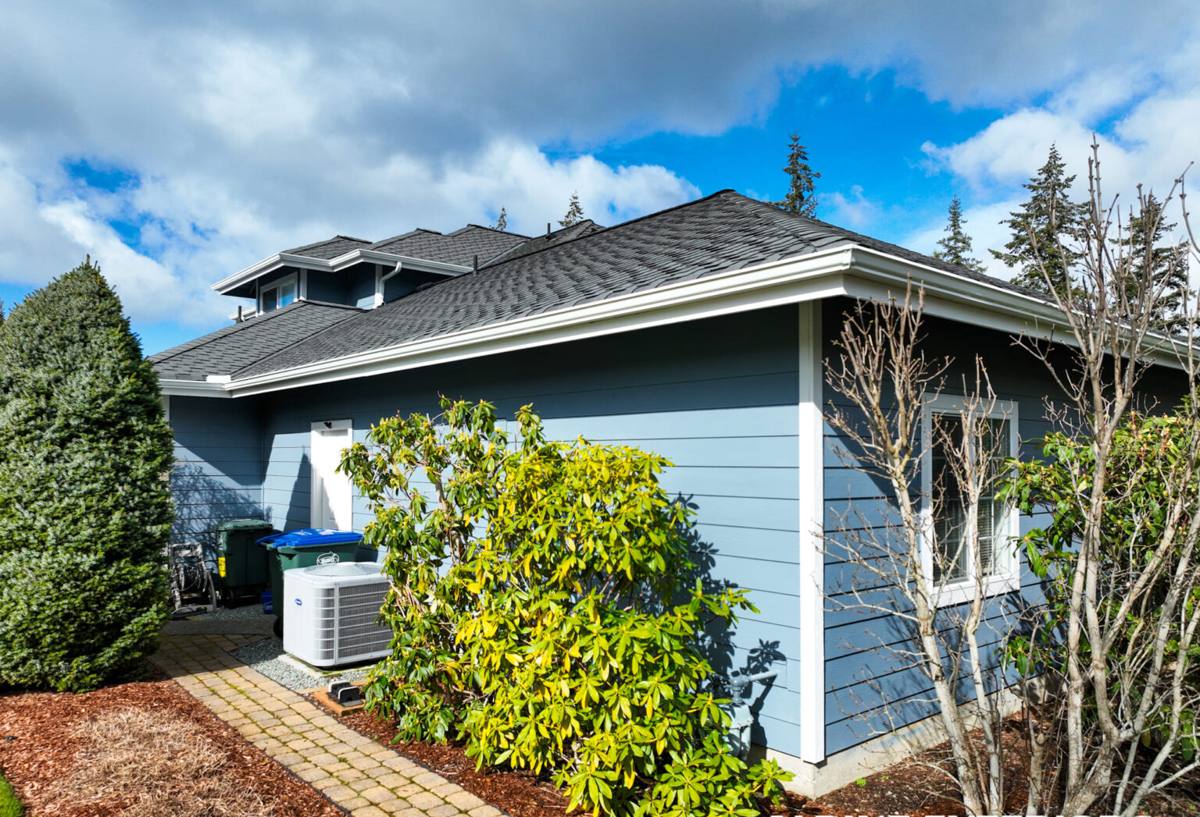
Why Salt Air, Rain, and Moss Matter More Here
Salt Air and Metal Corrosion
Coastal and near-coastal air carries fine salt particulate that settles on exposed metal — flashing, nail heads, vent caps, gutter hardware. Over years, that accelerates corrosion on anything that isn't properly coated or isn't a corrosion-resistant alloy. On a roof, the metal components are doing critical work: they're what keeps water out at every seam, valley, and penetration. When flashing corrodes and starts to pit or thin, it's not a cosmetic issue — it's a leak waiting for the next heavy rain.
Driving Rain and Wind-Driven Water
Whatcom County gets plenty of straight-down rain, but Marietta's exposure means storms off the water can push rain sideways into roof edges, valleys, and wall-to-roof transitions. Standard installation methods that would be adequate in a sheltered inland lot sometimes aren't enough here — water can be driven up and under shingle edges or through gaps that would stay dry in calmer conditions. That's why underlayment choice and edge detailing matter more on a Marietta roof than they might on a roof twenty miles east.
Moss: The Slow, Quiet Damage
Western Washington's moss problem is well known, but Marietta's combination of shade, moisture, and mild temperatures can extend the active moss season longer than drier parts of the county. Moss isn't just unsightly — its root structures work into shingle granules and butt joints, holding moisture against the roof deck long after the surrounding air has dried out. Left unchecked over several seasons, that trapped moisture degrades shingles from underneath and can work its way into the decking itself.
What a Correctly Built Asphalt Shingle Roof Needs in Marietta
A roofing job here isn't just "nail down shingles in rows." The systems underneath and around the shingles are what actually determine whether the roof performs for its full expected life in this climate. On every Marietta roof we build, we pay particular attention to:
- Ice-and-water shield at vulnerable points — valleys, eaves, and roof-to-wall transitions get a self-adhering waterproof membrane, not just standard felt, because these are the spots where wind-driven rain and moss moisture cause the most damage.
- Corrosion-resistant flashing and fasteners — given the salt air exposure, we don't cut corners on flashing material or fastener coating. Cheaper galvanized components can start showing corrosion within a handful of years this close to the water.
- Proper attic and roof ventilation — balanced intake and exhaust ventilation keeps moisture from condensing under the deck, which matters even more in a climate where the roof surface itself is rarely fully dry.
- Starter strip and sealant detailing at every edge — the edges are where wind-driven rain finds its way in first. Correct starter course installation and sealant application at rakes and eaves closes that door.
- Shingle selection suited to algae and moss resistance — many major manufacturers now offer shingles with copper-infused or algae-resistant granules. In a moss-prone neighborhood like Marietta, that's a meaningful upgrade, not a marketing gimmick.
Our Process for a Marietta Roofing Project
1. On-Site Assessment
We start with a full walk of the roof (or a drone inspection when pitch or access makes that safer) to check deck condition, existing ventilation, flashing condition, and any signs of past moss or moisture damage. For older Marietta homes, we also check attic-side sheathing for staining or soft spots, since that tells us more about the roof's real condition than the shingle surface alone.
2. Honest Scope: Repair, Overlay, or Full Tear-Off
Not every roof needs a full replacement. If the deck is sound and damage is localized, a repair or partial re-roof may be the honest answer. We'll tell you which situation you're in rather than defaulting to the biggest job. That said, we don't recommend overlaying new shingles over old on most Marietta homes — trapping an old, possibly moss-damaged layer under a new one just hides a problem instead of fixing it.
3. Tear-Off and Deck Inspection
On full replacements, removing the old roofing lets us actually see the deck. Any soft, rotted, or delaminated sheathing gets replaced before anything new goes down — installing new shingles over a compromised deck is one of the most common ways a "new roof" fails early.
4. Underlayment and Flashing Installation
This is where the climate-specific work happens: ice-and-water membrane at the vulnerable points, synthetic underlayment across the field, and new corrosion-resistant flashing at every valley, chimney, vent, and wall transition.
5. Shingle Installation
Shingles go down to manufacturer specification for nail placement, pattern, and exposure — the details that determine whether your warranty is actually valid if you ever need to use it.
6. Final Walkthrough
We walk the completed roof and the property with you, including gutters and downspouts, since a shingle roof is only as good as the water management system that carries runoff away from the house.
Asphalt Shingles vs. Other Roofing Options for This Climate
Homeowners in Marietta sometimes ask us to compare asphalt shingles against metal or cedar roofing. Each has real trade-offs in this specific environment:
| Roofing Type | Performance in Salt Air / Rain / Moss | Typical Consideration |
|---|---|---|
| Asphalt Shingles (architectural) | Strong option when installed with proper underlayment and algae-resistant granules; widely available in moss-resistant lines | Best balance of upfront cost, lifespan, and repairability for most Marietta homes |
| Standing Seam Metal | Excellent water shedding and moss resistance, but requires marine-grade coatings or alloys near the water to avoid corrosion | Higher upfront cost; longer lifespan when properly specified for coastal exposure |
| Cedar Shake/Shingle | More susceptible to moss and moisture retention without diligent maintenance; requires more frequent upkeep in this climate | Higher maintenance burden here specifically because of the extended moss season |
For most Marietta homes, a well-detailed asphalt shingle roof offers the best combination of durability, cost, and ease of future repair — as long as the installation accounts for the local conditions described above.
Maintenance That Actually Extends Roof Life Here
An asphalt shingle roof in Marietta isn't maintenance-free, and pretending otherwise sets homeowners up for surprises. A short annual checklist goes a long way:
- Have gutters cleared before and after the heavy fall rains so water isn't backing up under the eaves
- Get moss growth removed gently (not power-washed, which can strip granules) as soon as it appears, rather than waiting for a visible mat to form
- Have flashing and sealant points checked every few years, especially around chimneys and skylights, since these are the first places salt-air corrosion tends to show
- Watch for granules collecting in gutters, which can signal shingles are wearing faster than expected
- Address any interior ceiling staining immediately — it almost always means water has already found a way past the roofing system
Why Hire a Crew That Already Works in Marietta
Roofing crews who mostly work drier, inland areas sometimes underspecify the underlayment, flashing, or ventilation details that matter here, simply because they don't run into the salt air, rain, and moss combination as often. We're based in Ferndale and work throughout Whatcom County, including Marietta, so these aren't edge cases for us — they're the baseline conditions we design every roof around. That local familiarity shows up in the small decisions: which valley detail to use, which flashing metal to spec, where moss is most likely to establish first on your particular roof orientation.
We also know the practical side of working in this neighborhood — typical roof pitches and styles in the area, seasonal weather windows that make for safer and cleaner installations, and how to sequence a job so your property isn't exposed to an open roof during an unpredictable stretch of weather.
Signs Your Marietta Roof May Need Attention Soon
A few warning signs tend to show up before a leak does. If you're noticing any of these, it's worth having a roof looked at rather than waiting:
- Visible moss or algae streaking, especially on north-facing slopes
- Shingles that look cupped, curled, or are losing granules unevenly
- Rusty streaking near flashing, vents, or nail heads
- Daylight visible through the attic roof deck
- Higher-than-normal heating bills, which can point to failing attic ventilation or insulation tied to roof condition
Get a Straightforward Estimate
If your roof is showing wear, due for replacement, or you just want an honest read on its current condition, we're happy to take a look. Reach out for a free, no-pressure estimate using the form below, and we'll give you a straight answer about what your Marietta home's roof actually needs.