 Ferndale
 Ferndale's Coastal Neighbor Has Its Own Siding Problem
Lummi Nation sits on the peninsula between Bellingham Bay and Lummi Bay, just west of Ferndale, with exposure to open water that most inland Whatcom County homes never deal with. That waterfront position changes what siding has to survive. A product that performs fine a few miles inland — shielded by tree lines, hills, and distance from salt water — can fail years early on a home that takes wind straight off the bay.
We install siding across Ferndale and the surrounding communities, and homes closer to the water consistently show a different failure pattern than homes further inland: more corrosion on fasteners and trim, more paint and caulk breakdown on the weather-facing walls, and heavier moss growth on shaded north and east sides. None of that is unusual for this coastline. It's just a different set of demands, and the siding and installation details need to match them.
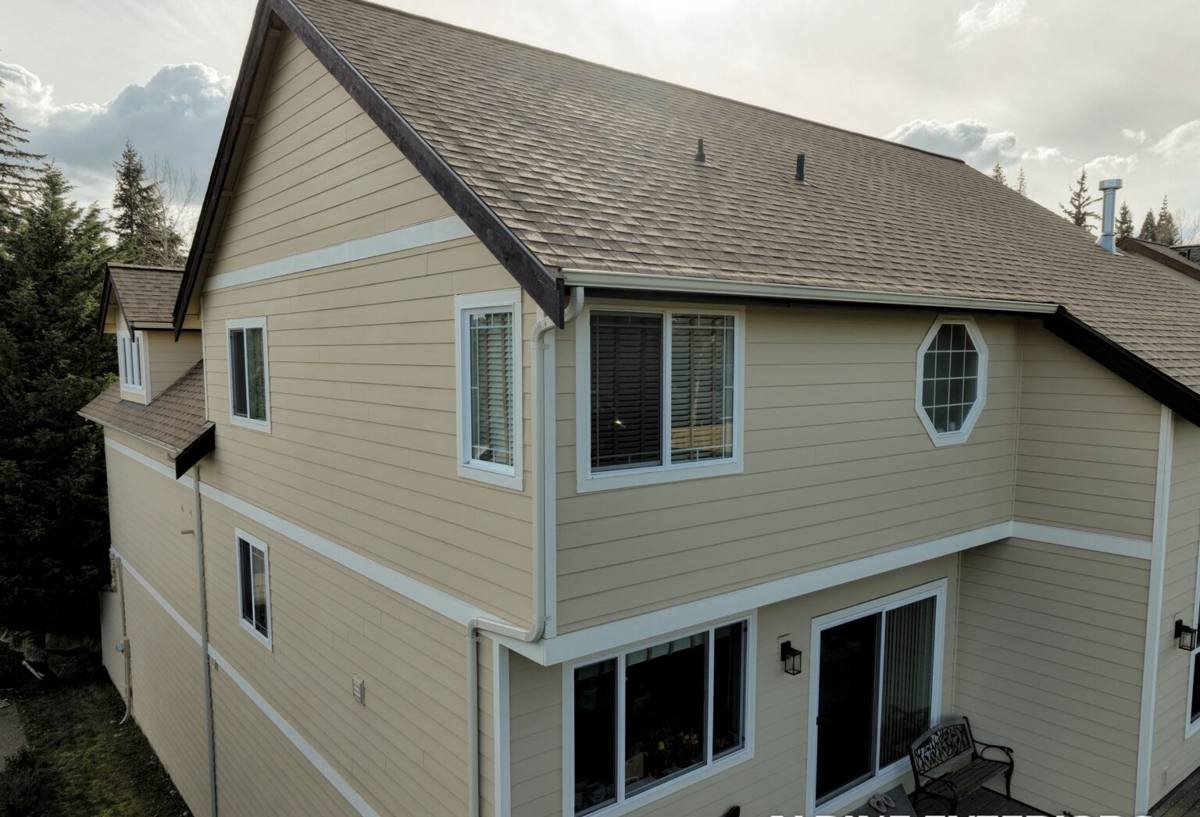
What Salt Air, Driving Rain, and a Long Moss Season Do to Siding
Salt Air and Corrosion
Airborne salt doesn't just sit on the surface — it works into fasteners, trim edges, and any exposed metal, accelerating rust and corrosion well beyond what you'd see on a home even a short distance from the water. Over years, corroding fasteners can loosen siding panels or stain the face of the siding with rust streaks. The fix isn't complicated, but it has to be planned for: corrosion-resistant fasteners and trim hardware rated for coastal exposure, not whatever is cheapest at the yard.
Driving Rain and Water Intrusion
Wind off the water doesn't just drop rain straight down — it drives it sideways into wall assemblies, forcing water into laps, joints, and penetrations that would stay dry on a calmer site. Siding that isn't installed with the right drainage path behind it will eventually let that water find its way to the sheathing, and once moisture is trapped behind siding, rot and mold follow — often invisible until the siding itself starts failing.
Moss, Shade, and Trapped Moisture
Whatcom County's long wet season, combined with the tree cover common on residential lots here, keeps shaded wall sections damp for weeks at a stretch. Moss and algae take hold on any siding surface that stays wet, and on porous or absorbent materials that moisture doesn't just sit on the surface — it gets pulled into the material itself, which is a very different problem than a cosmetic stain.
Why James Hardie's Climate-Engineered Lines Fit This Environment
James Hardie makes region-specific product lines for exactly this reason — siding built for the Pacific Northwest's wet, moss-prone, marine-influenced climate is a different formulation than siding built for the desert Southwest or the hurricane-prone Gulf Coast. For a coastal Whatcom County home, that means specifying Hardie's HZ5 line, engineered for wet, cold-winter climates like ours, rather than a generic national product.
Fiber cement itself is the bigger advantage on a site like this. It's non-combustible, it doesn't absorb and swell with moisture the way wood-based products can, and it holds paint and factory finish far longer than wood or engineered-wood siding exposed to the same salt air and rain. The ColorPlus factory finish is baked on under controlled conditions and backed by its own finish warranty — a meaningfully different proposition than field-applied paint that has to be maintained and eventually redone on the homeowner's schedule.
None of that means Hardie siding is maintenance-free on a site like this. It means the material itself isn't the weak point — the installation is where a coastal job succeeds or fails.
What Correct Installation Looks Like Here
Rainscreen and Drainage Gap
On a home taking direct wind-driven rain, a drainage gap behind the siding isn't optional — it's what lets any water that does get past the face of the siding drain and dry out instead of sitting against the sheathing. This is a detail that's easy to skip and impossible to inspect once the siding is up, which is exactly why it matters who's installing it.
Flashing and Penetrations
Every window, door, vent, and hose bib is a place where water wants to get behind the siding. Correct flashing at these penetrations, installed in the right order relative to the water-resistive barrier, is what keeps driving rain from finding its way in. This is one of the most common places we find shortcuts on older installations we're asked to repair or replace.
Fastening and Joint Treatment
James Hardie publishes specific fastener spacing, type, and placement requirements, and those requirements exist for a reason — get them wrong and you get cracking, popped fasteners, or panels that don't perform the way the product was engineered to. Joints and butt seams need to be treated per manufacturer spec, with attention to the caulking and sealant choices that hold up in a wet, salt-air environment rather than drying out and cracking within a couple of seasons.
Comparing Siding Options for a Home Near the Water
Homeowners near the water often ask us to walk through the trade-offs across siding materials before committing. Here's an honest comparison for this specific climate — salt air, driving rain, and heavy moss pressure.
| Factor | James Hardie (HZ5) | Vinyl | LP SmartSide | Cedar |
|---|---|---|---|---|
| Moisture resistance | High — cement-based, doesn't swell or rot | High, but seams and gaps can let water behind panels | Moderate — engineered wood, vulnerable if finish fails | Low to moderate — needs consistent maintenance |
| Salt air / corrosion | Panel unaffected; fastener spec matters | Panel unaffected; hardware can corrode | Panel unaffected; edges vulnerable to swelling | Fasteners and fittings need coastal-rated hardware |
| Moss and algae resistance | Good with ColorPlus finish; needs periodic washing | Fair; moss grows on the surface, hard to fully clean | Fair; trapped moisture is the bigger risk | Poor without regular treatment |
| Fire resistance | Non-combustible | Melts/deforms under heat | Combustible (wood-based) | Combustible |
| Ongoing maintenance | Low — occasional wash, repaint on a long cycle | Low, but limited repair options once damaged | Moderate — finish upkeep matters | High — refinishing every few years |
| Warranty | Strong, transferable manufacturer warranty | Varies widely by manufacturer | Manufacturer-specific, moisture exclusions common | Typically none from a manufacturer |
This is the honest reason we standardized on James Hardie rather than carrying multiple product lines: on a coastal Whatcom County home, it's the material that holds up with the least compromise across every factor that actually matters here.
Our Process, Start to Finish
Assessment and Moisture Check
We start by walking the exterior and identifying the site-specific exposure — which walls take direct wind and rain, which stay shaded and damp, where existing moisture or moss damage shows up. On a re-side, we check what's happening behind the existing siding before we ever talk product or color.
Prep and Water Management Details
This is where the drainage gap, flashing plan, and water-resistive barrier get worked out before a single piece of siding goes up. It's the least visible part of the job and the part that determines whether the siding lasts the 30-plus years it's capable of or fails early from trapped moisture.
Installation to Manufacturer Spec
Fastener type, spacing, clearances, and joint treatment follow James Hardie's published installation requirements for HZ5 product in this climate zone — not a generalized approach carried over from drier regions.
Final Inspection
We walk the finished job checking fastening, caulk lines, flashing details, and clearances before calling it done, so problems get caught on our schedule, not years later on yours.
Keeping Hardie Siding Looking Right Through Whatcom County Winters
Correctly installed Hardie siding is low-maintenance, not no-maintenance — especially this close to the water. A few habits go a long way:
- Rinse the siding with a garden hose once or twice a year, focusing on shaded, moss-prone walls
- Keep gutters clear so overflow isn't running down the face of the siding
- Trim back vegetation and tree limbs that keep a wall section shaded and damp
- Check caulking at trim and penetrations annually and have any cracked joints resealed
- Watch for chalking or fading on ColorPlus finish and address it under warranty rather than waiting
- Have fasteners and trim hardware inspected periodically for corrosion, especially on wind-exposed walls
Why Local Experience With This Stretch of Coastline Matters
A crew that mainly works inland jobs doesn't automatically know how differently a wind-exposed, salt-air site needs to be handled — the fastener choices, the flashing sequencing, the drainage detailing all shift once a home is taking direct exposure off the water. Working Lummi Nation and the rest of coastal Ferndale regularly means we're not guessing at these details or treating a waterfront home the same as one three miles inland. It also means we've seen how installations from a few years back are holding up, which is often the clearest evidence of what actually works here versus what looks fine on installation day and fails in year five.
If you're planning a re-side or building new near the water, we're happy to walk your home, point out the specific exposure it's dealing with, and put together a free, no-pressure estimate — just fill out the form below.