 Ferndale
 Windows Built for Lummi Nation's Coastal Conditions
Homes in Lummi Nation sit close to the water, and that proximity shapes everything about how windows perform here. Salt-laden air moves in off Bellingham Bay and the Strait of Georgia, driving rain comes in sideways during winter storms, and the long gray stretch from October through April keeps moss and algae established on anything that stays damp. A window that works fine in a drier inland neighborhood can start failing here years ahead of schedule if it wasn't specified and installed with this environment in mind.
Custom windows aren't just about matching an odd-sized opening or getting a particular grid pattern. In this area, "custom" also means choosing frame materials, glazing, and flashing details that are actually suited to a marine climate. We've been doing exterior work throughout Ferndale and the surrounding Whatcom County waterfront communities long enough to know which corners get skipped on a standard install — and why those corners matter most right here.
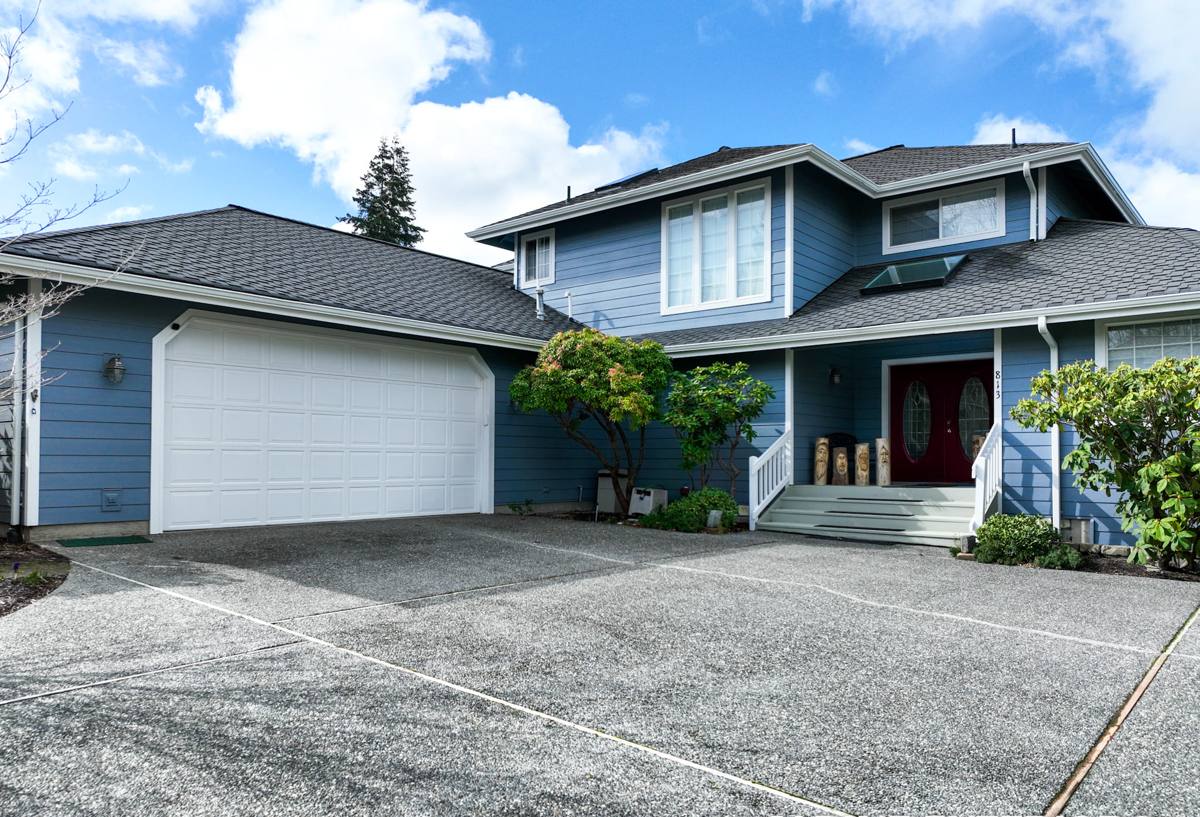
What Salt Air and Driving Rain Do to Windows Over Time
Salt Exposure
Airborne salt is corrosive to unprotected metal hardware — hinges, cranks, locks, and some low-grade aluminum cladding. Over a few winters, salt residue combined with condensation can pit finishes and seize moving parts on windows that weren't built with marine-grade hardware or a protective finish. This shows up as windows that get harder to open, locks that stick, or cladding that pits and dulls faster than it should.
Driving Rain
Wind-driven rain off the water doesn't just hit a window — it gets pushed into every gap, seam, and reveal under pressure. A window that's properly flashed and sealed sheds that water. One with a weak sill pan, missing flashing tape, or a gap in the weather-resistive barrier lets water track behind the frame and into the wall cavity, where it can sit unnoticed for months. This is the single biggest cause of rot we see around older window openings in this area.
Moss and Prolonged Dampness
Whatcom County's long wet season means anything shaded or north-facing stays damp for extended stretches. Wood sills and trim that aren't sealed or capped correctly become a foothold for moss and mildew, which hold moisture against the surface and accelerate decay. Vinyl and fiberglass don't feed moss the way bare wood does, but moss and organic buildup can still collect in tracks and weep holes if they're never cleared, which backs up water instead of letting it drain.
Choosing the Right Frame Material for This Climate
There's no single "best" window material for every home — it depends on your budget, your home's style, and how exposed the installation is to wind and rain. Here's how the common options hold up specifically in a marine, high-moisture setting like Lummi Nation.
| Material | Moisture Performance | Maintenance | Best Fit |
|---|---|---|---|
| Vinyl | Very good — won't rot, resists salt corrosion | Low — occasional cleaning | Budget-conscious replacements, rental properties |
| Fiberglass | Excellent — dimensionally stable in wet/dry cycles | Low | Exposed elevations, long-term durability |
| Wood (clad exterior) | Good if properly clad and flashed; vulnerable if seals fail | Moderate to high — exterior clad, interior wood needs periodic attention | Historic or traditional-style homes wanting a wood interior look |
| Aluminum | Fair — prone to corrosion and condensation without thermal breaks and marine-grade coatings | Moderate | Larger commercial-style openings, generally not our first recommendation on direct waterfront exposure |
For homes with direct exposure to prevailing wind and rain, we generally steer customers toward vinyl or fiberglass because they don't rely on a finish or coating to resist moisture the way wood and uncoated aluminum do. That's a maintenance and longevity call, not a knock on any manufacturer — every material has a place depending on the home and the owner's priorities.
What a Correct Window Installation Involves
The window unit itself is only part of the job. Most premature failures we're called out to fix trace back to installation shortcuts, not a bad window. A correct install in this climate includes:
- Removing old units carefully and inspecting the framing underneath for hidden rot before anything new goes in
- Installing a sloped sill pan so any water that gets past the window drains back outside, not into the wall
- Sealing the rough opening with flashing tape integrated correctly with the weather-resistive barrier — proper shingle-lap order so water always moves downward and outward
- Using backer rod and quality exterior-grade sealant at the perimeter, sized and tooled correctly rather than just caulked over
- Confirming the unit is level, plumb, and square before final fastening, so weatherstripping seals evenly across the whole frame
- Insulating the gap between frame and rough opening without overpacking, which can bow the frame
- Finishing exterior trim and caulking joints so there's no exposed gap for wind-driven rain to exploit
Skipping the sill pan or flashing integration is the most common shortcut we see on lower-cost jobs, and it's the one most likely to cause a hidden water problem two or three winters down the road.
Our Process for Lummi Nation Window Projects
1. On-Site Assessment
We look at each opening individually — sun exposure, wind direction, current condition of the framing and siding around it — rather than quoting off a generic template. Coastal-facing walls often need different attention than sheltered ones on the same house.
2. Material and Product Selection
We walk through frame material, glazing options, and grid or style choices based on your home's exposure and your budget, being upfront about trade-offs rather than just upselling the most expensive option.
3. Precise Measurement and Ordering
Custom windows are ordered to the exact opening, accounting for any settling or squaring issues in older homes so the finished install fits tight without oversized shims or gaps.
4. Removal and Structural Check
Old units come out carefully so we can inspect the sill and framing for rot or moisture damage before it's covered back up — this is often the only chance to catch a hidden problem early.
5. Installation with Full Flashing Detail
Sill pans, flashing tape, and air-sealing are done to the same standard on every job, not scaled back based on price point.
6. Final Weatherproofing and Walkthrough
Exterior trim, caulking, and hardware operation are checked before we consider the job done, and we walk the homeowner through what was done and what basic upkeep to expect.
Signs Your Current Windows Are Losing the Battle
Homeowners in this area often live with early warning signs for years before calling anyone, mostly because the symptoms show up gradually. Watch for:
- Fogging or condensation between panes on double- or triple-glazed units — a sign the seal has failed
- Soft or discolored wood trim around the frame, especially on north- or west-facing walls
- Windows that are noticeably harder to open, close, or lock than they used to be
- Visible moss or persistent green staining building up on sills or lower trim
- A draft you can feel at the frame edge even when the window is fully latched
- Paint or finish that's bubbling or peeling specifically around the window opening, not the wall generally
Any one of these on its own isn't an emergency, but they're worth addressing before the next wet season adds to the damage.
Cost Factors for Custom Window Projects
Every home and opening is different, so we don't quote sight-unseen, but the main variables that move the price are worth understanding upfront:
| Factor | Why It Matters |
|---|---|
| Frame material | Vinyl is generally the most budget-friendly; fiberglass and clad wood cost more upfront but often less over the window's life |
| Opening condition | Rot or framing repair discovered during removal adds labor and material beyond the window itself |
| Number and size of units | Larger openings and multi-unit projects have per-window efficiencies but higher total cost |
| Glazing package | Upgraded glass for energy performance or sound dampening costs more than standard double-pane |
| Access and site conditions | Second-story or hard-to-access openings take longer and may need additional equipment |
Why Local Experience Matters for This Job
A crew that mainly works drier, inland projects doesn't always think about sill pan slope, salt-resistant hardware, or shingle-lap flashing order the way a crew does when those details are the difference between a window lasting fifteen years or five in this specific environment. We work throughout Ferndale and Whatcom County's coastal communities regularly, which means we're not guessing at how a given wall assembly or exposure will behave — we've already seen how homes in these conditions age, both when the install was done right and when it wasn't.
That local familiarity also means we can talk through realistic expectations honestly: which upgrades are worth it for a home with direct water exposure, and which are unnecessary for a more sheltered lot a few streets back. We're not interested in selling every customer the same premium package regardless of their situation.
Get a Free, No-Pressure Estimate
If your windows in the Lummi Nation area are showing wear, drafting, or fogging — or you're planning a custom install as part of a larger renovation — we're happy to take a look and give you a straightforward assessment. There's no obligation and no pressure, just an honest read on what your home needs. Use the form below to request your free estimate.