 Ferndale
 Building Decks for Lummi Island's Marine Climate
Lummi Island sits out in the salt water of Hale Passage, off the Lummi Peninsula in Whatcom County, and that location changes what a deck has to survive. A deck built to a generic spec sheet might look fine for a year or two, but island homes take a steadier beating from salt-laden air, wind-driven rain that hits at an angle instead of straight down, and a moss season that can run half the year in the shaded, damp months. Building a deck here isn't fundamentally different from building one anywhere in the Pacific Northwest — it's the same lumber, the same fasteners, the same code — but every decision has to account for exposure that's more aggressive than what you'd see a few miles inland in Ferndale or Bellingham.
We've worked decks on the island and understand the practical realities of getting a crew, materials, and equipment there and back on a ferry schedule. That logistics piece matters more than most homeowners realize when they're comparing bids — a contractor who hasn't done it before will underestimate the time and cost, and that shows up later as rushed work or change orders.
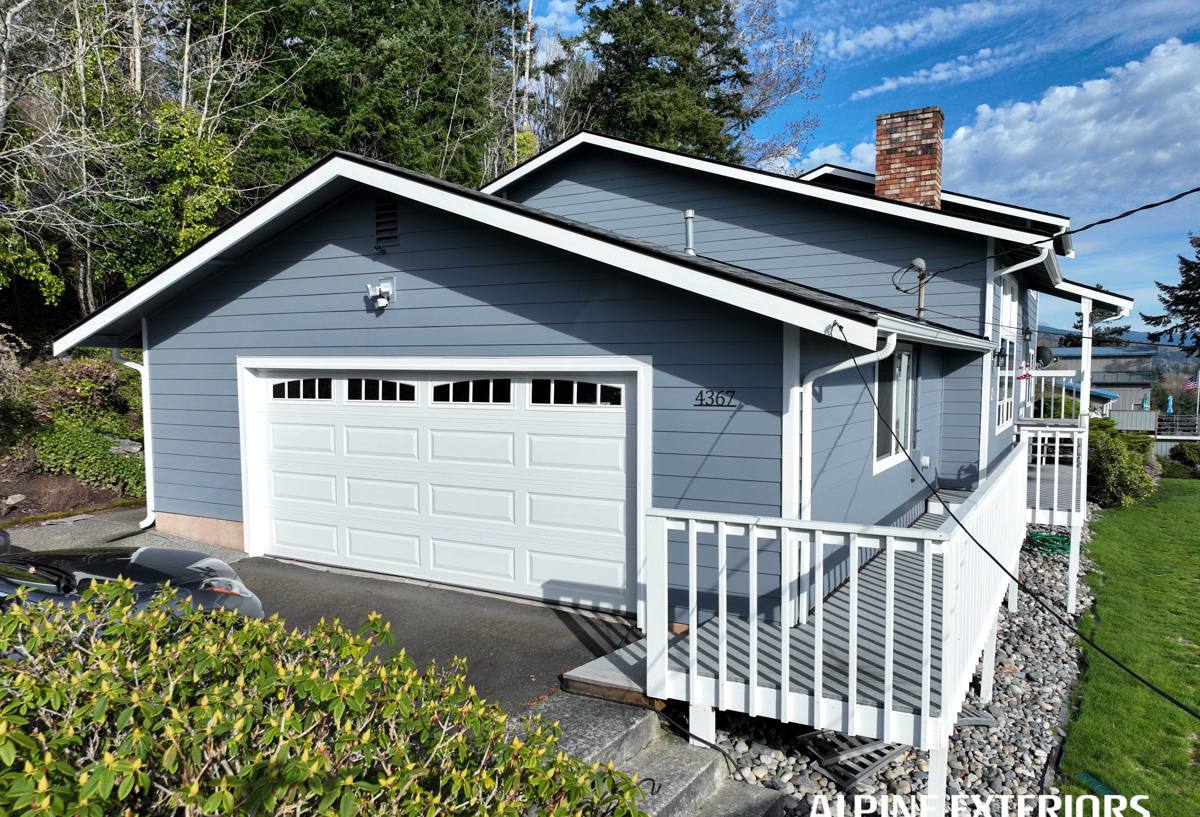
What Salt Air Does to a Deck Over Time
Salt air is corrosive to metal, full stop. Fasteners, joist hangers, post bases, and railing hardware that would last decades in a dry inland yard can start showing rust streaks and pitting within a few seasons on the island, especially on decks with any water-facing exposure or elevation. Once a fastener starts to corrode, it loses holding strength quietly — you often don't see a problem until a railing feels loose or a board starts to lift.
Why We Spec Hardware the Way We Do
For island decks we default to stainless steel or heavy hot-dip galvanized fasteners and structural hardware rated for coastal exposure, not the standard-duty galvanized product that's fine for a typical inland deck. It costs more up front. It's also the single easiest place for a contractor to cut corners invisibly, because the difference doesn't show for a few years — long after the job is signed off and paid for. We'd rather explain the extra cost at the estimate than have a homeowner find out the hard way at year five.
Metal-to-Metal and Metal-to-Wood Contact Points
Corrosion problems concentrate at connection points: joist hanger nails, ledger bolts, post-to-beam brackets, and any spot where dissimilar metals touch. We pay particular attention to these details on coastal jobs because that's where a five-year problem starts.
Driving Rain and Keeping Water Out of the Structure
Whatcom County gets plenty of rain generally, but island and shoreline exposure means more of it arrives sideways, driven by wind off the water. That matters most at two points on a deck: the ledger board where the deck attaches to the house, and any spot where a rail post or structural post penetrates a horizontal surface.
Ledger Flashing
The ledger board is the single most common source of rot and hidden water damage on an attached deck, anywhere in the Northwest. On a wind-exposed site, a flashing detail that's merely adequate inland can fail faster. We flash ledger connections with proper step and drip-cap flashing and a water-resistant barrier behind it, sealed to shed water outward and down rather than letting it track back into the house rim joist. This is not an area to save money — a rotted rim joist behind a deck ledger is a structural repair, not a deck repair.
Post Bases and Standing Water
Wood posts that sit in standing water at their base rot from the inside out long before it's visible on the surface. We set posts on elevated, water-shedding bases rather than letting end grain sit flush against a wet surface, and we check drainage at grade so water isn't pooling against footings after a storm.
Moss, Algae, and a Long Damp Season
Island and coastal sites in this part of Washington get shaded, moisture-holding conditions for much of the year, and moss and algae will colonize any decking surface that stays damp and doesn't get much direct sun — north-facing decks and areas under tree cover especially. Beyond looking bad, moss holds moisture against the decking surface and makes boards slick and genuinely dangerous underfoot in wet weather.
Design Choices That Reduce Moss Buildup
- Gapping and fastening decking correctly so water drains through rather than pooling on the surface
- Grading and framing the deck with a slight slope away from the house for positive drainage
- Choosing decking profiles and finishes that don't trap organic debris in grooves or seams
- Keeping the underside of the deck ventilated so trapped moisture can dry out between rain events
- Talking through realistic sun/shade exposure with the homeowner before material selection, not after
No deck design eliminates the need for occasional cleaning in a damp, shaded Whatcom County site — but a well-drained, well-ventilated deck needs far less of it, and stays safer between cleanings.
Choosing the Right Decking Material for the Island
There's no single "correct" decking material for every home — it depends on budget, sun exposure, maintenance appetite, and how close the deck sits to the water. We walk every homeowner through the real trade-offs rather than pushing one product.
| Material | Coastal Durability | Maintenance | Typical Trade-offs |
|---|---|---|---|
| Pressure-treated wood | Good, with proper hardware and finishing | Higher — needs regular sealing/staining | Lowest material cost; most sensitive to fastener and moisture detailing |
| Cedar | Good natural rot resistance | Moderate — greys or needs finish upkeep | Attractive, lighter weight; softer surface, higher cost than PT |
| Composite decking | Very good — doesn't rot or absorb water | Low — periodic cleaning, no sealing | Higher upfront cost; can still grow surface moss/algae if not cleaned |
| PVC/capped decking | Excellent moisture resistance | Lowest | Highest upfront cost; least "natural wood" look |
On shaded or heavily water-exposed sites, we often steer homeowners toward composite or capped decking specifically because it doesn't wick and hold moisture the way wood can, which cuts down on rot risk even if it doesn't eliminate the need to clean off moss. On sunnier, more open sites, a well-finished cedar or treated wood deck can perform very well and costs less to install.
Structural Basics That Matter Even More on Exposed Sites
Footings, framing spans, and railing structure follow the same building code whether a deck is on the island or in town, but wind and moisture exposure raise the stakes for getting them right the first time.
Footings and Frost Depth
Footings need to be sized and set to local frost depth and soil-bearing requirements, and on sites with any slope or drainage complexity, we look at how water moves across the site before we dig, not after.
Railings and Wind Exposure
A deck with open water exposure sees more sustained wind than a sheltered inland lot. Railing posts and their attachment to the frame need to meet code lateral load requirements with margin, not just pass on paper — this is a place where undersized blocking or a skipped through-bolt shows up as a wobbly rail within a year or two.
Permits
Deck permitting requirements depend on size, height, and attachment to the structure, and can vary by jurisdiction within Whatcom County. We handle the permit process as part of the job so homeowners aren't left guessing what's required.
Our Process for an Island Deck Project
- On-site walkthrough to assess sun/shade exposure, wind exposure, drainage, and existing structure condition
- Honest material recommendation based on the site's actual exposure, not a one-size-fits-all pitch
- Written estimate covering materials, hardware grade, permitting, and a realistic timeline that accounts for ferry logistics
- Proper ledger flashing, footing, and framing work before a single deck board goes down
- Coastal-grade fastener and hardware installation throughout, including hidden connection points
- Final walkthrough covering drainage, railing security, and basic maintenance guidance specific to the site's moss and moisture exposure
We don't shortcut the framing and flashing stage to make a project look faster on paper. That stage is invisible once the decking is down, and it's exactly the part that determines whether a deck is still solid in ten years or needs structural repair in three.
Why It Matters to Hire a Crew That Already Works the Island
A contractor based off-island who's never scheduled a job around the ferry will often underbid the logistics — fewer trips with more material per load, tighter weather-window planning, and realistic day-count estimates that don't blow up mid-project. It also means showing up prepared for the actual conditions on site rather than a generic mainland spec. We've priced and built around that reality before, and we set expectations honestly at the estimate stage rather than after the job is already underway.
None of this is unique know-how limited to one contractor — it's the difference between a crew that treats coastal exposure as a checkbox and one that treats it as the main design constraint it actually is.
Maintaining a Deck After It's Built
Even a well-built island deck needs some seasonal attention to stay in good shape:
- Sweep debris and standing leaves off the surface regularly, especially in shaded areas prone to moss
- Clean moss and algae buildup at least once a year, more often on north-facing or heavily shaded decks
- Check railing posts and stair connections annually for looseness, which can signal hardware corrosion
- Re-seal or re-stain wood decking on the manufacturer's recommended schedule — don't wait until it's visibly weathered
- Keep gutters and downspouts near the deck clear so runoff isn't dumping directly onto or under the structure
A few minutes of seasonal attention goes a long way toward protecting the investment, and it's a lot cheaper than replacing rotted framing down the road.
Let's Talk About Your Deck
If you're planning a new deck or replacing an aging one on Lummi Island, we're glad to come take a look, talk through what the site's exposure actually calls for, and give you a straight answer on materials and cost. Reach out for a free, no-pressure estimate using the form below.