 Ferndale
 Window Replacement Built for Kendall's Climate
Kendall sits in a stretch of Whatcom County that puts a specific, sustained kind of stress on windows: salt-tinged air that works on hardware and fasteners, wind-driven rain that gets forced sideways and upward into gaps a calmer climate would never test, and a long, damp moss season that keeps sills and shaded trim wet for months at a stretch. Windows take more of that abuse than almost anything else on a house, because they're where the exterior wall has the most seams, the most moving parts, and the most chances for water to get in if the original install or an earlier replacement wasn't done right.
This page covers window replacement specifically for existing Kendall homes — how to tell whether a window actually needs replacing, what a correct retrofit install involves, and how our process works from first look to final walkthrough. If you're building new rather than replacing windows in an existing wall, that's a different job with a different flashing sequence; this page is about working with a wall that's already closed in.
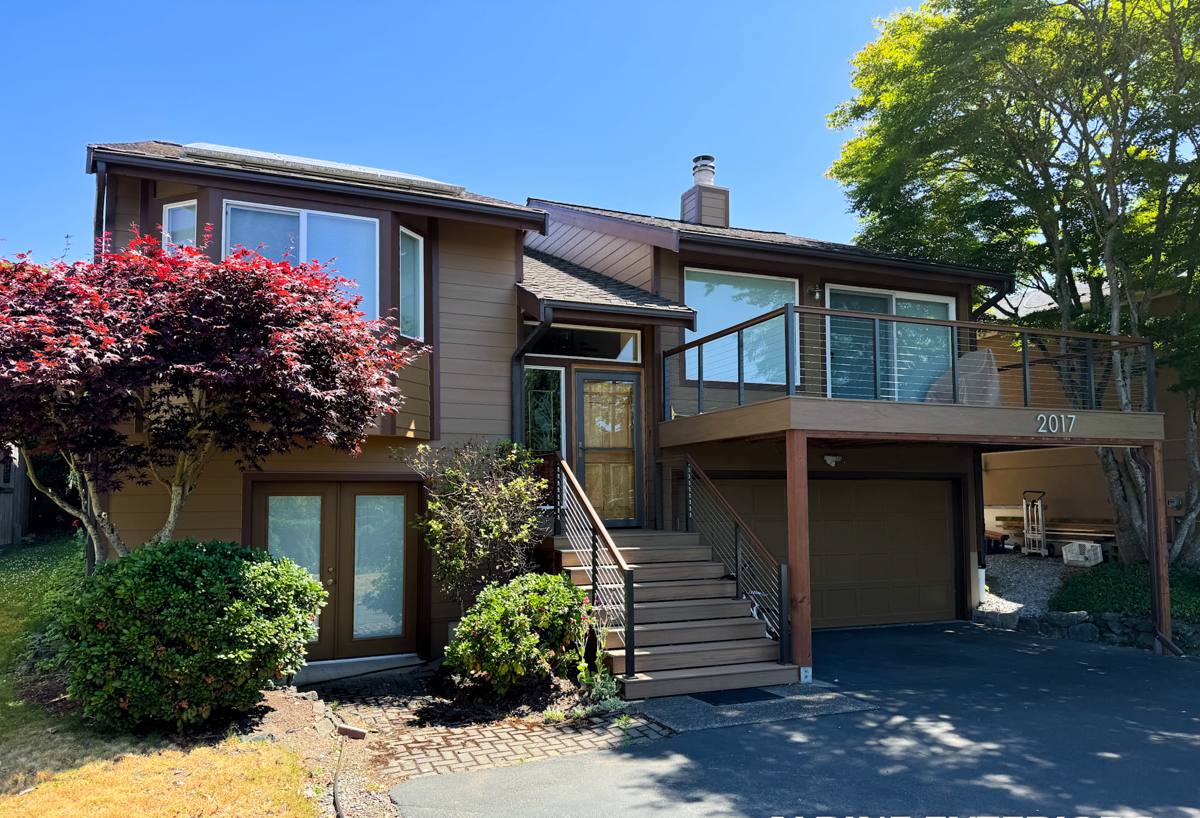
What Kendall's Climate Does to Windows Over Time
Salt Air and Hardware Fatigue
Salt-tinged marine air moving through this part of Whatcom County speeds up corrosion on window hardware, fasteners, and lower-grade flashing metal. Locks that stick, cranks that grind, and balances that give out earlier than they should are common on older Kendall windows, especially on elevations that face open exposure.
Wind-Driven Rain Finding the Gaps
Rain here rarely falls straight down. Wind pushes it sideways and up under trim and sash edges, which means a window that would stay dry in a sheltered climate can still leak in Kendall if the seal around the frame or the flashing behind the trim has aged or was never done correctly to begin with.
Moss, Shade, and Slow Rot
Shaded sills and window trim hold moisture longer here than they would in a drier climate, which feeds moss and mildew growth and, given enough years, softens wood at the sill and lower corners. By the time that damage is visible from outside, it's often been developing for a while underneath.
Condensation Between Seasons
The swing between a heated interior and a cold, wet Kendall exterior puts real condensation pressure on glass and frames. Fogging between panes, water on interior sills, or persistent dampness at the bottom corners of a window usually means a seal has failed, not that something is wrong with how the home is heated.
Signs a Kendall Home Needs Window Replacement
- Fogging or visible moisture trapped between the panes of a double-pane window
- Drafts or cold spots near the frame even when the window is fully closed and locked
- Sills or lower trim that feel soft, look discolored, or show visible rot
- Windows that stick, won't stay open on their own, or are hard to lock like they used to
- Visible daylight or gaps where the frame meets the siding or trim
- Paint or finish failing noticeably faster on window trim than on the rest of the exterior
Repair or Replace? How We Make the Call
Not every aging window on a Kendall property needs to come out. A window with a failed seal but a sound frame and functioning hardware is often a fair repair or reglaze candidate. A window with soft or rotted framing, a warped sash, or hardware that's been failing for years usually isn't — at that point the cost of patching it keeps adding up past what a proper replacement would have run.
| Condition | Repair Usually Makes Sense | Replacement Usually Makes Sense |
|---|---|---|
| Fogged glass, sound frame | Yes — reglaze or seal replacement | Only if the frame is also compromised |
| Stiff, corroded, or broken hardware | Yes — hardware replacement | Not on its own |
| Soft or rotted sill and trim | Rarely a lasting fix | Yes |
| Persistent draft despite sealing | Sometimes, if flashing is the actual cause | Yes, if the unit itself is the source |
| Single-pane or early double-pane, no storm window | Possible short-term patch | Yes, for real comfort and energy gains |
We'll give you a straight read on each window individually rather than a blanket answer for the whole house — it's common for a Kendall home to need three or four windows replaced now and get several more years out of the rest.
Why Retrofit Flashing Is the Detail That Actually Matters
We spend more time talking with homeowners about flashing than about window brands, because in this climate flashing is what separates a replacement that stays dry for decades from one that starts leaking again within a couple of wet seasons. On an existing home, the wall around the window is already closed up, so the install has to work with the siding and trim that's there rather than an open stud bay — which means the sequencing and sealing details matter even more than they do on new construction.
Removing the Old Window Without Guessing
Before a new window goes in, we check the condition of the rough opening itself — the framing, the sill, and whatever flashing or building paper is already there. A retrofit installed over a rotted sill or damaged flashing will fail again no matter how good the new window is, so problems found at this stage get addressed before anything new goes in, not covered over.
Sill Pan and Sloped Drainage
A correctly formed sill pan under the new window gives any water that gets past the glass a path to drain back outward instead of sitting against the frame or soaking into the sill. This is the single detail we see skipped most often on older replacement jobs in this area, usually in favor of just caulking the new unit into the old opening.
Integrating New Flashing With Existing Siding
Retrofit flashing has to tie into whatever weather barrier and siding is already on the wall, lapped in the right order so water sheds down and out rather than getting trapped behind the new trim. Where the existing siding or trim is in poor shape around an opening, we'll tell you honestly if some of it needs to come off and be redone properly rather than flashed around.
Sealing That's a Backup, Not the Whole Plan
Caulk and sealant have a place in a correct retrofit, but only as a supplement to real flashing and a properly pitched sill — never as the only thing standing between the window and the wall behind it. Caulk alone cracks and shrinks over time, and once it fails, it fails silently behind trim that still looks fine.
Choosing Windows for a Marine, Moss-Prone Climate
We install vinyl and fiberglass window systems suited to Whatcom County's wet, mild conditions, and we'll walk you through the real trade-offs rather than steering you toward whichever product is easiest to sell.
- Frame material: Vinyl and fiberglass both resist rot in a way uncladded wood frames don't, which matters given how much moisture Kendall sees through the year.
- Glazing package: Double-pane with a low-E coating covers most homes here; triple-pane or upgraded gas fill is worth discussing for exposed or noise-sensitive elevations.
- Hardware grade: Corrosion-resistant hardware holds up longer against this area's salt-tinged air than standard-grade hardware does.
- Warranty structure: A manufacturer's product warranty only covers the unit itself — we stand behind our installation work separately, since bad flashing voids the benefit of even the best window.
How Our Process Works
- On-site assessment: We check every window you're concerned about — frame condition, seal integrity, hardware function, and how the existing flashing ties into the siding around each opening.
- Honest repair-or-replace read: You get a straightforward recommendation window by window, along with a written scope, before any work begins.
- Ordering and lead time: Replacement windows are typically built to the exact opening size, so we'll give you a realistic timeline rather than an optimistic one.
- Removal and opening inspection: Old windows come out carefully, and we check the rough opening, sill, and existing flashing for hidden damage before setting anything new.
- Sill pan, flashing, and install: Each new window goes in with a properly pitched sill pan and flashing integrated into the existing wall assembly, not just caulked into place.
- Final check: We confirm operation, hardware function, and a clean seal at trim and siding before calling the job done.
A Practical Checklist Before Hiring for Window Replacement in Kendall
- Ask specifically how they handle sill pan and flashing integration, not just which window brand they sell
- Confirm current Washington contractor licensing and active liability insurance
- Get a written scope that separates the product warranty from the installation warranty
- Ask for a repair-or-replace recommendation on each window individually, not a blanket answer for the house
- Ask about realistic lead times on ordering, especially for custom or oversized openings
Why Hiring a Crew That Already Works Kendall Homes Matters
A crew that regularly replaces windows in and around Kendall has already seen how salt air corrodes underspecified hardware, how wind-driven rain finds its way through a poorly lapped sill, and which elevations in this area hold moisture longest through the wet season. That's practical knowledge that shows up in small decisions throughout a retrofit — decisions a crew unfamiliar with this specific climate might not think to make at all. It also means fewer surprises about how older Kendall homes were originally built and flashed, and someone who's still around if a warranty question comes up years down the road.
If you're dealing with drafty, foggy, or stubborn windows on a Kendall home — or you're just not sure whether repair or replacement is the right call — we're glad to take an honest, no-pressure look. Use the form below to request a free estimate.