 Ferndale
 Everson Decks Live in a Different Climate Than the Brochures Assume
Most decking material comes with installation instructions written for a national market — a market that doesn't get eight straight months of drizzle, heavy dew, and shade-grown moss. Everson and the surrounding Ferndale area do. Homes here sit in a low-lying, river-adjacent stretch of Whatcom County where fog settles in overnight, humidity lingers into the afternoon, and wood surfaces rarely get a full day to dry out between rain events. Add in the driving rain that blows through with winter storms off the Sound, and you've got conditions that will find every weak point in a deck within a couple of seasons — loose flashing, a footing that wasn't set below frost depth, fasteners that weren't rated for wet coastal air.
A deck built correctly for this area isn't a different product than a deck built anywhere else in the county. It's the same good framing and material choices, applied with the assumption that the wood or composite will be damp more often than it's dry. That assumption changes a lot of small decisions — decisions that don't show up until year three or four if they're skipped.
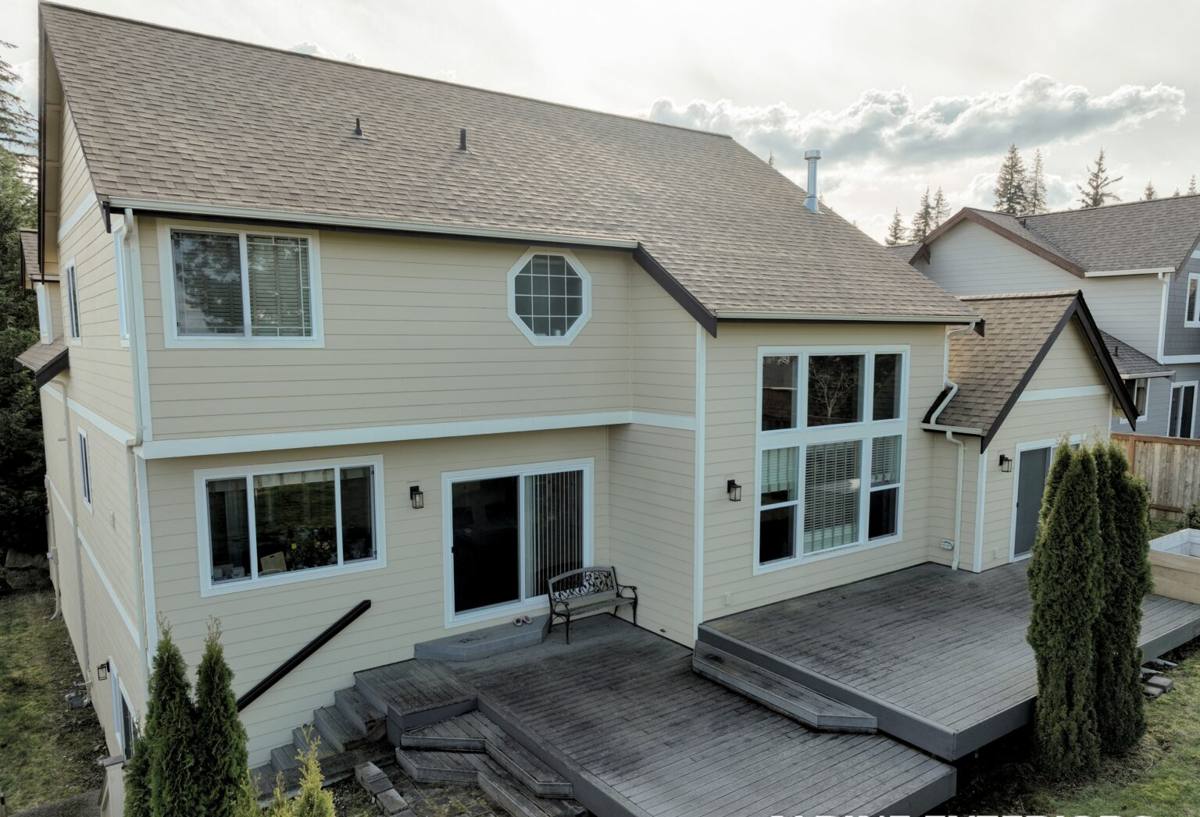
What Local Conditions Actually Demand From a Deck
Moisture that doesn't leave
Long moss season means constant low-level dampness on any horizontal surface that doesn't get direct sun and airflow. That's most of a deck, most of the year. Boards need gaps sized to let water through and air move underneath, not just for looks but so the structure underneath isn't sitting in standing moisture.
Ground that stays soft
Everson's soil holds water longer than sites up on a well-drained slope. Footings need to be sized and set to the depth Whatcom County requires for this soil and frost condition — not the minimum a builder can get away with on a dry-climate job elsewhere.
Salt-tinged air moving inland
Ferndale and the surrounding lowlands get salt-laden air off the Sound on windy days, and it travels further inland than people expect. Fasteners, hangers, and hardware that aren't corrosion-rated for coastal exposure will show rust streaks and weakened connections years before an inland-spec deck would.
Decking Material Options, Compared for This Climate
There's no universally "right" decking material — there's a right material for a given budget, maintenance appetite, and how much shade and moss exposure the specific spot on the property gets. Here's how the common options actually perform under Everson's rain-and-moss conditions:
| Material | How it handles moisture/moss | Maintenance | Typical lifespan here |
|---|---|---|---|
| Pressure-treated fir/hemlock | Absorbs moisture readily; moss and algae take hold fast in shaded spots without regular cleaning | Annual cleaning, periodic sealing | 10-15 years with upkeep |
| Cedar | Naturally more rot-resistant, but still needs airflow and gapping to shed moisture well | Cleaning plus stain/seal every 2-3 years | 15-20 years with upkeep |
| Capped composite (e.g., Trex, TimberTech) | Won't rot or absorb water into the core; surface can still grow moss/mildew film if never cleaned | Occasional wash, no sealing/staining | 25-30+ years, manufacturer-warrantied |
| PVC decking | Fully synthetic, most resistant to moisture damage; can be slicker when moss film forms | Occasional wash | 25-30+ years, manufacturer-warrantied |
For a lot of Everson properties — especially decks under mature trees or on the shaded side of the house — we lean toward capped composite or PVC precisely because the wood-rot risk is removed from the equation entirely. That's not a knock on wood; a well-built cedar deck that gets cleaned on a schedule holds up fine. It's a maintenance-versus-cost tradeoff we'll walk through honestly based on where your deck actually sits and how much sun it gets.
Framing and Structure: The Part That Determines Whether Any of This Lasts
The decking boards are what you see. The framing underneath is what decides whether the deck is still solid in fifteen years. In a climate that keeps everything damp longer than average, three things matter more than usual:
- Joist protection: Joist tops and cut ends need to be sealed or capped so they're not wicking moisture for months at a time.
- Ledger flashing: Where the deck attaches to the house, proper flashing keeps water from working its way behind the siding — one of the most common rot points we find on older decks in this area.
- Hardware rated for the exposure: Hangers, screws, and bolts need a coating rated for coastal/wet exposure, not a generic interior-grade fastener that starts corroding within a couple of wet seasons.
None of this is visible once the decking is down, which is exactly why it's worth asking a contractor directly what fastener and flashing spec they use before work starts — not after.
Footings, Railings, and Code Requirements
Whatcom County has specific requirements for footing depth, guardrail height, baluster spacing, and stair rise/run — and those requirements exist because they reflect real failure points, not paperwork for its own sake. A footing set too shallow can heave or shift as the ground around it saturates and drains through the wet season. A guardrail gap that's a fraction too wide is a real safety gap, not a technicality.
Permitting for Everson-area projects typically runs through the local jurisdiction or Whatcom County, depending on exactly where the property sits. We handle that step as part of the job rather than leaving it for the homeowner to sort out — it's a lot easier to get right the first time than to correct after the deck is built.
Common code and structural checkpoints
- Footings set to required depth and bearing for local soil conditions
- Ledger board properly bolted and flashed, not just nailed to siding
- Guardrails at correct height with baluster spacing that meets code
- Stair rise and run consistent, with a graspable handrail where required
- Joist hangers and structural connectors rated for exterior/wet exposure
Moss, Algae, and Keeping a Deck Looking Right Long-Term
Even a well-built deck in this part of Whatcom County will grow some moss or algae film on shaded boards — that's the climate, not a defect. The difference between a deck that looks tired after five years and one that still looks good after fifteen usually comes down to two things: board spacing that lets air and water move, and a homeowner who does a simple wash-down once or twice a year rather than letting growth establish itself into the surface. Composite and PVC decking make this easier since there's no sealing schedule to keep up with, but even those benefit from an annual rinse in a moss-heavy yard.
How We Approach an Everson Deck Project
- On-site walk-through: We look at sun exposure, drainage, existing structure (if it's a rebuild), and how the deck will actually be used before talking materials.
- Honest material conversation: We'll lay out wood versus composite versus PVC for your specific spot and budget — not push whatever has the best margin.
- Design and permitting: Layout, footing plan, and permit submission handled before any digging starts.
- Build: Footings, framing, decking, railing, and stairs, with the fastener and flashing spec discussed above.
- Final walk-through: We go over the finished deck together and explain what maintenance, if any, it needs going forward.
Why It Matters That We Already Work in Everson
A crew that already builds decks in the Everson and greater Ferndale area isn't guessing at soil behavior, drainage patterns, or which corners of a property hold moisture longest — we've seen it repeatedly on jobs nearby. That familiarity shows up in small decisions: where to add an extra footing on softer ground, how much board gap to leave given the shade a particular yard gets, and which fastener spec actually holds up here rather than in a drier climate. It also means straightforward logistics — no travel premium, and a crew that can get back out for a warranty check without it being a special trip.
Questions Worth Asking Before You Hire Anyone
- Are footings sized and set to Whatcom County code for this soil, not a generic minimum?
- What fastener and hardware coating rating do you use for coastal/wet exposure?
- How is the ledger board flashed where it meets the house?
- Do you pull the permit, or is that left to the homeowner?
- What's the realistic maintenance schedule for the material we choose, in this climate specifically?
If you're weighing options for a new deck or a rebuild in the Everson area, we're happy to walk the property, talk through materials honestly, and give you a straightforward, no-pressure estimate. There's a form right below this to get that conversation started.