 Ferndale
 Deck Repair Built for Point Roberts Conditions
Point Roberts sits out on its own peninsula, surrounded by water on three sides, which means every deck out there takes a harder hit from the weather than a deck twenty miles inland. Salt-laden air off the water accelerates corrosion on fasteners and hardware. Driving rain off the Strait finds its way into every gap, seam, and end-grain cut. And the long, damp Whatcom County shoulder seasons give moss and algae months at a time to get established on any surface that doesn't dry out quickly. We've repaired enough decks out here to know that a deck built or repaired without those three factors in mind is a deck that will need attention again soon.
This page covers what deck repair actually means for homes in Point Roberts specifically — what fails first, what a correct repair looks like, and how we handle the logistics of working in a community that's a little different to get to and from than most of our other Whatcom County service areas.
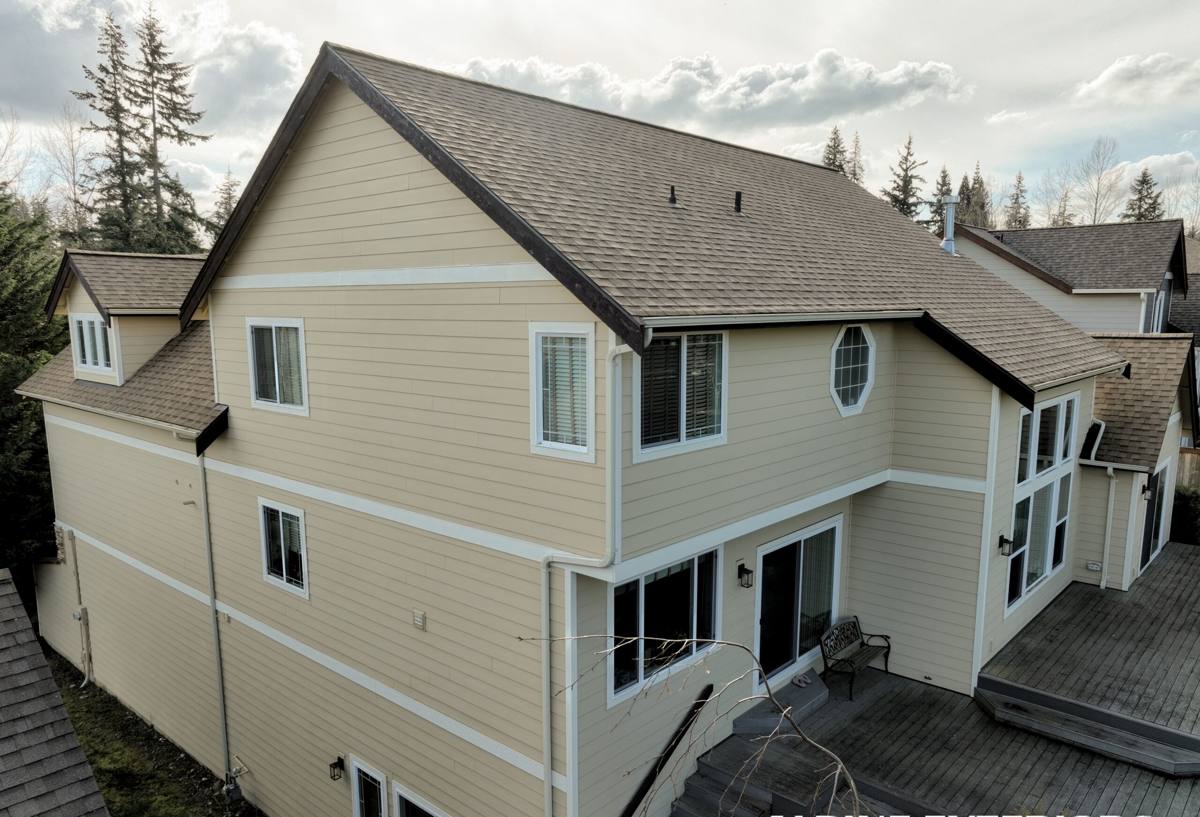
What Fails First on Point Roberts Decks
Fasteners and Hardware
Galvanized nails and screws that would last a couple decades in a drier, inland yard can start showing rust bleed and weakening within several years out here because of the salt content in the air. We see it most on ledger board connections, joist hangers, and any exposed fastener heads on the deck surface. Once a fastener starts to corrode, it loses holding strength well before it looks bad enough to worry a homeowner — which is part of why deck failures out here can surprise people.
Ledger Board and Rim Joist Rot
The ledger board — where the deck attaches to the house — is the single most common failure point we find on repair calls anywhere in the region, and salt air combined with driving rain makes it worse here. Water gets behind improperly flashed ledgers, soaks the rim joist and the ledger itself, and rot sets in from the inside where you can't see it until the deck starts to feel spongy or the whole structure develops a slight sag at that connection.
Moss, Algae, and Surface Decay
Whatcom County's wet season gives moss plenty of time to colonize deck boards, especially on the north side of a house or under tree cover where sun doesn't reach. Moss holds moisture against the wood surface far longer than open air would, which speeds up rot in solid wood decking and can degrade the surface layer on some composite products over time. It also makes the deck slick and genuinely dangerous underfoot, which is a safety issue as much as a maintenance one.
Post Bases and Footings
Wood posts that sit in or near standing water, or that were never properly isolated from the concrete footing with a post base, rot from the bottom up. This is a slow failure — often invisible until the post is soft enough to probe with a screwdriver — but it's a structural issue, not a cosmetic one.
How We Assess a Point Roberts Deck
Every repair call starts with a full walk of the structure, not just a look at the boards you can see. That means:
- Checking the ledger board connection and flashing from underneath, not just visually from the top
- Probing joists, beams, and posts with an awl or screwdriver at moisture-prone points — near the house, at grade level, under planters or hot tubs
- Checking every hanger and fastener for rust bleed, loosening, or corrosion
- Testing the railing system for lateral movement, which is one of the most common code and safety issues we find
- Looking at drainage — where water pools, where it's supposed to shed, and whether it actually does
- Assessing moss and algae coverage and whether it's cosmetic or has already caused surface decay
We tell homeowners honestly what we find, including what's fine to leave alone for now. Not every deck issue needs a full rebuild, and we're not going to tell you it does.
Repair vs. Replace: How We Make the Call
The structural frame — posts, beams, joists, ledger — is what determines whether a deck is a repair job or a replacement job. If the frame is sound and the damage is limited to surface boards, railings, or isolated hardware, repair is usually the right call and the more economical one. If the ledger connection has been compromised by rot, or if multiple joists or posts have significant decay, patching around those problems just delays a bigger job and can create a safety liability in the meantime.
| Condition | Usually Repairable | Usually Needs Replacement |
|---|---|---|
| Deck boards | Isolated cupping, splitting, or moss staining on a few boards | Widespread soft spots, rot through the board thickness |
| Ledger board | Minor surface weathering, flashing needs updating | Rot at the house connection, evidence of long-term water intrusion |
| Railings | Loose balusters, worn top rail, minor wobble | Rotted posts, failed connections, code-noncompliant spacing/height |
| Framing (joists/beams) | One or two isolated soft spots away from bearing points | Rot at multiple bearing points or along a beam span |
| Posts/footings | Surface weathering above grade | Soft wood at or below grade, undersized or heaved footings |
Our Repair Process
1. Assessment and Written Estimate
We inspect the full structure and give you a clear, written breakdown of what needs to happen and why — not a vague number. If we find something beyond the original scope once we open things up (which happens more often with hidden ledger rot than homeowners expect), we tell you before doing the work, not after.
2. Demo of Compromised Material Only
We remove what's actually failed — boards, hardware, sections of framing — without tearing into sound material unnecessarily. This keeps costs down and respects work that's still doing its job.
3. Correct the Root Cause, Not Just the Symptom
If a ledger board rotted because of missing or failed flashing, we fix the flashing, not just the board. If moss took hold because a section of the deck never gets sun and never sheds water properly, we address drainage and airflow where we can, not just scrub the surface. Replacing rotted wood without fixing why it rotted just buys you a few more years before the same repair call.
4. Hardware Upgrade Where It Matters
Given the salt air exposure out here, we default to corrosion-resistant fasteners and connectors rated for coastal or treated-lumber exposure, not the cheapest galvanized option. It costs a little more up front and pays for itself by not needing this repair again in five years.
5. Final Walkthrough
We walk the finished deck with you, point out what was done, and flag anything worth keeping an eye on going forward — moss-prone spots, drainage areas, whatever's relevant to your specific deck.
Materials: What We Recommend and Why
For Point Roberts specifically, material choice matters more than in a drier inland location because of the combined salt air and moisture exposure. Pressure-treated lumber remains a solid, economical choice for framing and is what most homes out here already have. For decking surfaces exposed to heavy moss and moisture, composite decking has a real advantage — it doesn't absorb water the way solid wood does, which limits rot, though it still needs periodic cleaning since moss and algae will grow on any surface that stays damp and shaded, composite included. Cedar is a traditional choice with real visual appeal but requires more consistent maintenance — sealing, cleaning, occasional board replacement — to hold up against this level of moisture exposure. We'll walk through the honest maintenance trade-offs of each option for your specific deck rather than push one product across the board.
Fastener and Hardware Standards
We use connectors and fasteners rated for the exposure category the deck actually faces — stainless steel or coated hardware in higher-exposure spots like ledger connections and anything near grade. This is a small percentage of total job cost and one of the cheapest ways to add years to a repair.
Maintenance That Extends the Life of a Repair
A good repair job doesn't mean zero maintenance going forward, especially in this climate. A simple annual routine goes a long way:
- Clear leaves, needles, and debris from between boards and off ledger flashing before the wet season sets in
- Clean moss and algae off the surface early in the season before it has all winter to work into the wood
- Check that gutters and downspouts near the deck are directing water away, not onto or under it
- Look underneath once a year for early signs of moisture staining or soft wood, especially near the ledger and post bases
- Re-seal or re-stain solid wood decking on the schedule the product actually requires, not just when it looks faded
Why Hire a Crew That Already Works Point Roberts
Point Roberts has a logistical wrinkle most contractors don't want to deal with: it's a U.S. exclave, cut off from the rest of Whatcom County by land and only reachable by driving through Canada or by boat. That border crossing adds real time and coordination to every trip — material deliveries, crew scheduling, and simple things like making a second trip for a part that wasn't accounted for. A lot of contractors quietly avoid bidding jobs out there for exactly this reason, or they price in so much uncertainty that the estimate isn't a fair one.
We already build that logistics reality into how we plan and price a Point Roberts job, so there's no surprise fee for the crossing and no scheduling guesswork. We also know the specific conditions this peninsula creates — the salt exposure, the moss timeline, the drainage issues that show up on waterfront and near-waterfront lots — because we've repaired decks out here before, not because we're guessing based on general Pacific Northwest deck knowledge.
A Quick Pre-Estimate Checklist
Before we come out, it helps to have a general sense of what you're seeing. Walk your deck and note:
- Any soft, spongy, or bouncy spots underfoot
- Visible gaps, cracking, or separation where the deck meets the house
- Rust staining around fasteners or hardware
- Railings that wobble or feel loose when pushed
- Moss, algae, or standing water that doesn't clear within a day or two of dry weather
- Any area that's felt "off" when you walk on it, even if you can't point to why
None of this requires special tools or expertise — just a walk around with attention. It gives us a head start on the assessment and gives you a better sense of what to expect from the estimate.
Get a Free, No-Pressure Estimate
If your Point Roberts deck has a soft spot, a rust-stained connection, or just years of moss buildup you're not sure how to read, we're happy to come take an honest look. There's no pressure and no obligation — just a clear assessment and a straightforward estimate for what it would actually take to fix it right. Use the form below to get in touch.