 Ferndale
 Building a Deck That Holds Up in Cordata
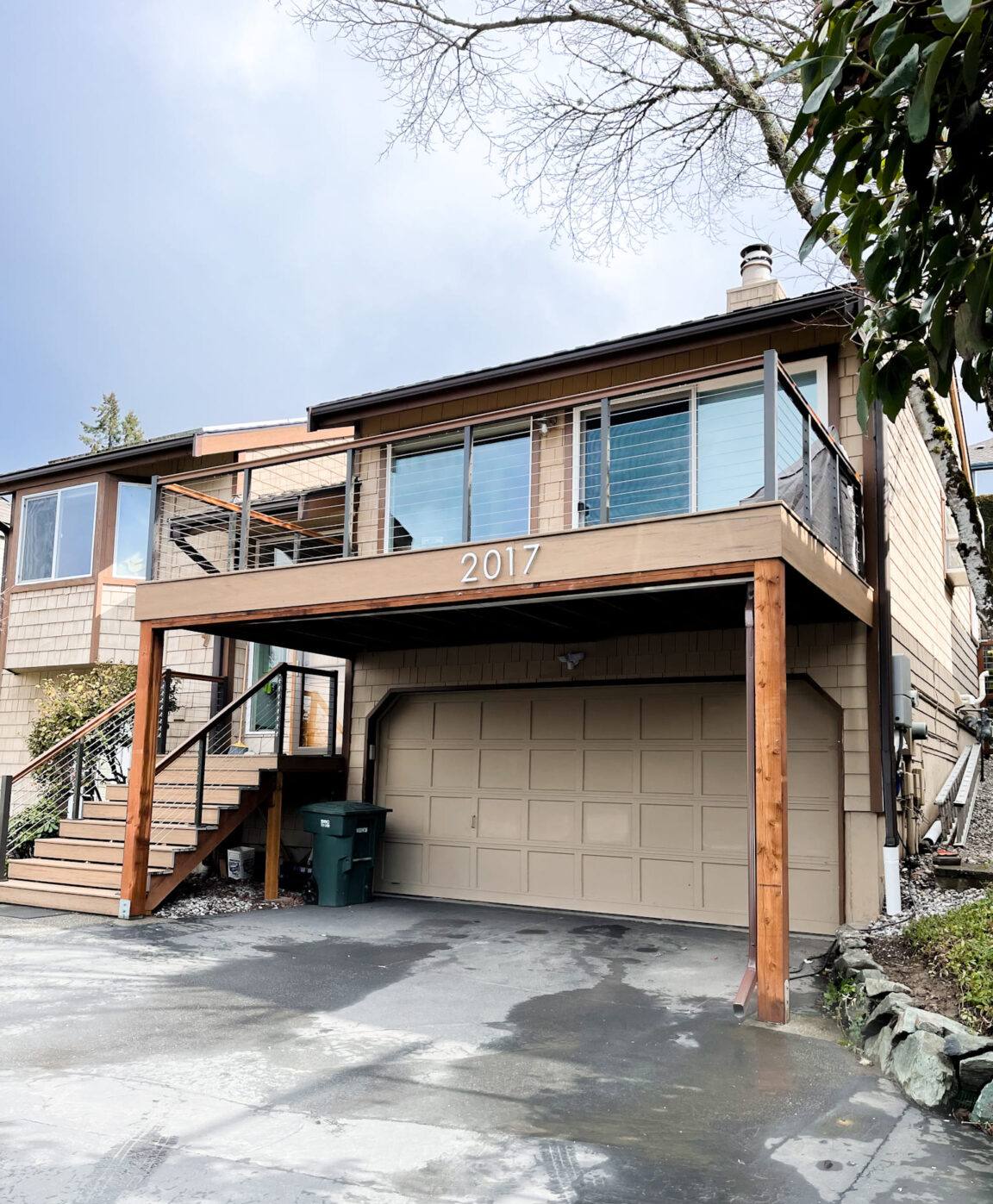
Cordata sits in the growing corridor between Ferndale and Bellingham, and a lot of the homes here are newer than what you'll find closer to the older parts of town — but "newer" doesn't mean a deck attached to one of these houses gets a pass on the weather. Whatcom County's marine climate doesn't care how old the house is. A deck built here has to deal with salt-laden air drifting in off the Salish Sea, long stretches of driving rain, and a moss season that can run from early fall well into spring. We build and repair decks in this area regularly, and almost every callback we get traces back to the same handful of decisions made — or skipped — at the framing stage.
This page is about one thing: what it actually takes to build a deck in Cordata that doesn't need to be rebuilt in eight years. Not a generic deck-building overview, but the specifics that matter for this neighborhood's exposure and this county's climate.
What Cordata's Climate Does to an Outdoor Deck
Salt Air and Corrosion
Ferndale and the surrounding area sit close enough to the water that salt-laden air is a real factor, even inland in Cordata. Salt in the air accelerates corrosion on any exposed metal — nails, screws, joist hangers, bolts — long before the wood itself shows any wear. A deck can look structurally fine on the surface while the fasteners holding it together are quietly rusting from the inside of the joints, where you can't see them. This is one of the most common problems we find on older decks in this area: the decking boards are still serviceable, but the hardware underneath has failed.
Driving Rain and Moisture
Whatcom County doesn't just get rain — it gets sustained, wind-driven rain that pushes water sideways into ledger connections, stair stringers, and anywhere two pieces of material meet. Flat, horizontal surfaces without a slight pitch hold standing water. Standing water finds every gap in flashing, every under-sized drainage gap between boards, and every spot where end grain was left exposed. Over years, that's how rot starts — not from a single storm, but from water that never fully has a chance to leave.
The Long Moss Season
Because the wet season here runs so long, moss and algae get a real foothold on any deck surface that stays shaded or doesn't drain and dry between rain events. Beyond looking bad, moss holds moisture against the decking surface and makes boards slick and dangerous underfoot — a real concern on stairs and any deck near mature trees, which describes a fair number of Cordata lots. Deck orientation, gaps between boards, and surface texture all affect how much of a moss problem a homeowner ends up fighting every year.
What a Correctly Built Deck Requires Here
Footings and Framing
Footings need to be sized and set to the depth the local frost and soil conditions call for, not just poured to whatever looks adequate. Framing lumber should be rated for the exposure it's actually going to see — ground-contact-rated pressure treatment where posts meet the soil, and a structure that's been engineered to shed water off the top of every framing member instead of letting it pool.
Fasteners and Hardware
Given the salt exposure in this area, we treat fastener selection as a structural decision, not an afterthought. Hot-dip galvanized or stainless connectors and screws cost more up front than standard coated fasteners, but in a climate that's actively working to corrode metal, the cheaper option is the one that ends up costing a homeowner a rebuild.
Drainage and Airflow
The space under a deck matters as much as the surface on top. Decking needs consistent gapping to let water through instead of pooling on the boards, and the substructure needs enough airflow underneath to actually dry out between storms. A deck built tight to the ground with no ventilation is a deck that stays damp for most of the wet season, which is exactly the condition rot and moss both need to take hold.
Choosing a Decking Material for This Climate
There's no single "right" decking material for Cordata — there's a right material for a given budget, maintenance appetite, and how much shade and moisture a particular yard deals with. Here's how the common options actually compare in this climate:
| Material | Moisture & Moss Resistance | Maintenance | Typical Lifespan Here |
|---|---|---|---|
| Pressure-treated wood | Good if sealed and maintained; absorbs water if neglected | Annual cleaning and periodic re-sealing | 10-20 years with upkeep |
| Cedar | Naturally moisture-resistant but softer; still needs sealing in this climate | Regular sealing to hold its color and resist moss | 15-20 years with upkeep |
| Composite decking | Very good; doesn't absorb water like wood, but surface moss still needs cleaning | Occasional washing; no sealing or staining | 20-30 years |
| PVC / capstock boards | Excellent; fully sealed surface sheds water and resists staining | Lowest maintenance of the group | 25+ years |
Composite and capstock products cost more per square foot than treated wood, but in a climate where the maintenance window is short and the wet season is long, a lot of Cordata homeowners find the lower upkeep worth the added cost. That said, wood decking done right — sealed on schedule and built with proper drainage — is still a legitimate, more affordable choice. We'll walk through the honest trade-offs for your specific yard rather than push whatever has the best margin.
Our Process for Cordata Deck Projects
- Site assessment. We look at sun and shade exposure, drainage on the lot, existing structure condition if this is a rebuild, and how the deck ties into the house.
- Design and material selection. We walk through decking and framing options against your budget and how much maintenance you actually want to do each year.
- Permitting. We handle the permit application and inspections required for the project so you're not the one chasing down paperwork.
- Framing and structure. Footings, ledger attachment, joists, and hardware go in to spec — this is the stage that determines how the deck performs in ten years, not year one.
- Decking, railing, and finish work. Surface material goes down with correct spacing and fastening for drainage, followed by railing and any stairs.
- Final walkthrough. We go over care and maintenance specific to the material you chose so you know what upkeep actually looks like here.
Permits and Code in Ferndale and Whatcom County
Most decks attached to a house, and many free-standing decks above a certain height, require a building permit under local code, along with inspections at the framing and final stages. Requirements can vary depending on whether a property falls under Ferndale city jurisdiction or unincorporated Whatcom County, and they can change over time, so we always confirm current requirements with the local building department before work starts rather than assume last year's rules still apply. Skipping this step is a common shortcut with unpermitted decks we're asked to inspect or take over — it tends to surface as a problem later, at resale or insurance time, not during the build.
Maintenance: What Keeps a Deck Going Here
Whatever material you choose, a few habits make the biggest difference in how long a deck lasts through Whatcom County winters:
- Clear leaves and debris out of the gaps between boards before the wet season sets in — trapped debris holds moisture against the wood.
- Wash the surface at least once a year to knock back moss and algae before it gets established, especially on shaded sections.
- Check and re-seal wood decking on the schedule the sealant manufacturer recommends — sun and rain both break down finishes faster here than in a drier climate.
- Keep an eye on ledger and stair connections for rust staining, which is often the first visible sign of hardware corrosion underneath.
- Trim back vegetation and tree cover where you can, since shade that never dries out is what feeds a moss problem.
- Have the substructure looked at every few years, not just the surface — most structural problems start underneath, out of sight.
Why Hire a Crew That Already Works in Cordata
A deck builder who's never worked in this specific climate will often frame and fasten a deck the way it's done in a drier region, because that's what they know. In Whatcom County, that shows up a few years later as rusted hardware, soft framing at the ledger, or moss that never goes away because the deck was never built to shed water and dry out. Working regularly in Ferndale and the surrounding communities means we already know which fastener grades hold up, what the local building department expects at inspection, and how to size drainage and gapping for our wet season rather than a national average. That local knowledge is the difference between a deck that needs attention every year and one that quietly does its job.
Get a Free, No-Pressure Estimate
If you're planning a new deck in Cordata or want an honest look at whether an existing one is holding up the way it should, we're happy to come take a look. There's no pressure and no obligation — just a straight assessment of what your project needs and what it would take to do it right. Use the form below to get started.