 Ferndale
 Why Asphalt Shingles Still Make Sense in Cordata
Asphalt shingles remain the most common roofing material in this part of Whatcom County for good reason: installed correctly, with the right underlayment and ventilation, they hold up well against the marine climate that defines this area, and they do it at a price point that fits most remodeling and new-construction budgets. That doesn't mean any asphalt shingle roof will perform the same way. The difference between a roof that lasts its full rated life and one that starts failing early almost always comes down to installation detail, not the shingle bag itself.
Cordata sits close enough to the water and to open, wind-exposed terrain that roofs here take a different kind of beating than roofs in a drier inland climate. Salt-laden air accelerates corrosion on exposed metal fasteners and flashing. Driving rain, pushed sideways by wind rather than falling straight down, tests every lap, seam, and penetration on a roof in a way that gentler rainfall doesn't. And a long moss season — stretching well beyond just the wettest months — means shaded, north-facing, and tree-covered roof sections stay damp far longer than roofs in sunnier regions. A shingle roof built for Cordata needs to account for all three.
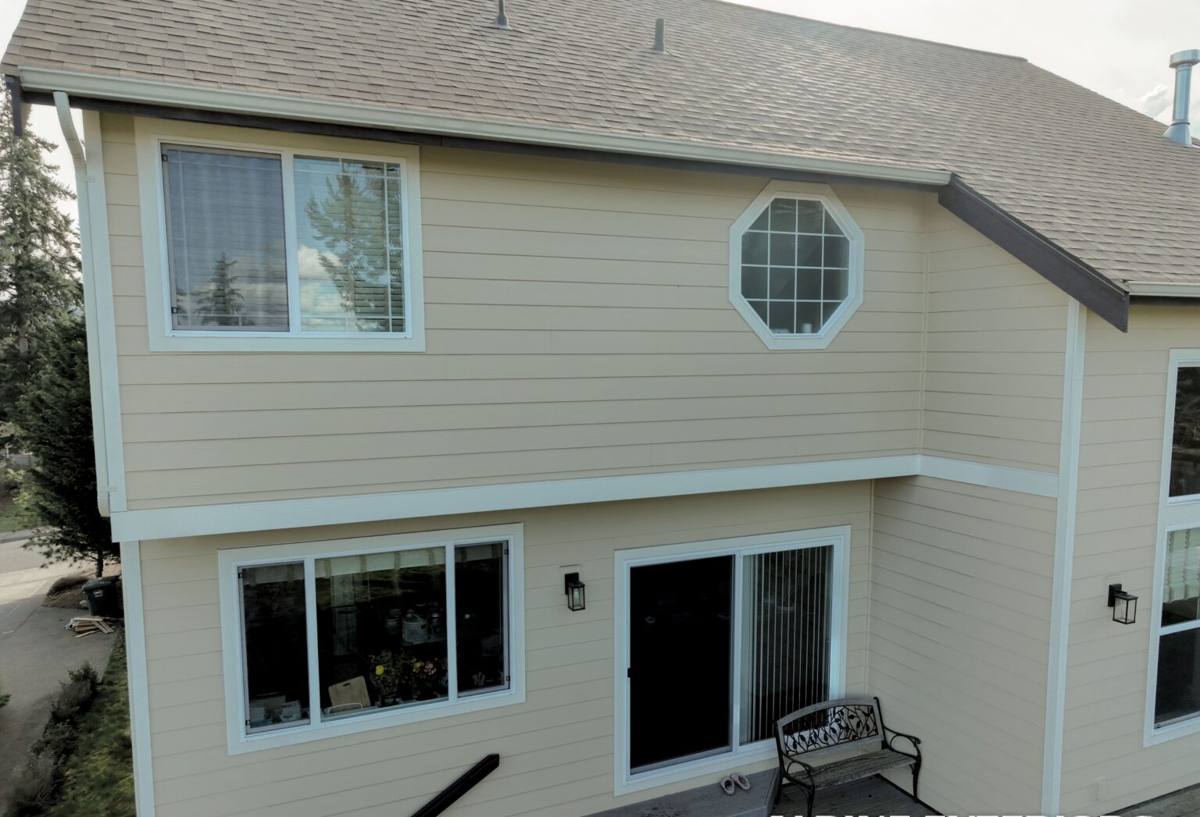
What the Local Climate Actually Does to a Roof
Salt Air and Corrosion
Homes in and around Ferndale are close enough to Bellingham Bay and the greater Salish Sea coastline that airborne salt is a real factor in material selection, even on roofs that aren't directly waterfront. Salt exposure speeds up corrosion on bare steel fasteners, unprotected flashing, and lower-grade metal roof accessories. Over years, corroded fasteners can back out or lose their grip, and corroded flashing can develop pinholes long before the shingles themselves show wear. This is why fastener and flashing material selection matters as much as shingle brand on a Cordata roof.
Wind-Driven Rain
Rain that comes in at an angle — which is common in this region's weather patterns — doesn't just run down the roof plane and off the eave. It gets pushed under shingle tabs, into exposed nail heads, and toward any seam that isn't properly lapped or sealed. A roof designed for a calmer climate can get away with looser detailing at valleys, ridges, and penetrations. A roof built for Cordata's wind-driven rain can't. Every transition point needs to be built assuming water will be pushed at it from an angle, not just falling straight down.
Moss, Shade, and Moisture Retention
Whatcom County's wet season runs long, and roof sections that stay shaded by trees or face north hold moisture for extended stretches even between rain events. That moisture is exactly what moss and algae need to establish. Once moss takes hold on a shingle roof, it does more than look bad — it holds water against the shingle surface, works its way under tab edges, and can gradually lift shingles enough to let water underneath. Left unaddressed for years, moss growth shortens the practical life of an asphalt shingle roof well below its rated lifespan.
What a Correctly Installed Shingle Roof Actually Involves
A shingle roof is a system, not a single layer. Every component below the visible shingles does specific work, and skipping or shortcutting any of them is usually where premature roof failure starts.
Deck Inspection and Prep
Before new shingles go down, the roof deck needs to be inspected for soft spots, delamination, or water damage from the roof it's replacing. Any compromised sheathing gets cut out and replaced. Skipping this step and roofing over a damaged deck is one of the most common shortcuts that leads to problems well before the shingles themselves wear out.
Underlayment
Underlayment is the roof's backup layer — the barrier that protects the deck if wind or ice ever gets water past the shingles themselves. In a climate like Cordata's, with sustained wet seasons and wind-driven rain, a synthetic or high-quality underlayment installed with correct overlap is a meaningful part of the roof's actual water resistance, not just a code-minimum formality.
Ice and Water Shield at Vulnerable Areas
Eaves, valleys, and areas prone to ice damming or heavy water concentration benefit from a self-adhering ice and water membrane underneath the shingles. This isn't decorative — it's a second line of defense exactly where water is most likely to find a way in.
Flashing at Every Transition
Chimneys, skylights, sidewalls, valleys, and any roof-to-wall intersection need properly formed and sequenced flashing, not just caulk and hope. Flashing has to be installed in the correct order relative to the underlayment and shingle courses so water is always directed out and down, never trapped behind a lap. In a wind-driven-rain climate, flashing quality at these transitions is often the single biggest factor in whether a roof stays dry for its full service life.
Ventilation
Balanced intake and exhaust ventilation keeps the attic space at a reasonable temperature and moisture level year-round. Poor ventilation traps moisture under the deck, which can lead to premature shingle deterioration from underneath and creates conditions that support mold and rot in the attic structure itself — separate from, but related to, the moss issue happening on the outside surface.
Shingle Installation and Nailing Pattern
Correct nail placement, count, and depth — following the manufacturer's specification for the wind zone — is what keeps shingles locked down through the area's exposed, windy stretches. Overdriven or underdriven nails, or nails placed outside the manufacturer's nailing zone, are a common cause of shingles that blow off or lift years before they should, and it's a defect that's often invisible until wind actually tests it.
Choosing the Right Shingle for This Climate
Not every asphalt shingle product is built the same, and for a Cordata roof, a few features matter more than they would in a milder climate.
| Feature | Why It Matters Here |
|---|---|
| Algae-resistant (AR) granules | Slows moss and algae growth on shaded, north-facing, or tree-covered roof sections common in this area |
| High wind rating | Matters on exposed lots and homes facing open terrain where gusts are stronger |
| Sealant strip quality | Affects how well tabs stay bonded down against wind-driven rain and gusts over time |
| Manufacturer warranty structure | Coverage terms vary; understanding what's prorated versus non-prorated matters over a 20-30 year roof life |
| Corrosion-resistant accessory metal | Reduces long-term degradation of flashing and fasteners from salt-air exposure |
We install algae-resistant shingle lines as a standard recommendation for Cordata roofs specifically because of how long shaded sections stay damp here. It doesn't eliminate moss risk entirely — nothing does — but it meaningfully slows it compared to a standard shingle in the same conditions.
Our Process for a Cordata Roof Replacement
- Inspection and assessment: We look at the existing roof's condition, deck integrity, ventilation setup, and any problem areas like valleys, chimneys, or shaded sections showing moss growth.
- Written scope and material selection: You get a clear, itemized scope covering tear-off, deck repair allowance, underlayment, ice and water shield placement, flashing plan, shingle product, and ventilation work — not a vague lump-sum number.
- Tear-off and deck inspection: Old roofing comes off down to the deck so we can actually see and address any damage, rather than roofing over unknown problems.
- Underlayment and ice/water shield installation: Installed with correct overlap and placement at vulnerable areas before any shingles go down.
- Flashing installation: Formed and sequenced correctly at every penetration and transition point.
- Shingle installation: Installed to manufacturer nailing specifications for the applicable wind zone.
- Ventilation check and correction: Intake and exhaust balance is verified and corrected if the existing setup is inadequate.
- Final walkthrough: We review the completed work with you and cover basic maintenance expectations for this climate, including moss monitoring.
Signs a Cordata Roof Needs Attention
- Visible moss or heavy algae streaking, especially on shaded or north-facing slopes
- Shingle tabs that are curling, cupping, or lifting at the edges
- Granules collecting in gutters in noticeably larger amounts than in past years
- Missing or damaged shingles after a windstorm
- Visible daylight or water staining in the attic near valleys, chimneys, or sidewalls
- Soft or spongy spots when walking the roof (best assessed by a professional, not a homeowner on a ladder)
- Rusting or corroded flashing and fasteners visible at roof edges or penetrations
- A roof approaching or past its expected service life, even without obvious visible damage
Maintenance That Extends a Shingle Roof's Life Here
Given how long moss season runs in this region, periodic moss treatment and gentle removal — done carefully, without pressure-washing that can strip granules — is one of the more effective ways to protect a shingle roof's lifespan in Cordata specifically. Keeping gutters clear so water isn't backing up under the eave line, trimming back overhanging branches that keep sections of roof shaded and damp, and having a professional check flashing and sealant points every few years are all low-cost habits that meaningfully extend a roof's service life in this climate. None of this replaces a correctly built roof to begin with, but it protects the investment once it's in place.
Why Local Roofing Experience Matters
A shingle roof built to a generic specification can technically meet code and still underperform in a climate like this one. Crews who work regularly in Whatcom County's coastal conditions know which valleys tend to collect debris and moss first, which roof orientations need extra attention to ventilation, and which fastener and flashing choices actually hold up against sustained salt exposure rather than just looking fine on installation day. That kind of judgment comes from doing this work repeatedly in this specific climate, not from a general roofing background alone.
We also know that Cordata homes vary — some sit more exposed to wind, others are more shaded by mature trees — and a roof plan that's right for one lot isn't automatically right for the one next door. Part of doing this job correctly is adjusting the ventilation, shingle selection, and moss-prevention approach to the specific property rather than applying one standard plan everywhere.
Get a Straightforward Assessment
If your Cordata home's roof is showing moss, missing granules, storm damage, or is simply getting old enough to plan ahead for, we're glad to take a look and give you an honest read on its condition — no pressure, no upsell. Reach out below for a free estimate and we'll walk you through exactly what we see and what we'd recommend.