 Ferndale
 Deck Repair Built for Bellingham's Climate
Bellingham and Ferndale sit close enough to the water and the Nooksack lowlands that decks here age differently than decks inland. Salt-laden air off Bellingham Bay and the Strait works into fasteners and hardware year-round. Long stretches of driving rain push moisture into every joint, seam, and end-grain cut on a deck. And Whatcom County's mild, wet winters mean moss and algae get a five- or six-month head start most years, colonizing shaded boards and north-facing rail sections before a homeowner even notices. A deck repair that ignores those three factors — salt, rain, and moss — tends to fail again within a season or two. One that accounts for them holds up.
We repair decks across Bellingham and Ferndale as a standing part of our siding and exterior work, not a side job. That matters because deck problems are rarely isolated — a soft ledger board or a failing rail post is often connected to the same moisture patterns affecting siding, trim, or a nearby foundation wall. Treating the deck in isolation can mean missing the actual source of the damage.
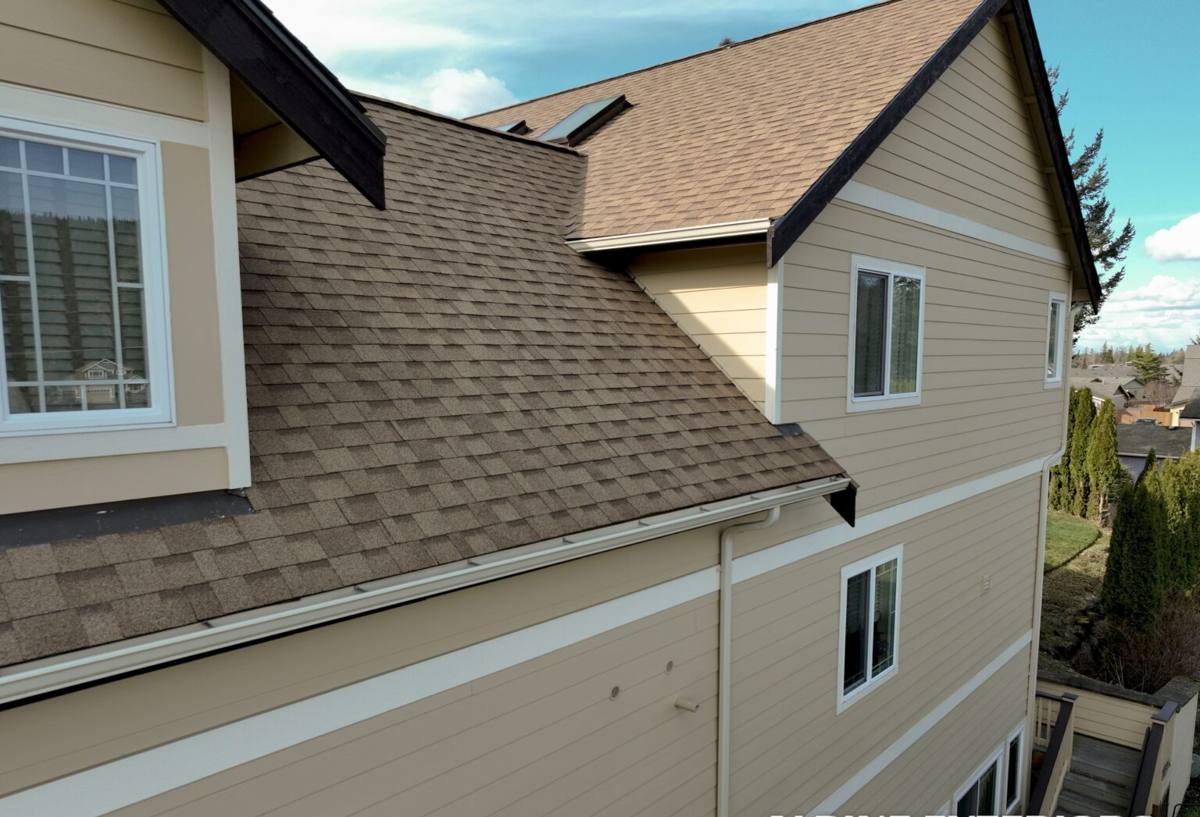
What Bellingham's Weather Actually Does to a Deck
Salt Air and Fasteners
Homes within a few miles of the water see accelerated corrosion on nails, screws, and structural connectors — especially older galvanized hardware that wasn't rated for coastal exposure. Corroded fasteners lose holding strength quietly; a rail post or stair stringer can look solid while the metal actually anchoring it has thinned considerably.
Driving Rain and End-Grain
Whatcom County's rain doesn't just fall straight down — wind-driven rain off the Strait hits decks at an angle, working into cut ends, screw holes, and the underside of boards where water pools and doesn't dry quickly between storms. End-grain is the most absorbent part of any deck board, and it's usually the first place rot starts, particularly at board ends butted against a house or rim joist.
Moss, Algae, and Trapped Moisture
Shaded decks, north-facing rail sections, and anywhere leaves or fir needles collect will grow moss through most of the fall, winter, and spring here. Moss itself doesn't rot wood directly, but it holds moisture against the surface far longer than bare wood would dry on its own — and that extended wet time is exactly what invites decay fungus into the boards underneath.
Signs a Bellingham Deck Needs Repair, Not Just Cleaning
- Soft, spongy, or springy spots when you walk across the deck
- A screwdriver or awl sinking easily into a board or post with light pressure
- Rail posts that wobble or flex when pushed
- Visible gaps opening up between boards or at the ledger board where the deck meets the house
- Rust streaking below fasteners or connector hardware
- Persistent moss or dark staining that comes back within weeks of cleaning
- Stair stringers that feel less solid than the rest of the deck
- Any separation or daylight visible at the ledger-to-house connection
Any one of these on its own might be minor. Several together, or anything involving the ledger board or a support post, usually means the problem has moved past the surface and into the structure.
What a Correct Deck Repair Involves
Diagnosis Before Anything Gets Replaced
The first step is figuring out how far the damage actually goes. A board that looks bad on top can have a solid joist underneath it, or the reverse — clean-looking boards can be sitting on a joist that's rotted from below where it's never visible without pulling something up or getting underneath the deck. We probe suspect areas, check the ledger connection, and look at the framing from below when there's access, rather than assuming the visible damage is the whole story.
Structural Work Comes First
Framing, ledger board integrity, post bases, and joist hangers get addressed before anything cosmetic. A deck with new boards over a compromised frame is a deck that will need the same repair again soon — just with the new boards torn out along with the old problem.
Matching Fasteners and Hardware to the Environment
Given the salt exposure common around Bellingham, we use fasteners and structural connectors rated for coastal and treated-lumber contact rather than standard-grade hardware. It costs a little more up front and it's the difference between hardware that lasts and hardware that needs revisiting in a few years.
Rebuilding Drainage and Airflow
Where moss and trapped moisture caused the original damage, we look at whether the deck's drainage and airflow can be improved as part of the repair — board spacing, ledger flashing, and grade around support posts all affect how quickly a deck dries out after a storm. Fixing the boards without addressing why they stayed wet just resets the clock.
Repair vs. Replacement
Not every deck problem calls for a full rebuild, and not every deck is worth patching. The honest answer usually comes down to how much of the structure is still sound.
| Situation | Typical Approach | Why |
|---|---|---|
| A few soft boards, frame is solid | Board replacement | Isolated decking damage doesn't require touching the frame underneath |
| Rot at the ledger board or rim joist | Targeted structural repair | This connection carries the deck's load; it needs to be solid regardless of the rest of the deck's condition |
| Multiple joists compromised, posts sound | Partial reframe | Framing can often be replaced in sections without rebuilding the whole substructure |
| Widespread rot across framing and posts | Full rebuild | Past a certain point, patching costs nearly as much as rebuilding and doesn't come with the same lifespan |
| Deck is structurally sound but surfaces are worn or stained | Refinishing or resurfacing | No repair needed — the issue is cosmetic, not structural |
Cost for deck repair in this area runs on a fairly wide range because so much depends on what's found once we're actually into the structure — a straightforward board swap costs far less than a ledger or framing repair. We'll give you a clear picture of scope before work starts, and flag it honestly if what we find changes the plan.
Materials: What Holds Up Here and What Doesn't
Pressure-treated lumber remains the standard for deck framing in this region because it resists rot better than untreated wood at a reasonable cost, but it still needs to be sealed at cut ends and kept from sitting in standing water. For decking boards, composite materials have become common because they don't absorb moisture the way wood does and they resist the moss staining that plagues shaded wood decks around here — though composite isn't maintenance-free, and it has its own installation requirements around spacing and fastening that matter more in a wet climate than in a dry one. Cedar remains a solid choice for homeowners who want a natural wood look, but it requires more regular sealing and cleaning in this climate to keep moss and gray weathering in check. We'll walk through the honest trade-offs — upfront cost, maintenance burden, and how each material actually performs under Whatcom County rain — rather than pushing one product for every deck.
Our Process for Bellingham and Ferndale Deck Repairs
- On-site inspection — we check boards, framing, posts, and the ledger connection, including from underneath where access allows
- Written scope — what's damaged, what's sound, and what we recommend, explained plainly
- Repair or rebuild — structural work first, then decking, rail, and stair components
- Hardware and fastener check — replacing anything undersized or corroded for the coastal environment
- Final walkthrough — confirming the deck is solid, level, and draining correctly before we call it done
Why a Crew That Already Works Bellingham Matters
A deck repair crew that works Bellingham and Ferndale regularly has already seen how salt air, driving rain, and moss season play out on decks in this specific area — which framing details tend to fail first, which materials actually hold up against local moss and moisture patterns, and which shortcuts from a deck's original build tend to cause problems years later. That local pattern recognition speeds up diagnosis and helps avoid repairs that look right but don't account for what Whatcom County weather will do to them next winter. It also means someone local to call if a repair needs a follow-up look, rather than a crew that did one job in the area and moved on.
If you've got a deck in Bellingham or Ferndale that's showing soft spots, wobbly rails, or moss that keeps coming back, we're happy to take a look. Reach out for a free, no-pressure estimate using the form below — we'll tell you honestly what we find and what it would take to fix it right.